GFE250
PET Continuous Filament Non woven Geotextile has high strength, good creep property excellent and erosion resistance, aging-resistance and heat resistance.
Tel: +86-411-39569550 | E-mail: info@geofantex.com/geofantex@gmail.com

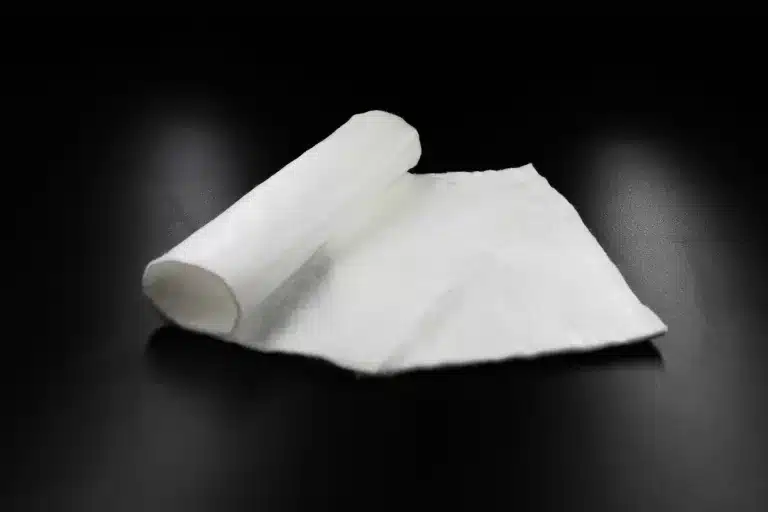
PET Continuous Filament Non woven Geotextile has high strength, good creep property excellent and erosion resistance, aging-resistance and heat resistance.
PET Continuous Filament Non woven Geotextile is made from virgin PET (polyester) chips, the continuous filament was extruded from PET chip by machine directly by spunbond process, and then punch together to get the stable 3D with higher strength fabric.
Nonwoven polyester continuous filament geotextiles have a high melting point and UV resistance. They provide an effective and economical solution for filtration, separation, drainage, liner protection and reinforcement applications.
Continuous filament Non woven geotextiles are made from 100% polyester fibres, mechanically bonded by needle punching. Heat bonding can also be applied to further strengthen the geotech fabric.
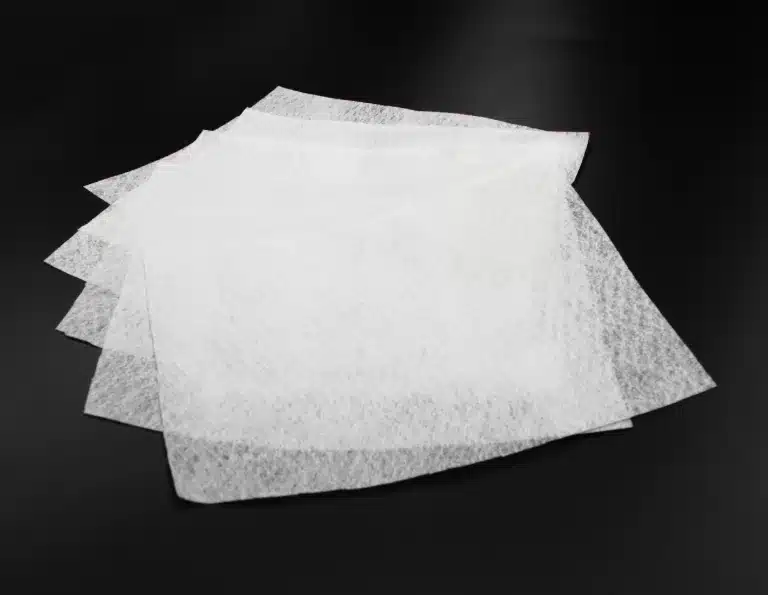
Geofantex is a leading supplier and manufacturer of high-quality geotextile nonwoven products in China. Our geotextile nonwoven is made of 100% polypropylene staple fiber and uses needle-punched technology to ensure excellent filtration, drainage, and separation functions for a wide range of civil engineering projects.
GeoFanTex medium weight nonwoven geotextiles are made from staple filaments of polypropylene fiber that are needlepunched and heat set.
Nonwoven Geotextiles are planar, permeable textile structures produced by mechanically bonding random fibers. Nonwoven geotextiles are used with soil, rock, earth, or any other geotechnical engineering-related material as an integral part of a human-made project, structure, or system.
Nonwoven Geotextile is made from the highest quality Polypropylene Staple Fibers and needle-punched to form dimensional structures, with Acid resistance.
The most common nonwovens are needled products. Staple fibres or continuous filaments are bonded by mechanically entangling the fibres with a barbed needle. It looks and feels like black felt. Sometimes the product is manufactured in white or orange.
Nonwoven geotextiles are multi-purpose fabrics that are felt-like in appearance. PP needle punched geotextile is manufactured from short synthetic fabric (polypropylene fiber).The product is formed after the processes of opening,combing,mixing and disordering,lapping and needling.
End of content
End of content
WhatsApp us