

+86-159 9860 6917
info@geofantex.com
geofantex@gmail.com
+86-400-8266163-44899
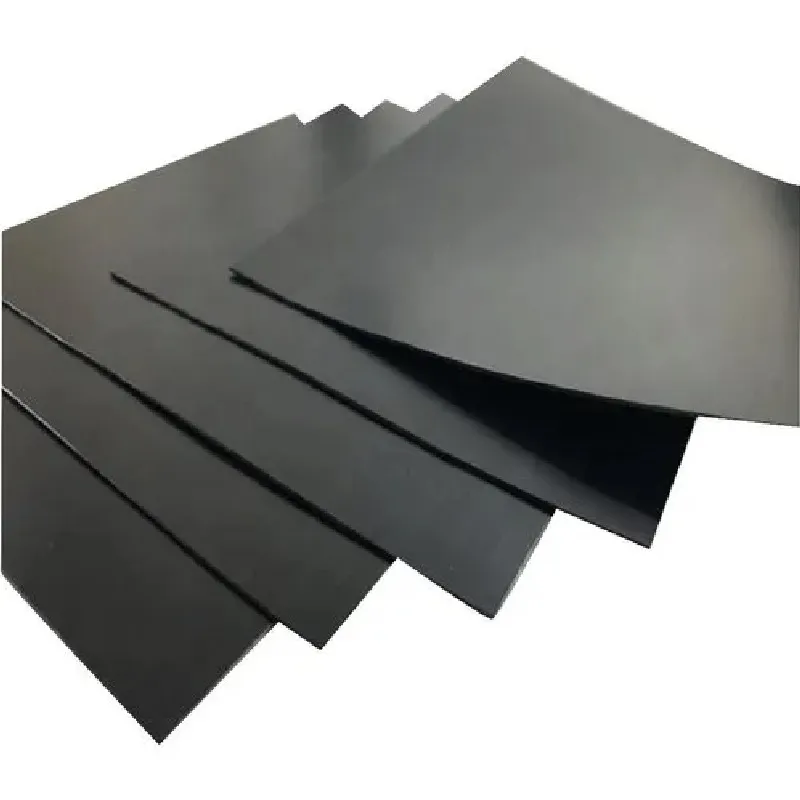
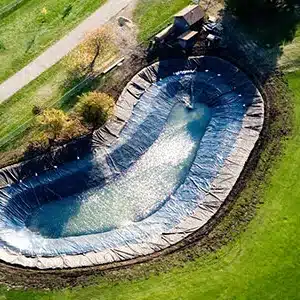
HDPE geomembrane pond liners provide reliable waterproof containment for ponds, reservoirs, aquaculture, irrigation, wastewater, and industrial projects. For contractors, distributors, and project buyers, selecting the right thickness, roll dimensions, surface type, and technical specifications is essential for long-term performance and installation efficiency. Compare project requirements, request technical data, and obtain a tailored quotation before placing a bulk order.
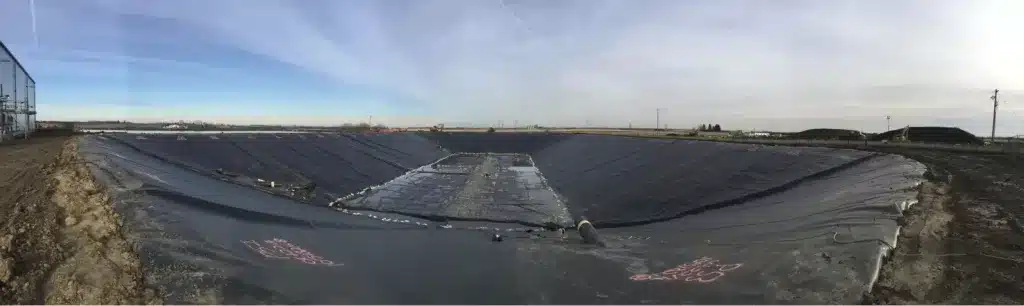
What is an HDPE Geomembrane Pond Liner?
High-density polyethylene is widely used in environmental and industrial containment projects. The material creates a durable, impermeable barrier that helps prevent leakage and protects surrounding soil and water resources.
Its strong physical and chemical properties make it suitable for demanding outdoor environments. It offers resistance to many chemicals, punctures, tears, and UV exposure.
Key aspects and benefits:
- Composition and Properties: Made from HDPE, these liners offer high tensile strength, chemical and UV resistance, impermeability, and flexibility to accommodate ground movement.
- Environmental Applications: Used in ponds, irrigation canals, reservoirs, landfills, and wastewater treatment systems to prevent seepage and contamination.
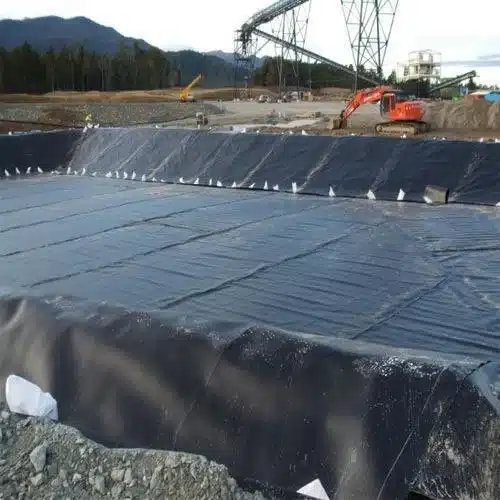
- Agricultural and Industrial Uses: Ideal for fish ponds, irrigation ponds, and tailing ponds in mining operations, reducing water loss and controlling contamination.
- Durability and Lifespan: Designed to last over 30 years when properly installed, providing long-term containment solutions.
- Environmental Impact: HDPE liners prevent soil and water contamination and are recyclable, supporting sustainable construction practices.
- Installation: Involves site preparation, subgrade evaluation, panel seaming/welding, and quality control to ensure leak-proof performance.
What are the Key Applications of HDPE Geomembrane Pond Liners?
The material is suitable for a wide range of environmental, agricultural, water-management, and industrial projects. Its low permeability and durability make it especially useful when liquids must remain isolated from the surrounding ground.
- Environmental Protection: HDPE geomembranes are extensively used in protecting natural resources by preventing the leakage of pollutants into soil or groundwater. In landfills, they act as liners to contain hazardous waste, preventing contamination of the environment.
Example: A major landfill in California used HDPE geomembranes to line its waste containment area, successfully preventing contamination of the surrounding environment. - Water Management: These liners are widely used in water containment systems, such as reservoirs, ponds, and canals, to prevent water loss due to seepage. They provide an efficient solution for conserving water in arid regions.
Example: A large irrigation pond in Arizona used HDPE liners to reduce water loss, improving water efficiency for local agriculture. - Agriculture: In agricultural applications, HDPE liners are used in fish ponds, irrigation ponds, and containment for agricultural runoff, ensuring minimal water loss and controlling contamination.
Example: An agricultural operation in Texas implemented HDPE geomembrane liners for aquaculture ponds to reduce water waste and control algae growth. - Waste Containment: HDPE geomembranes are essential in creating secure containment areas for hazardous or non-hazardous waste, including in the construction of containment ponds for wastewater treatment.
Example: A wastewater treatment facility in the UK employed HDPE geomembranes in their lagoon system to contain treated water, ensuring compliance with environmental standards.
These liners are indispensable in ensuring safety, sustainability, and environmental protection in these industries.
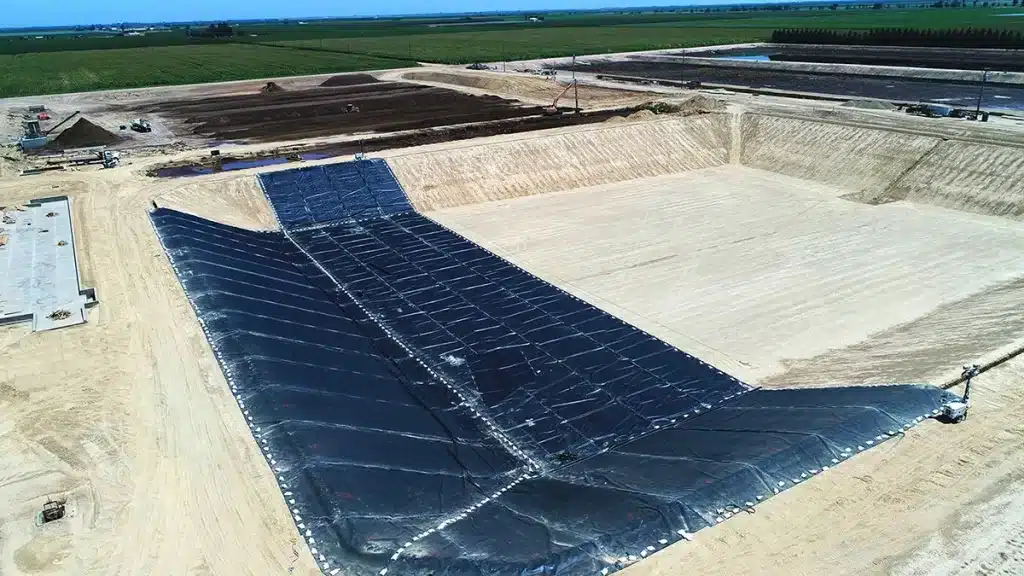
What Advantages Do HDPE Geomembrane Pond Liners Offer?
High-density polyethylene provides several practical advantages for environmental, agricultural, mining, and industrial applications.
- High Chemical Resistance: Withstand exposure to acids, bases, salts, and other chemicals without degradation.
- Puncture and Tear Resistance: Durable enough to resist mechanical damage during installation and operation.
- Long Lifespan: Designed to last over 30 years when properly installed, ensuring long-term containment.
- Impermeability: Prevent leakage of water and contaminants, protecting soil and groundwater.
- Low Maintenance: Minimal upkeep is required, reducing overall operational costs.
- Environmental Sustainability: Recyclable material and effective containment help reduce environmental impact.
Together, these properties make high-density polyethylene a practical choice for projects that require reliable and efficient containment.
How Is It Installed?
Correct installation is essential for achieving reliable, leak-resistant performance. Although procedures vary according to project design and site conditions, installation generally follows several key stages.
- Site Preparation: The ground is cleared, leveled, and compacted to remove sharp objects, debris, and uneven areas that could damage the liner.
- Subgrade Inspection: The subgrade is checked for stability and smoothness to provide uniform support for the geomembrane.
- Liner Placement: HDPE liner panels are carefully laid out according to the design layout, allowing for proper overlap and thermal expansion.
- Seaming and Welding: Adjacent panels are joined using thermal fusion welding to create strong, continuous seams.
- Quality Control and Testing: Seams are tested using vacuum, air pressure, or spark testing to ensure there are no leaks.
Careful installation reduces the risk of leakage and helps the containment system achieve its intended service life.
What is the Environmental Impact of HDPE Geomembrane Pond Liners?
High-density polyethylene can contribute to environmental protection when it is correctly specified and installed.
Its low permeability helps isolate stored liquids from surrounding soil and groundwater. This function is particularly important in wastewater treatment, mining, landfills, agriculture, and industrial containment.
Long service life can also reduce the frequency of replacement. In addition, the material can be recycled where appropriate collection and processing facilities exist.
However, environmental performance depends on more than the material itself. Proper design, installation, seam testing, drainage, protection layers, and routine inspection all contribute to the overall effectiveness of a containment system.
Choosing the Right Specification for Your Project
Material selection should reflect actual site and operating conditions rather than relying on a single standard specification.
Important factors include thickness, roll width and length, smooth or textured surface, tensile properties, puncture resistance, UV exposure, chemical compatibility, subgrade conditions, and installation method.
Project buyers should also consider transportation requirements and welding conditions. Roll dimensions can influence installation speed, seam quantity, equipment requirements, and overall project cost.
For large projects, review technical data and project requirements before confirming the final specification. Contractors, distributors, and engineering buyers can also request samples or technical documentation when additional verification is required.
Selecting the appropriate material and installation method helps create a safer, more efficient, and longer-lasting containment system for water, wastewater, agricultural, mining, and industrial applications.
Get Free Sample
We’ll respond as soon as possible(within 12 hours)