

+86-159 9860 6917
info@geofantex.com
geofantex@gmail.com
+86-400-8266163-44899
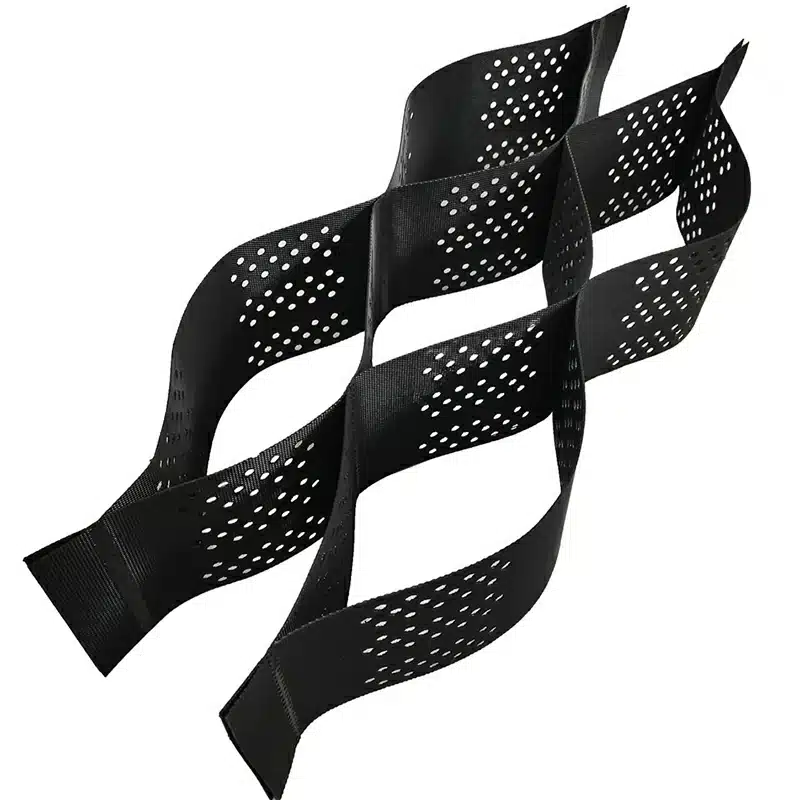
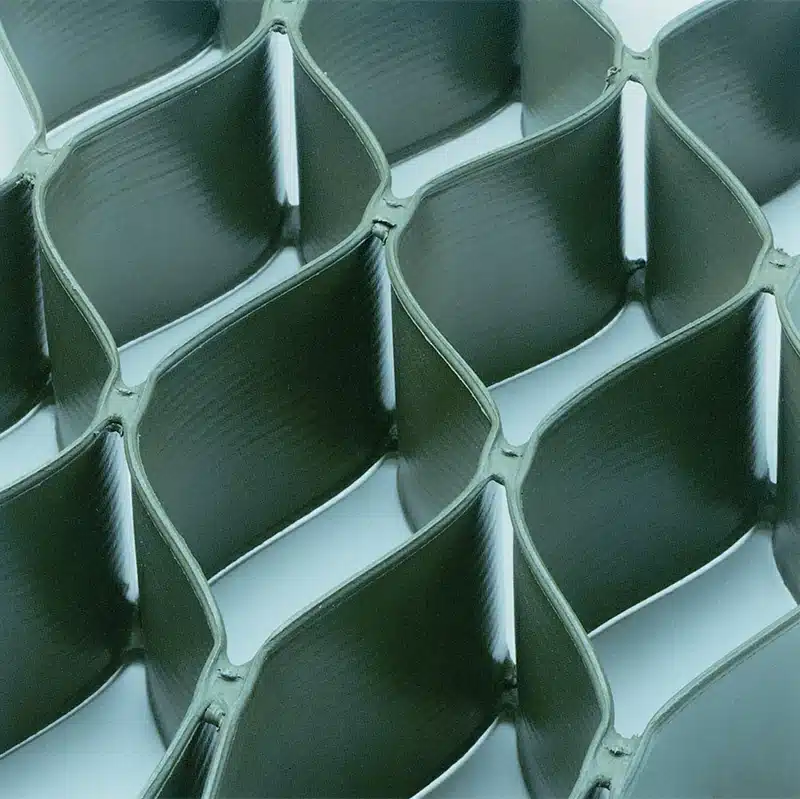
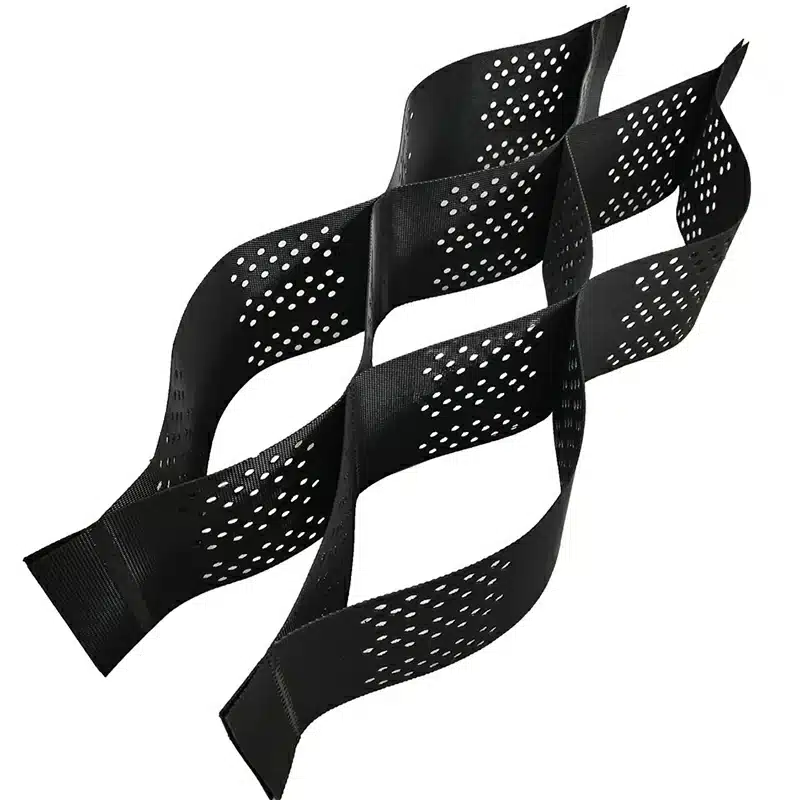
An HDPE geocell is a three-dimensional cellular confinement system manufactured from high-density polyethylene. Its interconnected cells expand into a honeycomb structure that confines soil, aggregate, or other suitable infill materials. This confinement helps limit lateral movement and improve the stability of reinforced layers.
Engineers and contractors use these systems in road construction, slope protection, and embankment stabilization. Selecting suitable materials requires careful evaluation of physical properties, cell dimensions, loading conditions, and installation requirements.
What Is an HDPE Geocell and How Does It Work?
Flexible polyethylene strips connect to form expandable cellular panels. During construction, workers expand the panels over a prepared surface and fill the cells with specified materials. The cell walls restrict lateral movement and help the infill resist deformation under applied loads.
This confinement improves the behavior of granular materials and helps maintain the integrity of reinforced layers. Unlike planar reinforcement products, cellular confinement systems provide lateral restraint throughout the cell depth. However, performance depends on cell geometry, connection strength, infill properties, and construction quality. These factors must be considered together during system design.
Where Is HDPE Geocell Used in Civil Engineering?
Road construction is a common application, especially where weak subgrades require additional support. Geocells confine granular base materials and help reduce lateral displacement under traffic loads. Properly designed systems can improve the stability of access roads, construction platforms, and pavement foundations.
Slope protection is another important application. Cellular panels retain soil or aggregate on exposed surfaces and help limit erosion caused by rainfall and runoff. Engineers evaluating HDPE geocell systems for slope protection must consider slope inclination, drainage, anchorage, and infill stability. Riverbanks and drainage channels may require additional hydraulic assessments to address scour and flowing water.
Which Material Properties and Specifications Matter Most?
Cell height, expanded cell dimensions, strip thickness, and connection strength influence product selection. Cell height determines the depth of the confined infill, while strip thickness describes the polyethylene wall itself. These dimensions serve different purposes and should not be confused.
HDPE offers flexibility and resistance to many chemicals under suitable service conditions. However, durability also depends on polymer formulation, manufacturing quality, and environmental exposure. Buyers reviewing HDPE geocell material specifications should examine junction strength, strip properties, perforation details, and relevant test documentation. Comparing these characteristics helps identify products that meet the project’s mechanical and environmental requirements.
How Should Buyers Select a Cellular Confinement System?
Product selection begins with the intended application and site conditions. For road stabilization, engineers evaluate subgrade strength, traffic loading, aggregate characteristics, and reinforcement depth. Slope applications require additional consideration of surface runoff, inclination, infill retention, and anchorage requirements.
Contractors and procurement teams should verify expanded panel dimensions, cell geometry, connection methods, and installation requirements. Reviewing HDPE geocell specifications for road construction against approved drawings helps prevent unsuitable material substitutions. Buyers should also confirm product consistency and the availability of technical documentation. Final selection must follow the engineering design rather than rely on product dimensions or price alone.
An HDPE geocell provides three-dimensional confinement for soil stabilization, road reinforcement, and surface erosion control. Its performance depends on appropriate material properties, infill selection, and construction methods. Engineers and buyers should evaluate the complete system against actual project conditions. Contact Geofantex to discuss available reinforcement products, technical specifications, and suitable material options for your next infrastructure project.

Get Free Sample
We’ll respond as soon as possible(within 12 hours)