


+86-159 9860 6917
info@geofantex.com
geofantex@gmail.com
+86-400-8266163-44899
As infrastructure projects expand into challenging terrain, reinforced soil structures have become essential for maintaining long-term stability. A Geogrid retaining wall system provides an effective solution for controlling soil movement, increasing load-bearing capacity, and improving the performance of retaining walls in both commercial and civil engineering projects. By reinforcing the soil behind the wall, geogrids help engineers build safer, taller, and more cost-efficient structures while reducing maintenance throughout the project lifecycle.
When Should You Use a Geogrid Retaining Wall?
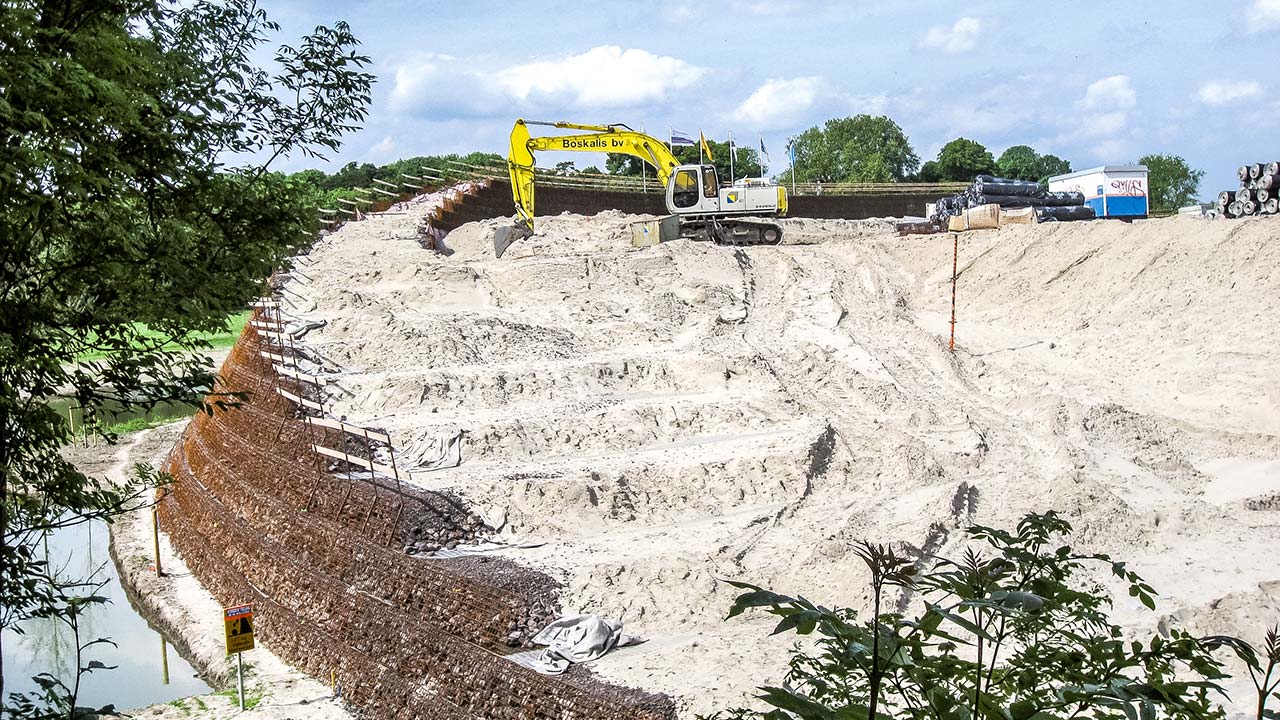
Not every retaining wall requires reinforcement, but a Geogrid retaining wall becomes highly beneficial whenever additional structural support is needed. Geogrid reinforcement is commonly recommended in the following situations:
- Retaining walls higher than 3–4 feet (0.9–1.2 m)
- Sloped backfill that increases lateral earth pressure
- Weak, loose, or poorly compacted soils
- Areas subjected to heavy surcharge loads such as roads, parking lots, or buildings
- Segmental retaining wall (SRW) systems requiring reinforced soil structures
In these applications, geogrids distribute tensile forces throughout the reinforced soil mass, significantly improving wall stability and reducing the likelihood of settlement or structural failure.
How Geogrids Improve Retaining Wall Performance
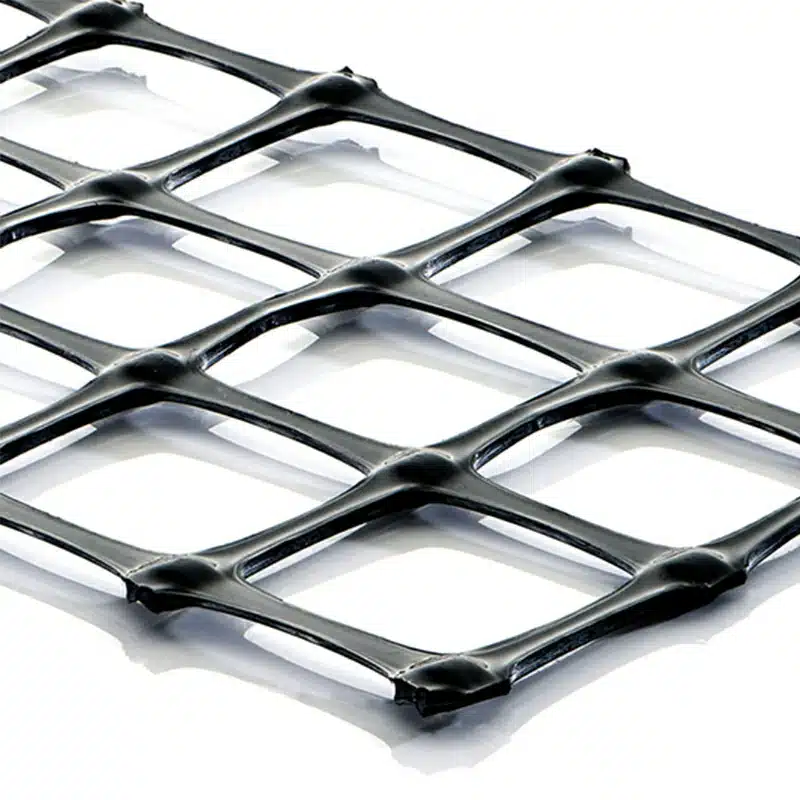
The primary function of a Geogrid retaining wall is to reinforce the soil rather than the wall facing itself. The polymer grid interlocks with compacted backfill, creating a reinforced composite structure capable of resisting lateral earth pressure more effectively than conventional retaining walls.
Key performance benefits include:
- Increased soil shear strength
- Improved load distribution
- Reduced lateral soil movement
- Lower risk of wall deformation
- Enhanced resistance to differential settlement
- Greater long-term structural reliability
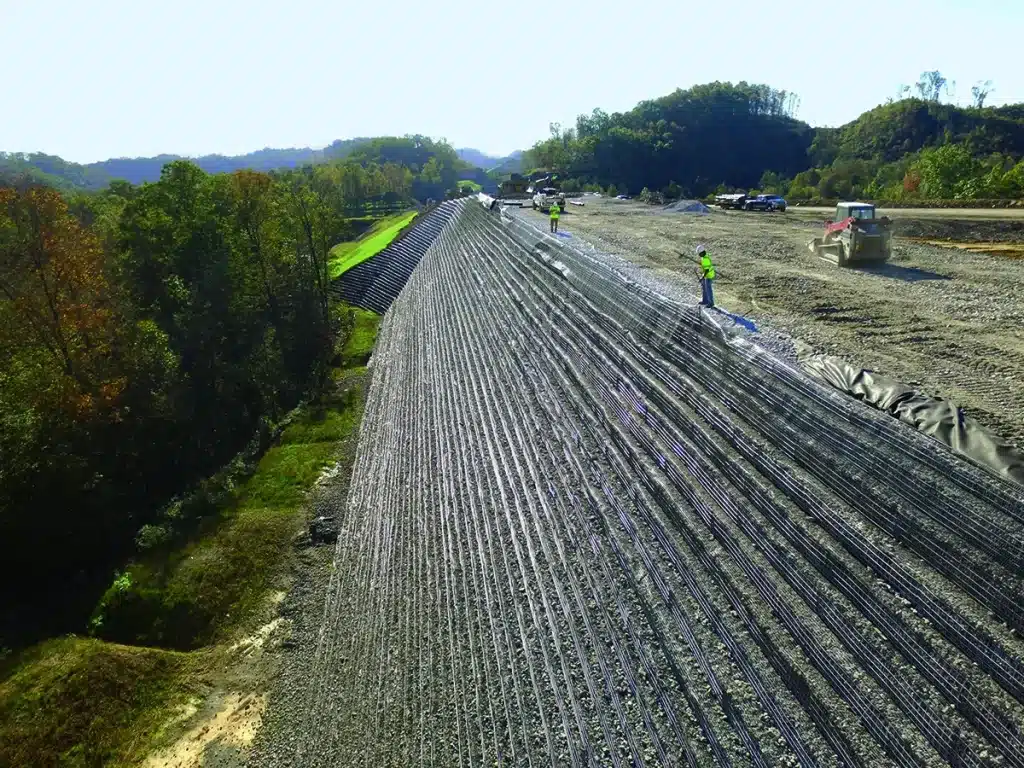
Because the reinforced soil acts together with the wall facing, the entire system performs as a single engineered structure capable of supporting higher loads with greater stability.
How High Can a Retaining Wall Be Without Geogrid?
The maximum unsupported height depends on wall type, soil quality, drainage conditions, and applied loads. Under typical conditions:
- Gravity retaining walls generally reach approximately 3–4 ft (0.9–1.2 m) without reinforcement.
- Segmental retaining walls can also remain unreinforced up to about 4 ft where soil conditions are favorable.
- Poor drainage, soft soils, sloping backfill, seismic activity, or traffic loading significantly reduce allowable wall height.
For walls exceeding 4 ft, most engineering standards and local building codes recommend or require reinforced soil systems using geogrids to ensure long-term safety and performance.
Applications in Slope Stabilization
Beyond retaining walls, geogrids play an important role in stabilizing steep slopes and embankments. A Geogrid retaining wall system is often combined with other geosynthetics to create comprehensive slope stabilization solutions for transportation and environmental projects.
Common applications include:
- Highway and railway embankments
- Hillside developments
- Bridge approaches
- Riverbank stabilization
- Industrial sites
- Residential landscaping
- Coastal and erosion control projects
When combined with proper drainage systems, erosion control products, and vegetation, geogrids provide durable protection against slope failure while supporting sustainable site development.
Installation Best Practices
Proper installation is essential for maximizing reinforcement performance. The installation process generally includes:
- Excavate and prepare a stable foundation.
- Install the retaining wall facing or initial block course.
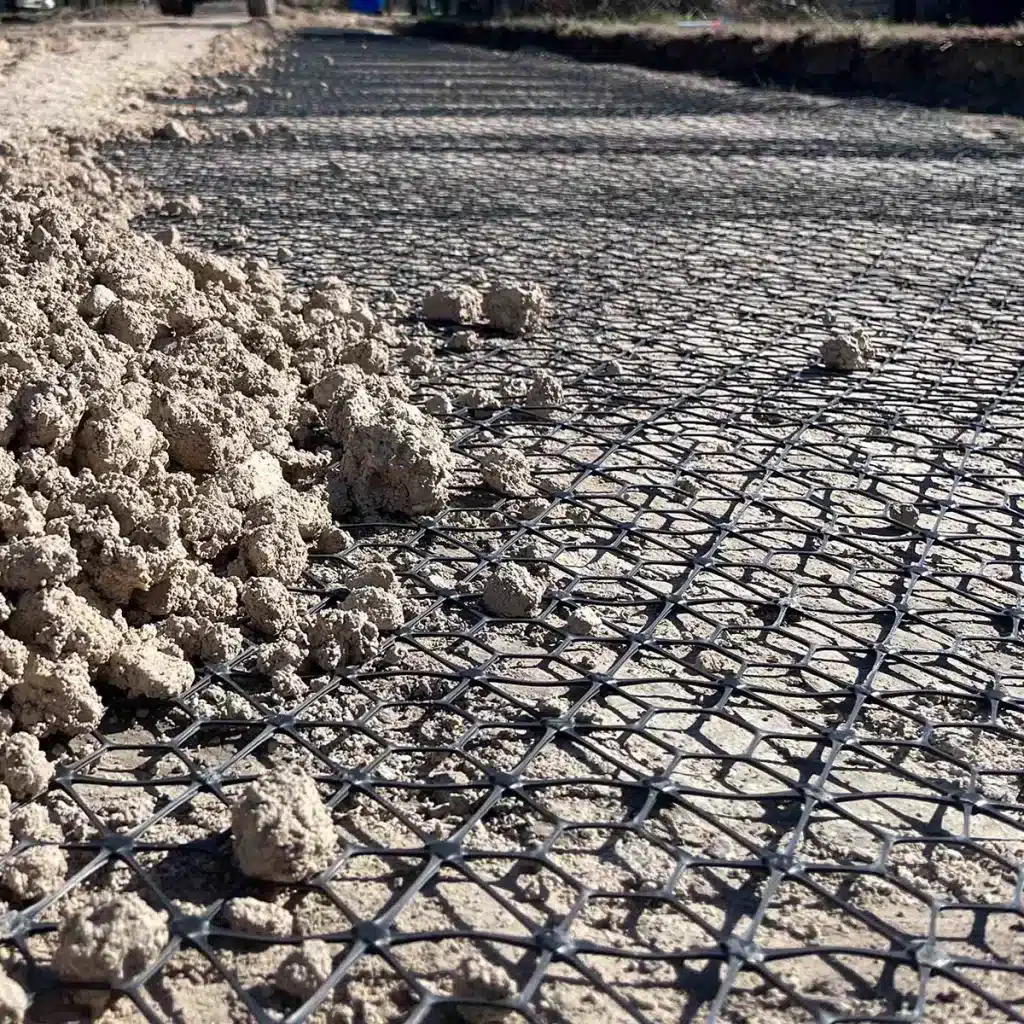
- Roll the geogrid horizontally over the compacted backfill.
- Secure the grid to the wall system according to design specifications.
- Place and compact backfill in controlled layers.
- Repeat geogrid installation at specified vertical intervals for taller walls.
- Complete final grading and drainage measures.
Correct tensioning, overlap, and compaction ensure that the reinforcement performs as designed throughout the wall’s service life.
A Geogrid retaining wall provides an efficient and proven solution for reinforcing retaining structures in demanding soil conditions. By improving load distribution, increasing soil strength, and limiting lateral movement, geogrid systems deliver superior stability for retaining walls, steep slopes, and reinforced earth structures.
Whether used for highways, commercial developments, residential landscaping, or infrastructure projects, geogrid reinforcement offers contractors, engineers, and material buyers a cost-effective method of constructing safer, longer-lasting retaining walls. Combined with proper drainage and quality backfill, geogrid technology remains one of the most reliable solutions for modern slope stabilization and reinforced soil engineering.
Get Free Sample
We’ll respond as soon as possible(within 12 hours)