

+86-159 9860 6917
info@geofantex.com
geofantex@gmail.com
+86-400-8266163-44899
Geocell for road construction provides an effective solution for stabilizing weak subgrades and improving pavement performance. For roads built on soft clay, silt, or loose sand, Geofantex HDPE geocell systems provide three-dimensional confinement that improves aggregate stability, distributes traffic loads, and helps reduce rutting and settlement. For contractors, distributors, and infrastructure project buyers, selecting the right geocell specifications can support efficient aggregate use, lower maintenance requirements, and reliable long-term road performance.
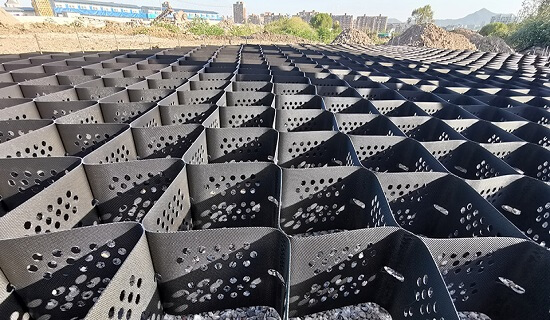
How Does Geocell for Road Construction Stabilize Weak Subgrades?
Soft subgrades often lack sufficient bearing capacity to withstand repeated traffic loads. Under these conditions, aggregate particles may move laterally, causing rutting, uneven settlement, and progressive pavement deformation.
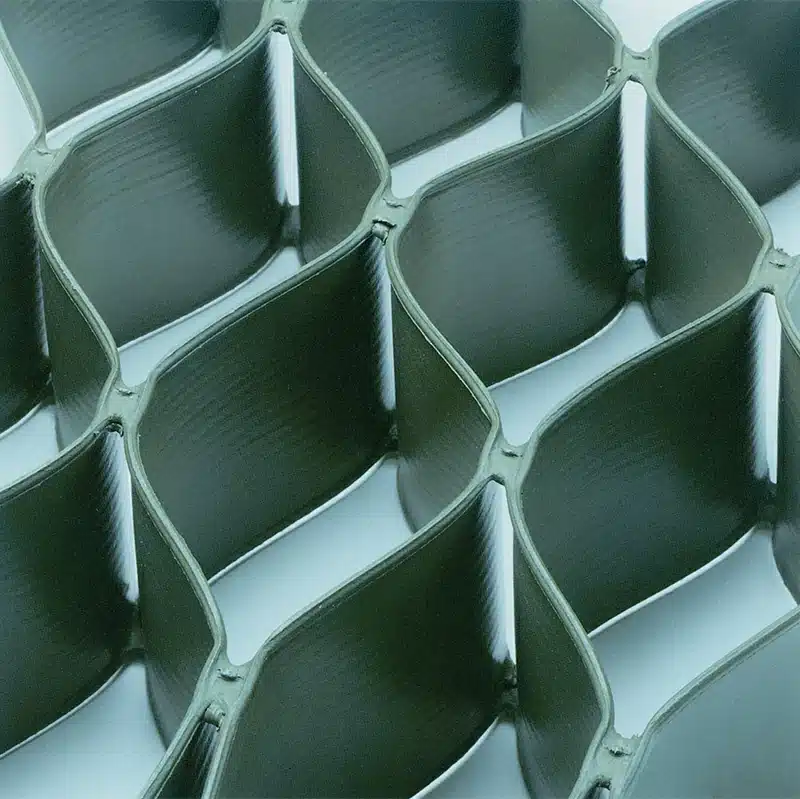
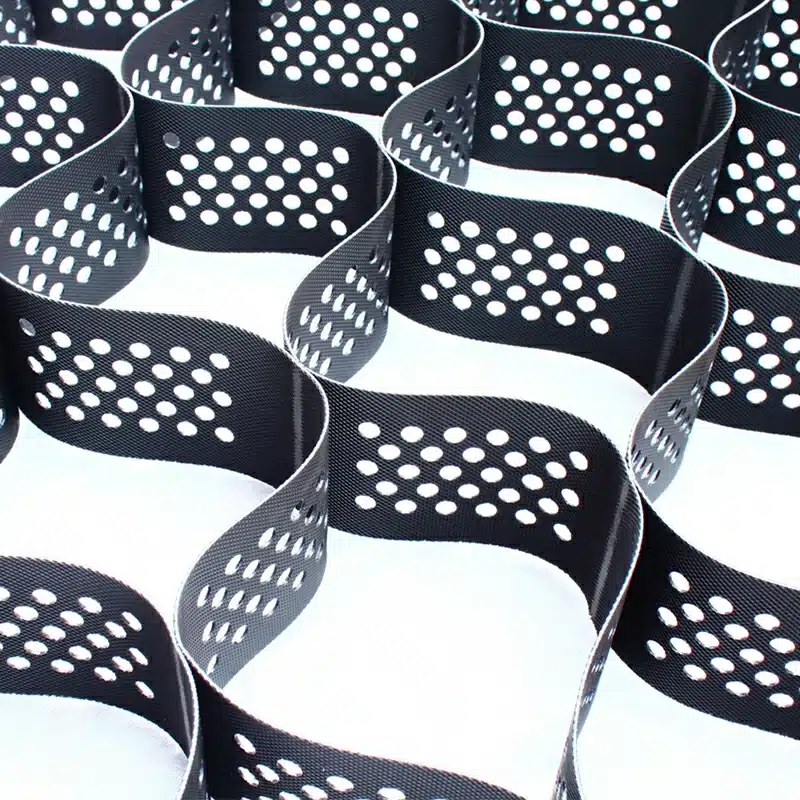
Installing a geocell system creates a three-dimensional cellular confinement layer that restricts aggregate movement and distributes applied loads over a wider area. This improves the mechanical stability of the granular base and reduces localized stress concentrations.
The performance of geocell for road construction depends on subgrade strength, cell geometry, infill characteristics, aggregate thickness, and installation quality. Proper engineering design is essential for achieving the intended stabilization benefits.
Geocell for Road Construction on Soft Soil
Three-dimensional cellular confinement restricts lateral aggregate movement and helps distribute traffic loads over weak clay, silt, or loose sand subgrades. This can improve the stability of granular base layers and reduce deformation under repeated loading.
Geocell for Road Construction to Improve Bearing Capacity
Confining aggregate within interconnected cells creates a more stable composite layer. The system helps distribute wheel loads and improve the performance of pavement foundations over weak soils.
Reducing Rutting and Settlement with Geocell
Cellular confinement limits lateral aggregate displacement and helps reduce rut formation. When properly designed, the reinforced base can also help control differential settlement caused by variable subgrade conditions.
How Can Geocell for Road Construction Reduce Construction Costs?
Conventional road construction over weak ground often requires thicker aggregate layers to achieve adequate stability. However, increasing base thickness can raise material, transportation, and installation costs.
Geocell reinforcement improves aggregate confinement, potentially allowing engineers to optimize granular layer thickness while maintaining the required structural performance.
For suitable projects, geocell for road construction may reduce aggregate consumption, material transportation requirements, and future maintenance expenses.
The actual savings depend on subgrade conditions, traffic loading, aggregate availability, geocell specifications, and construction methods. Any reduction in base thickness should be supported by engineering calculations rather than assumed as a fixed percentage.
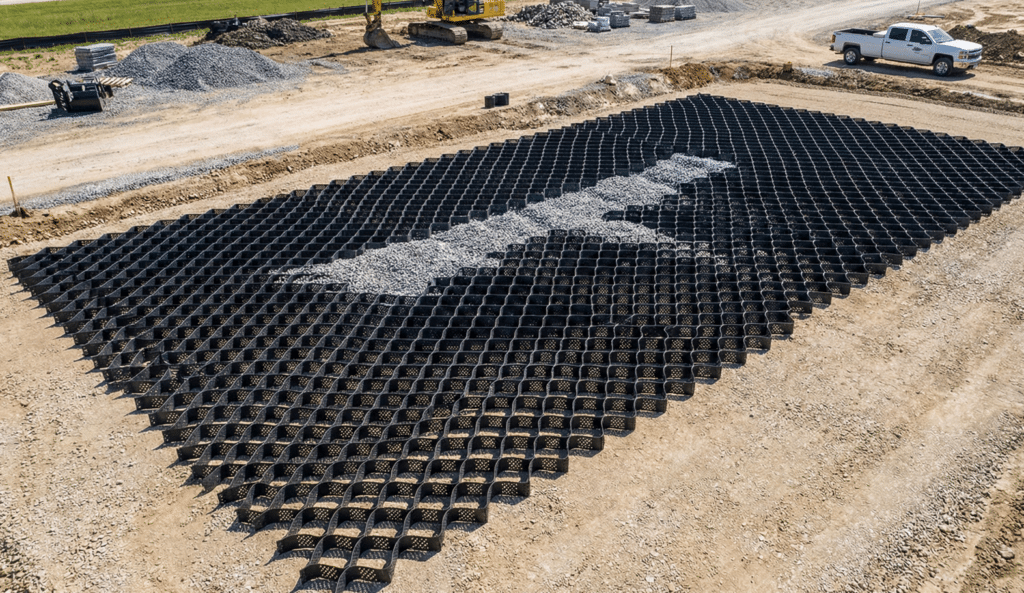
How Does Geocell Compare with Planar Reinforcement for Road Stabilization?
Geogrids and geocells improve pavement performance through different reinforcement mechanisms.
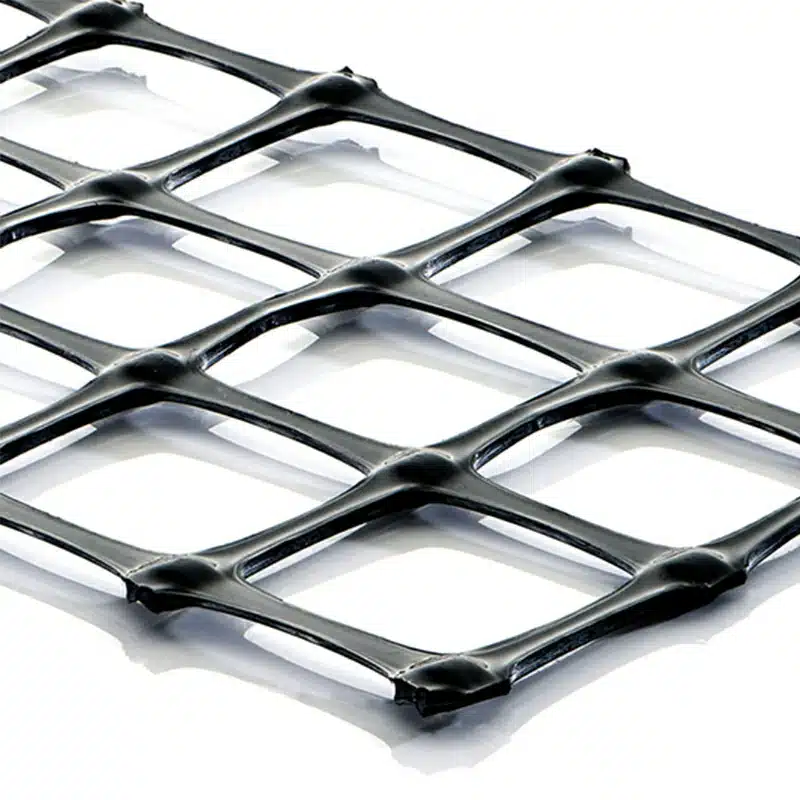
Geogrids are planar geosynthetics that interact mechanically with aggregate particles through their apertures, providing lateral restraint and tensile reinforcement.
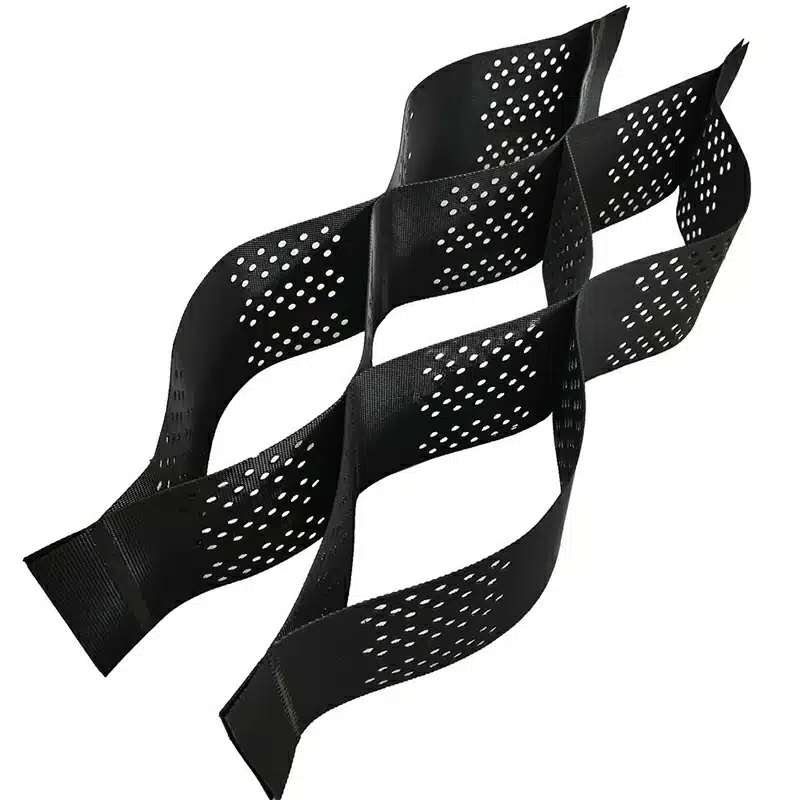
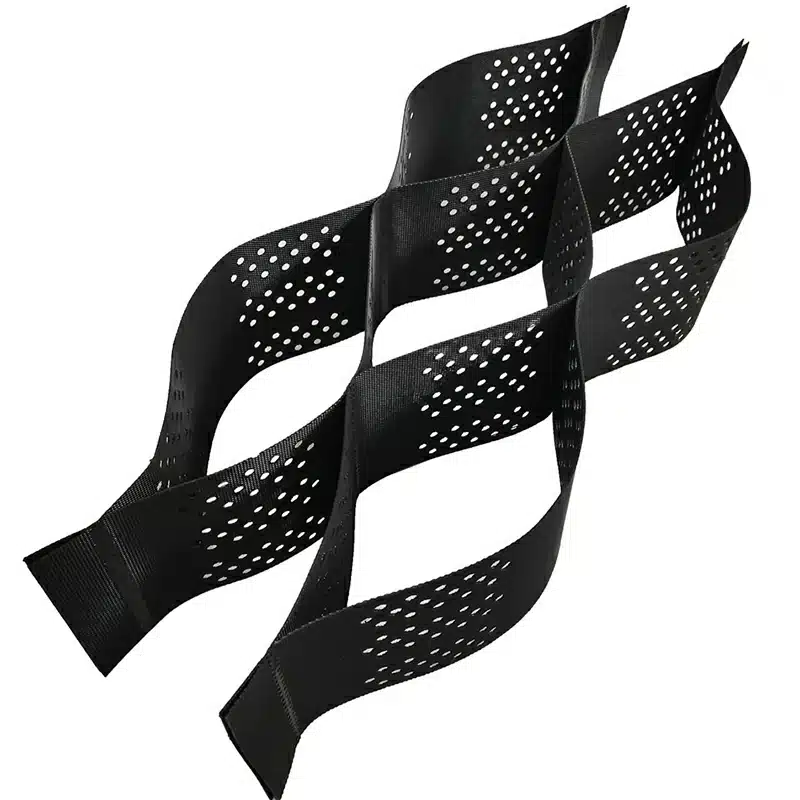
Geocells form three-dimensional interconnected cells that confine aggregate within a defined depth. This cellular structure restricts lateral movement and improves the stability of the infill under applied loads.
For weak subgrades and demanding traffic conditions, geocell for road construction can provide effective confinement and load distribution.
However, neither system is universally superior. Engineers should compare reinforcement mechanisms, soil conditions, aggregate properties, expected loading, installation requirements, and project costs before selecting a suitable solution.
Where Is Geocell Used in Road Engineering Projects?
Geocell reinforcement is used in transportation and infrastructure projects where weak soils, repeated traffic, or limited aggregate availability create construction challenges.
Common applications include:
- Rural access roads: Stabilizing granular surfaces over weak or variable subgrades.
- Mining haul roads: Improving aggregate confinement under repeated heavy vehicle loads.
- Temporary construction roads: Providing stable access for construction equipment and material transportation.
- Parking areas: Supporting granular base stability under vehicle loads.
- Industrial access routes: Reducing aggregate displacement in frequently trafficked areas.
When selecting geocell for road construction, engineers should evaluate cell height, cell dimensions, polymer properties, seam strength, infill material, drainage conditions, and expected traffic loads.
Geofantex supplies HDPE geocell solutions for road stabilization and civil engineering applications. Contractors and procurement teams can request technical specifications and quotations based on their project requirements.
Weak subgrades and increasing aggregate costs remain important challenges in road construction. By providing three-dimensional cellular confinement, geocell for road construction helps stabilize granular base layers, improve load distribution, and reduce pavement deformation.
Successful performance depends on selecting suitable materials, preparing the subgrade, and following appropriate installation and compaction procedures. For infrastructure projects requiring reliable ground stabilization, Geofantex offers HDPE geocell solutions with technical support and bulk supply options. Contact Geofantex to discuss your road construction requirements and request a tailored quotation.
Get Free Sample
We’ll respond as soon as possible(within 12 hours)