

+86-159 9860 6917
info@geofantex.com
geofantex@gmail.com
+86-400-8266163-44899
Using geocell for road construction helps contractors, engineers, and infrastructure buyers improve subgrade stability, reduce rutting, and optimize aggregate requirements. HDPE geocell systems provide three-dimensional confinement that reinforces granular layers and improves load distribution over weak soils. Commonly used in highways, access roads, industrial pavements, and temporary haul roads, these systems offer a practical reinforcement solution for new construction and road rehabilitation projects.
Why Use Geocell for Road Construction on Weak Subgrades?
Weak subgrades are a common challenge in road engineering. Soft soils, high moisture content, and repeated traffic loading can cause excessive deformation, rutting, and premature pavement deterioration.
Conventional aggregate layers may require substantial thickness to provide adequate support under these conditions.
Geocell reinforcement improves aggregate confinement, helping stabilize the pavement foundation and reduce lateral movement under traffic loads.
How Does Geocell Reinforcement Stabilize Soft Soil?
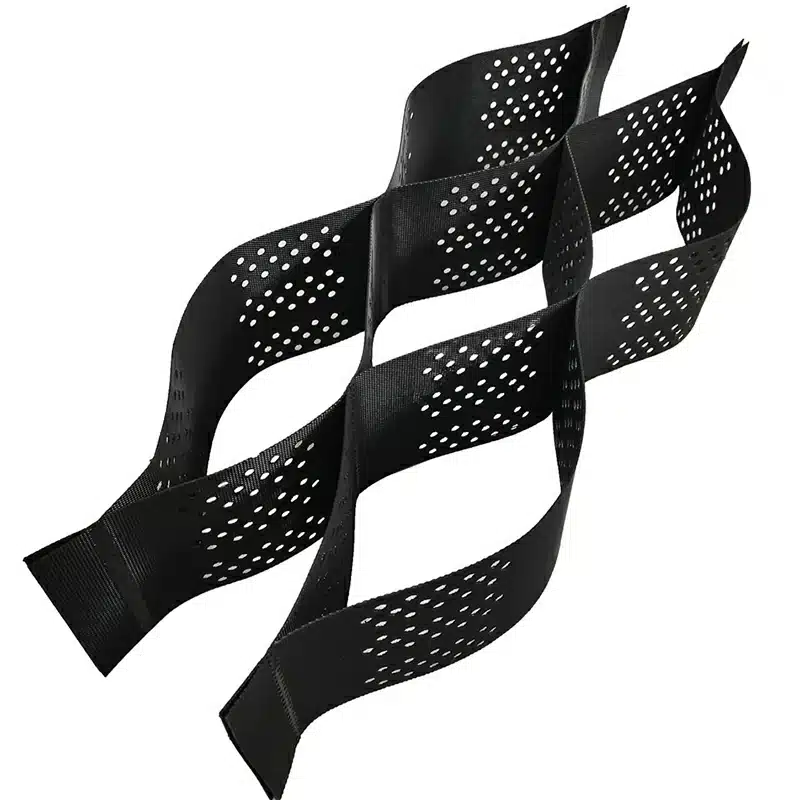
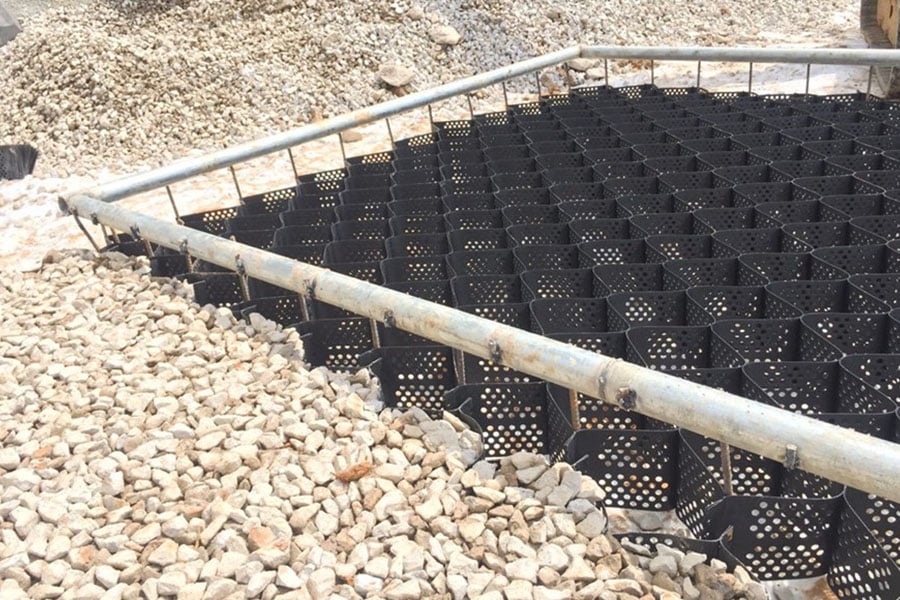
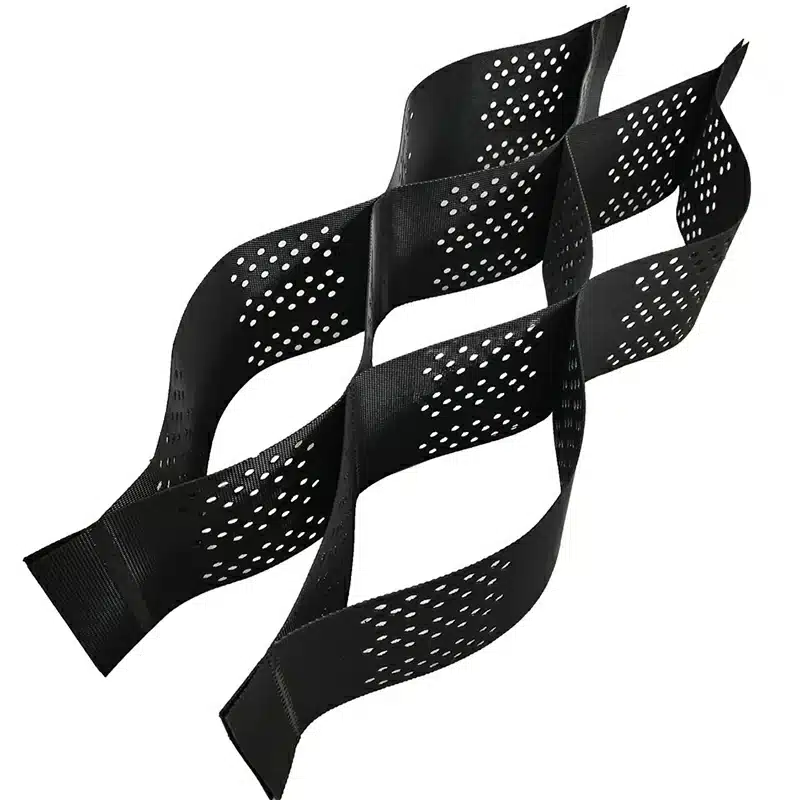
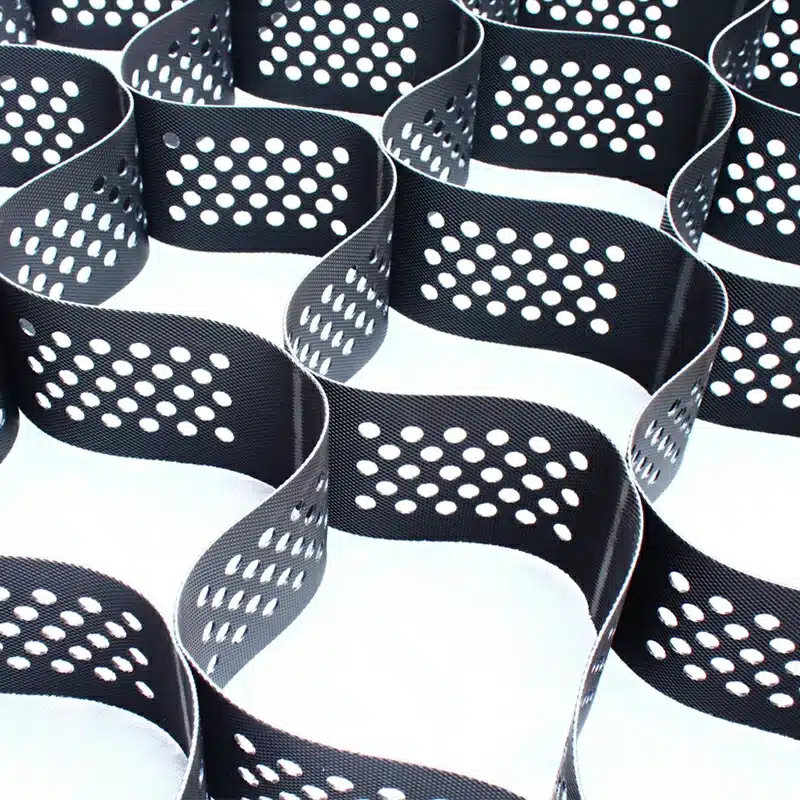
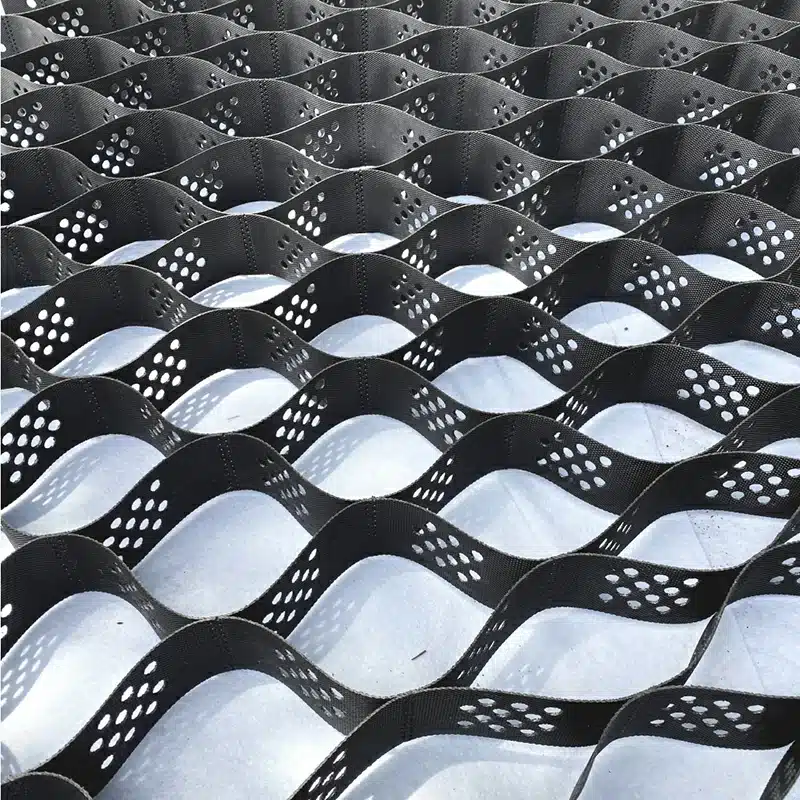
Geocells consist of interconnected polymer strips that expand into a three-dimensional honeycomb structure. Once filled with suitable aggregate, the cells restrict lateral displacement and improve the stiffness of the reinforced layer.
This confinement helps reduce localized deformation and provide more consistent support over weak or variable subgrades.
When Should Geocells Be Used on Weak Subgrades?
Cellular confinement systems are particularly useful where low soil bearing capacity, repeated vehicle loading, or moisture-related instability affects conventional road construction.
However, severely unstable soils may require additional ground improvement, drainage, or reinforcement measures.
How Does Geocell for Road Construction Improve Load Distribution?
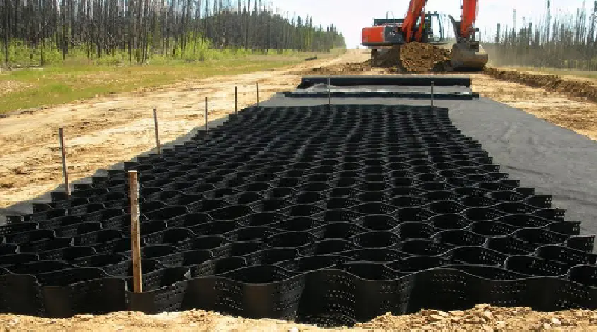
A geocell system confines aggregate within interconnected cells, limiting lateral movement under applied loads.
This confinement improves the mechanical response of the granular layer and helps distribute traffic loads over a wider area.
The main benefits include:
- Improved Load Distribution: Reduces localized stress concentrations within the pavement structure.
- Reduced Rutting: Limits aggregate displacement and permanent deformation under repeated traffic.
- Enhanced Base Stability: Helps maintain the integrity of granular layers over weak subgrades.
- Improved Structural Performance: Supports more consistent pavement behavior under varying loading conditions.
The actual improvement depends on geocell specifications, aggregate properties, subgrade strength, and pavement design.
How Does Cellular Confinement Extend Pavement Service Life?
Repeated vehicle loads can gradually deform unreinforced aggregate layers, particularly where the underlying soil provides insufficient support.
Geocells create a confined aggregate layer with improved resistance to lateral deformation.
By reducing aggregate movement and helping control rut formation, geocell reinforcement can contribute to longer pavement service life.
In suitable applications, geocell for road construction may also allow engineers to optimize aggregate layer thickness without compromising the required structural performance.
However, any reduction in aggregate thickness should be supported by appropriate engineering calculations and project-specific design requirements.
What Are the Main Applications of Geocell Road Reinforcement?
HDPE geocells are used in various transportation and infrastructure applications.
Highways and Access Roads
Geocell reinforcement helps improve the stability of granular base layers, particularly where subgrade conditions are weak or variable.
Industrial Pavements
Industrial access roads and working platforms often experience repeated heavy vehicle loading. Cellular confinement can improve aggregate stability when incorporated into a properly designed pavement structure.
Rural Roads
Unpaved rural roads may experience rutting, aggregate displacement, and erosion. Geocells help maintain surface stability and reduce maintenance requirements.
Temporary Haul Roads
Construction and mining projects frequently require temporary roads over weak ground. Geocell systems can improve aggregate confinement and support repeated equipment movement.
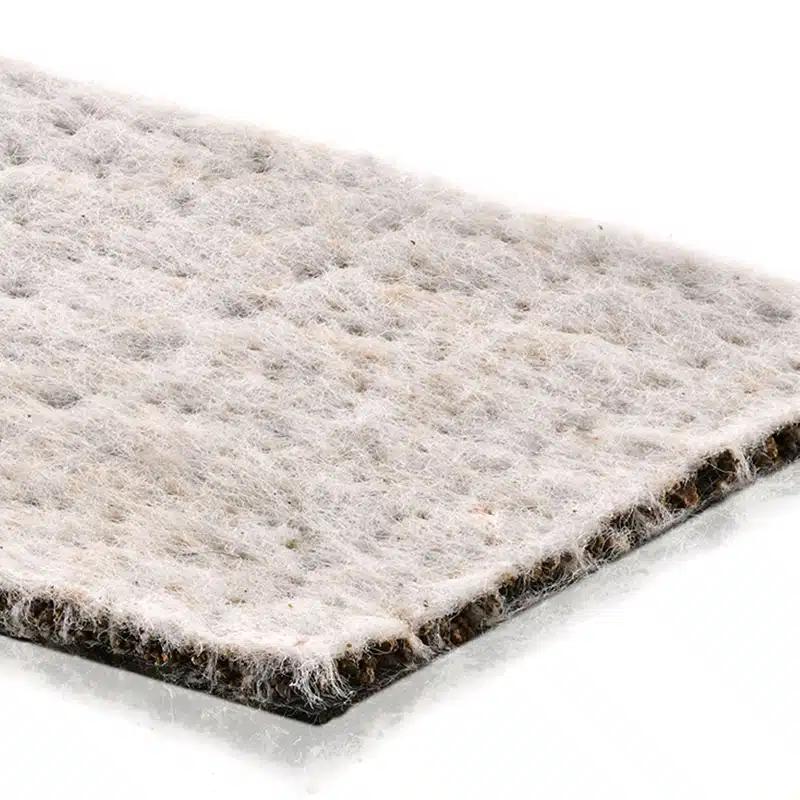
For soft subgrades, geocells may be combined with geotextile separation layers to prevent aggregate contamination and maintain the integrity of the reinforced base.
How Does Geocell for Road Construction Reduce Costs?
The economic benefits of geocell reinforcement depend on project conditions, material availability, and pavement design.
Potential cost advantages include:
- Reduced Aggregate Requirements: Improved confinement may allow a reduction in aggregate thickness where supported by engineering design.
- Lower Transportation Costs: Reduced aggregate quantities can decrease hauling requirements, particularly in remote locations.
- Improved Construction Efficiency: Expandable geocell panels can be installed using conventional earthmoving equipment and appropriate construction procedures.
- Reduced Maintenance: Improved resistance to rutting and aggregate displacement may decrease repair frequency.
- Long-Term Value: Improved pavement performance can reduce life-cycle costs compared with conventional construction methods under suitable conditions.
These benefits should be evaluated against geocell material costs, installation expenses, and associated construction costs.
What Geocell Specifications Should Engineers Consider?
Selecting a suitable geocell for road construction requires evaluating both material properties and site-specific engineering conditions.
Important specifications include:
- Cell Height: Influences the depth of aggregate confinement.
- Cell Dimensions: Affect aggregate compatibility and confinement performance.
- Wall Thickness: Contributes to the mechanical properties of the cellular structure.
- Weld Strength: Determines the strength of connections between adjoining polymer strips.
- HDPE Properties: Influence flexibility, durability, and environmental resistance.
- Panel Dimensions: Affect installation efficiency and material quantities.
Engineers should also consider subgrade bearing capacity, aggregate gradation, expected axle loads, traffic frequency, and drainage requirements.
Technical data sheets and relevant test results should be reviewed before confirming product selection.
How to Choose a Geocell Supplier for Road Projects
Contractors, distributors, and procurement managers should evaluate product quality, technical documentation, manufacturing consistency, and supply capabilities.
A reliable supplier should provide clear information about cell dimensions, material specifications, connection strength, and available panel configurations.
For accurate quotations, buyers should provide project dimensions, expected traffic loads, soil conditions, required geocell specifications, order quantities, and shipping destinations.
Geofantex Geosynthetics supplies HDPE geocell products for road reinforcement, ground stabilization, and infrastructure construction.
Choosing the right geocell for road construction can improve aggregate confinement, enhance pavement stability, and reduce rutting over weak subgrades. Successful performance depends on appropriate material selection, pavement design, aggregate quality, drainage, and installation practices.
For highways, industrial access roads, rural roads, and temporary haul roads, HDPE geocells offer a flexible solution for improving road foundation performance. Contact Geofantex Geosynthetics with your project requirements to request technical specifications and a customized HDPE geocell quotation.
Get Free Sample
We’ll respond as soon as possible(within 12 hours)