


+86-159 9860 6917
info@geofantex.com
geofantex@gmail.com
+86-400-8266163-44899
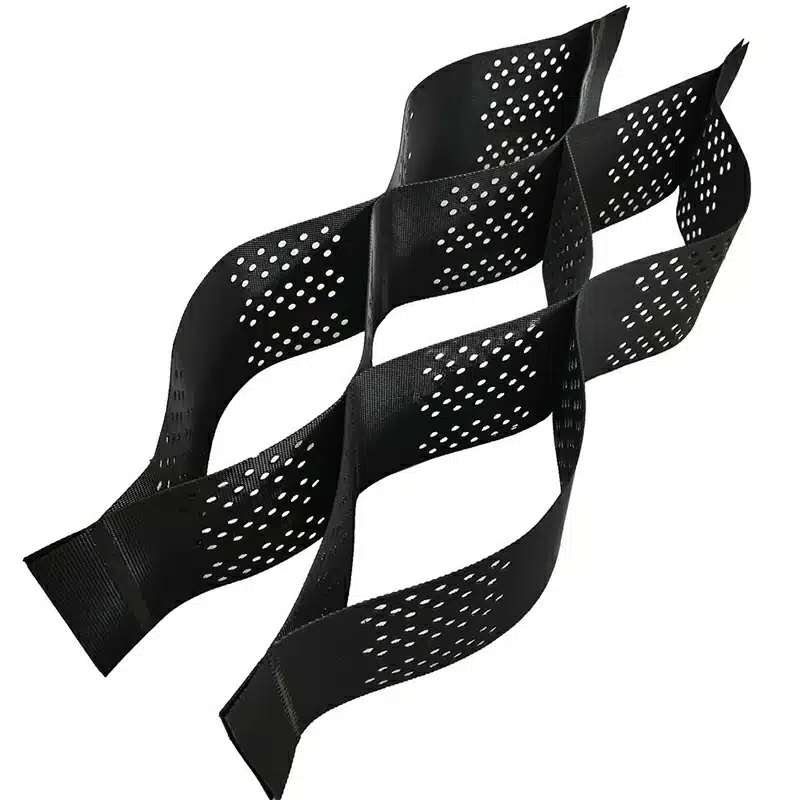
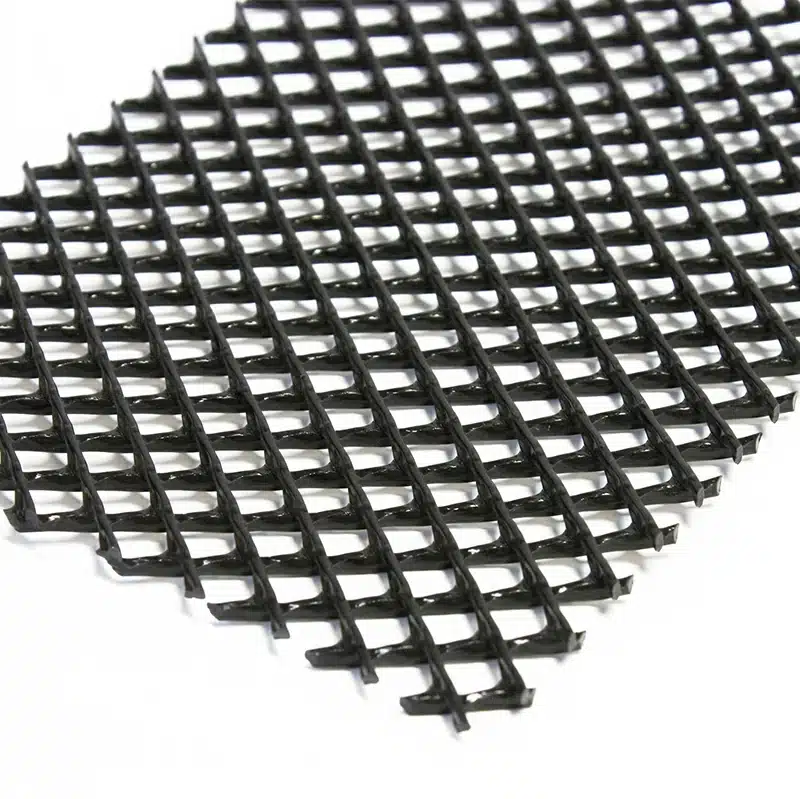
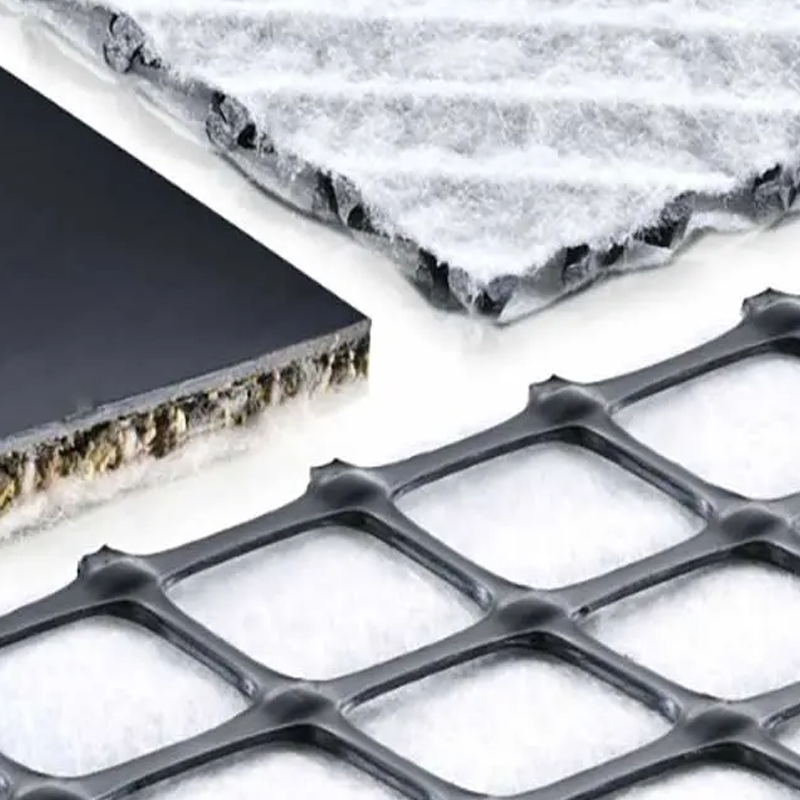
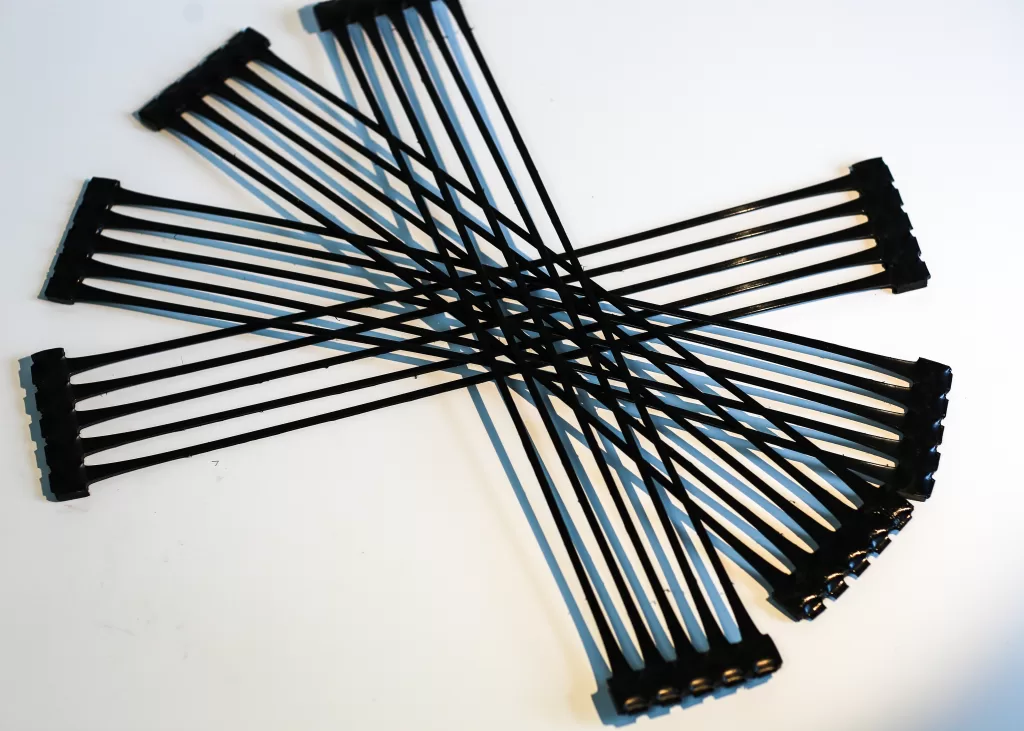
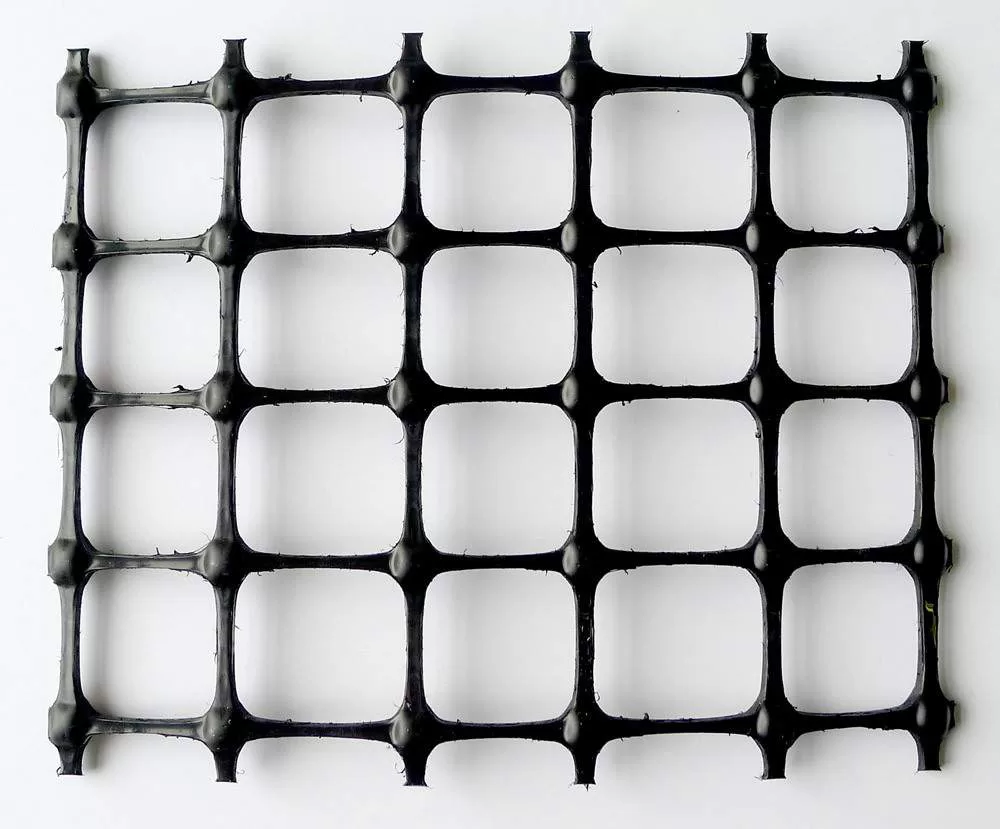
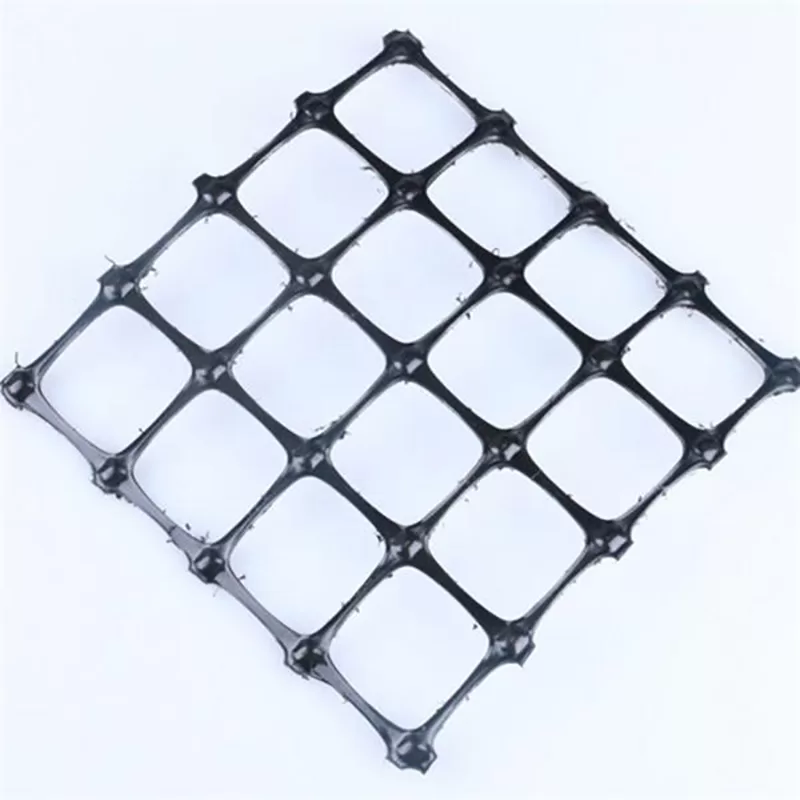
Geogrid Soil Stabilization is a widely adopted geosynthetic technique used to improve the mechanical performance of weak subgrades in civil engineering. By reinforcing granular layers and interacting with surrounding soil particles, Geogrid Soil Stabilization enhances structural capacity and reduces long-term deformation in infrastructure systems.
This method is particularly relevant in road construction, rail foundations, retaining structures, and working platforms where native soils lack sufficient strength or stiffness.
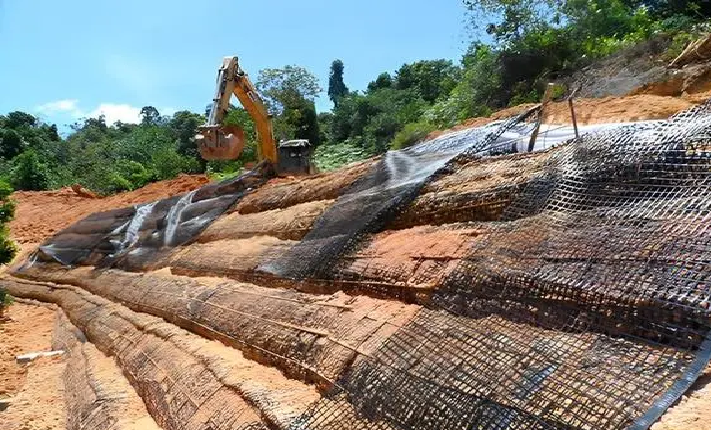
Key Mechanisms of Geogrid Soil Stabilization in Weak Subgrades
Weak or unstable subgrade soils typically exhibit low shear strength, high compressibility, and moisture sensitivity. Geogrid Soil Stabilization addresses these limitations through mechanical reinforcement rather than chemical alteration.
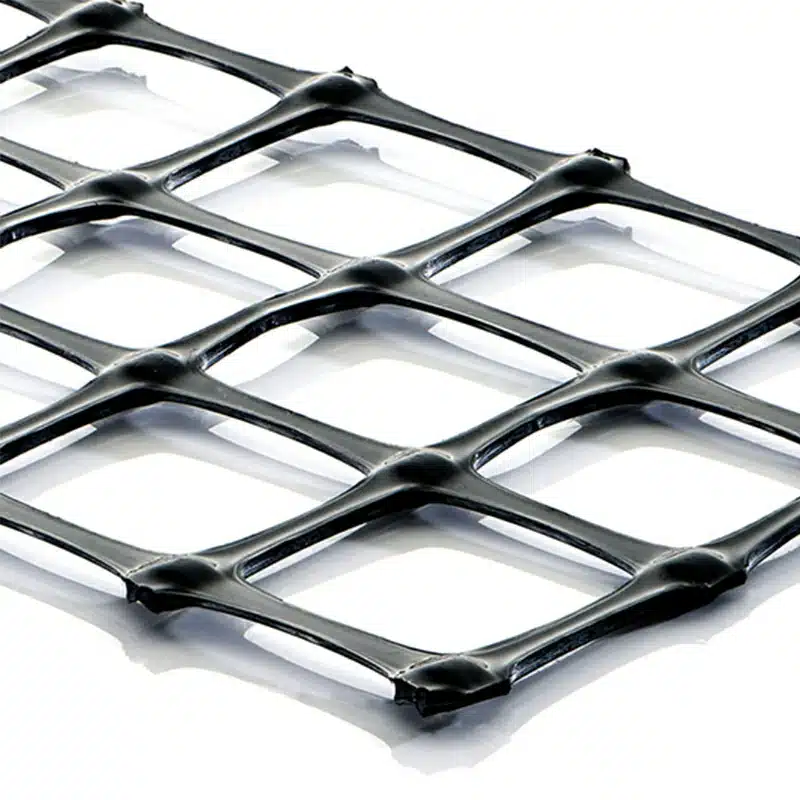
One of the primary functions of Geogrid Soil Stabilization is lateral confinement. The geogrid interlocks with aggregate particles, restricting their sideways movement under repeated loading. This confinement effect significantly increases the apparent stiffness of the base layer.
Another mechanism is load distribution. Geogrid Soil Stabilization spreads applied traffic loads over a wider area, reducing stress concentration on the subgrade and minimizing differential settlement.
Additionally, the system improves shear resistance. The tensile strength of the geogrid mobilizes when the aggregate begins to deform, resisting shear failure and increasing overall system stability.
Engineering Problems Solved by Geogrid Soil Stabilization
In practice, Geogrid Soil Stabilization is used to mitigate several recurring geotechnical issues:
- Excessive rutting and surface deformation under repeated traffic loading
- Low bearing capacity in soft clay or silty subgrades
- Moisture sensitivity and poor drainage behavior, which weakens soil structure
- Frost heave and shrink–swell cycles in fine-grained soils
- Erosion and particle displacement in unprotected subgrades
- Construction instability caused by insufficient compaction support
By integrating reinforcement at the base course interface, Geogrid Soil Stabilization improves constructability even in marginal soil conditions, reducing reliance on deep excavation or full soil replacement.
Performance Improvements in Pavement and Base Layers
When incorporated into pavement structures, Geogrid Soil Stabilization significantly enhances base course performance.
First, it increases aggregate interlock, which improves load transfer efficiency between particles. This leads to a stiffer composite layer that behaves more like a bound material under stress.
Second, Geogrid Soil Stabilization reduces permanent deformation. Rutting is minimized because aggregate particles are prevented from lateral displacement, maintaining consistent layer thickness.
Third, compaction efficiency improves. The geogrid provides a stable platform during construction, allowing for more uniform densification of base materials.
Finally, structural lifespan is extended. Roads built with Geogrid Soil Stabilization typically require less maintenance due to reduced fatigue cracking and subgrade pumping.

Cost Efficiency and Sustainability Advantages
One of the major advantages of Geogrid Soil Stabilization is its impact on project economics.
Because the reinforcement increases structural efficiency, designers can often reduce aggregate thickness while maintaining performance standards. This directly lowers material procurement, transportation, and installation costs.
In addition, Geogrid Soil Stabilization reduces long-term maintenance expenditures by limiting pavement distress mechanisms such as rutting and settlement.
From a sustainability perspective, reduced aggregate consumption means lower quarrying demand and decreased carbon emissions associated with hauling and construction activities. As a result, Geogrid Soil Stabilization is increasingly used in green infrastructure and low-impact development projects.
Applications in Slopes and Retaining Structures
Beyond pavements, Geogrid Soil Stabilization plays a critical role in mechanically stabilized earth (MSE) systems.
In slope stabilization, geogrids reinforce soil mass stability by providing tensile resistance against gravitational sliding forces. This allows for steeper slope angles without compromising safety.
In retaining wall systems, Geogrid Soil Stabilization creates a composite reinforced soil block that works in conjunction with facing elements. This system distributes loads internally and reduces reliance on rigid structural walls.
Geogrid Soil Stabilization is a high-performance geosynthetic solution that improves soil behavior through mechanical reinforcement, load distribution, and confinement effects. It addresses key challenges in weak subgrades, enhances pavement performance, reduces construction costs, and extends infrastructure lifespan. Its versatility in roads, slopes, and retaining structures makes it a foundational technology in modern geotechnical engineering.
Get Free Sample
We’ll respond as soon as possible(within 12 hours)