

+86-159 9860 6917
info@geofantex.com
geofantex@gmail.com
+86-400-8266163-44899
Drainage fiber material is used in civil engineering, landscaping, and subsurface drainage projects to manage water flow and reduce soil migration. Common solutions include nonwoven geotextiles, woven filtration fabrics, and drainage geocomposites. For engineers, contractors, and procurement professionals, selecting suitable materials requires evaluating permeability, filtration performance, mechanical strength, and site conditions. Understanding these properties helps buyers compare specifications and choose appropriate drainage solutions for roads, foundations, retaining walls, and environmental projects.
What Is Drainage Fiber Material and How Does It Work?
Drainage fiber material generally refers to permeable synthetic textile materials designed to allow water to pass through while helping retain soil particles. In geotechnical engineering, these materials are commonly manufactured from polypropylene (PP) or polyester (PET) and are available in woven and nonwoven structures.
Their primary functions are filtration and separation. When installed between soil and drainage aggregate, the fabric limits the migration of fine particles while allowing water to enter the drainage layer. This helps maintain the performance of drainage pipes, gravel beds, and other water management systems.
Unlike waterproof membranes, drainage geotextiles allow water to pass through their structure. Some nonwoven fabrics also provide limited in-plane drainage, although dedicated drainage cores are generally preferred when higher lateral flow capacity is required.
For projects involving subsurface water management, drainage fiber material for soil filtration and separation should be selected according to soil characteristics, hydraulic conditions, and installation requirements.
What Are the Main Types of Drainage Fiber Materials?
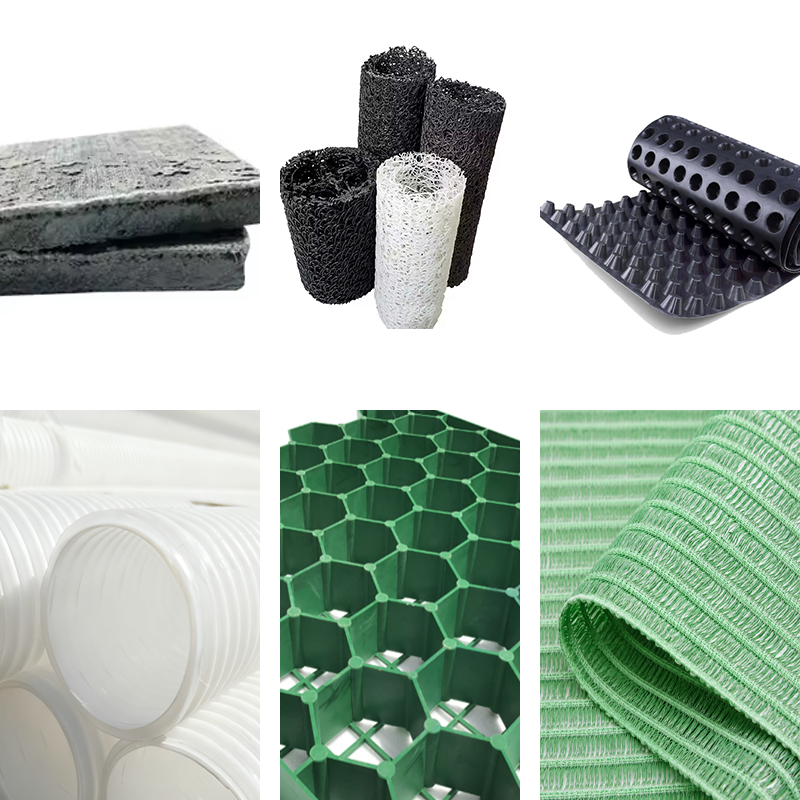
Drainage fabrics differ in their manufacturing methods, hydraulic properties, and mechanical performance. The three main options are:
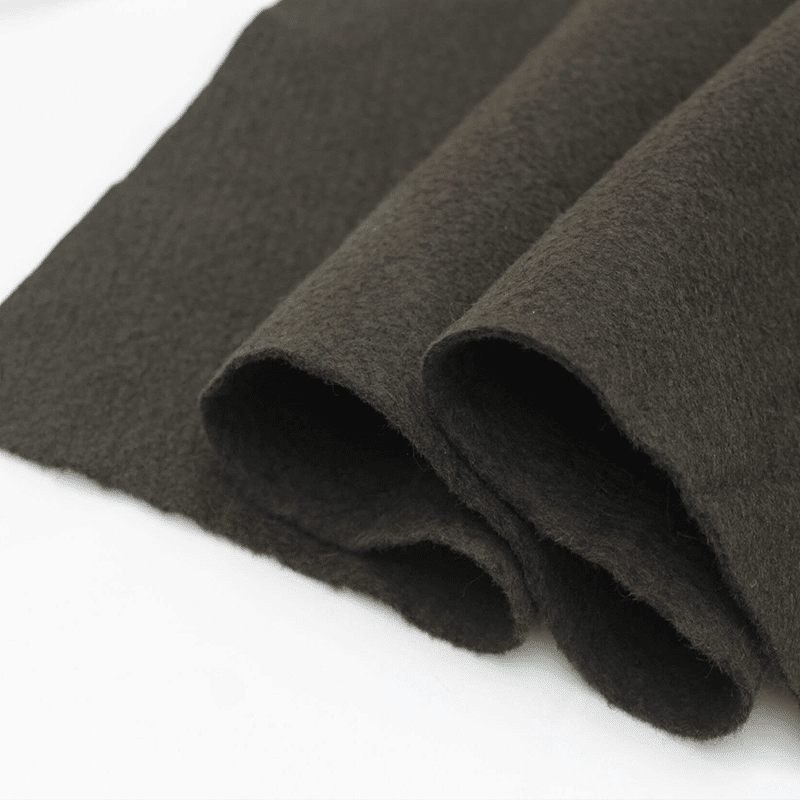
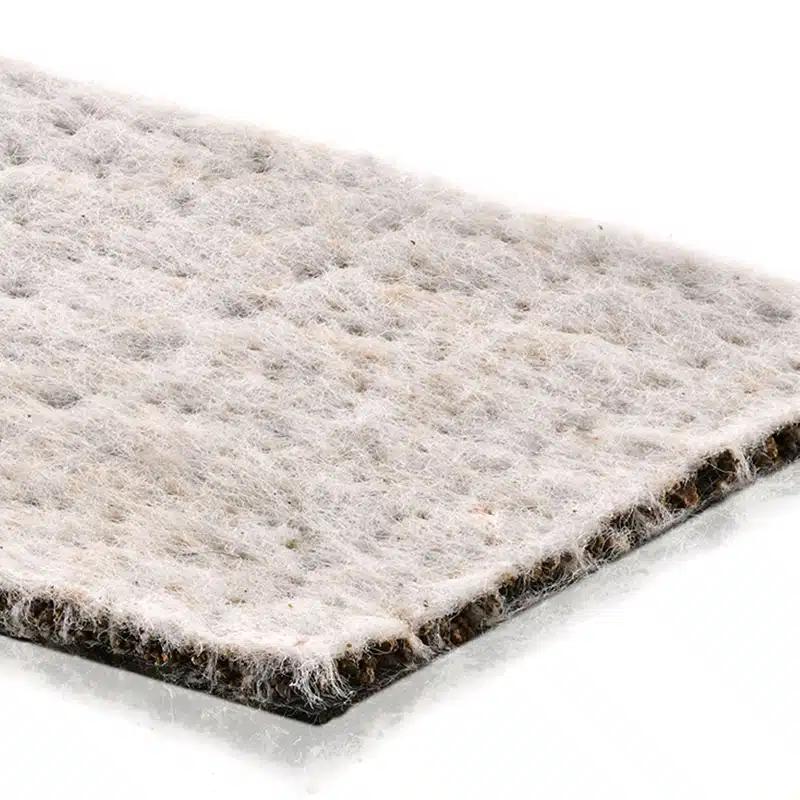
- Nonwoven Geotextiles: Manufactured from synthetic fibers, commonly bonded through needle punching. Their permeable structure makes them suitable for filtration and separation around drainage pipes, foundations, and retaining walls.
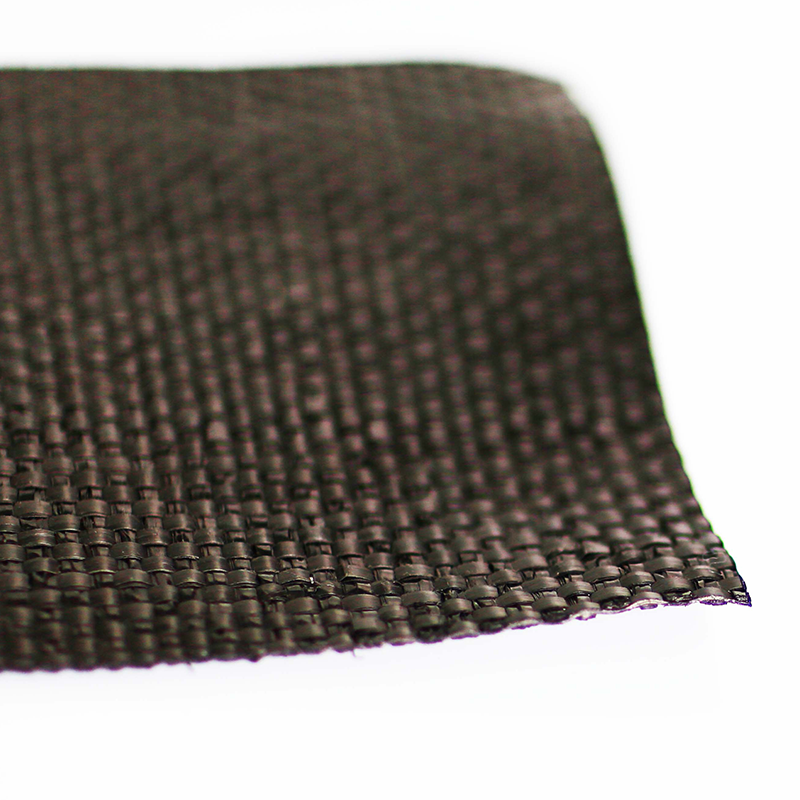
- Woven Geotextiles: Produced by interlacing synthetic yarns or tapes. These fabrics are commonly used for soil separation and reinforcement, while specially engineered woven products can also provide filtration.
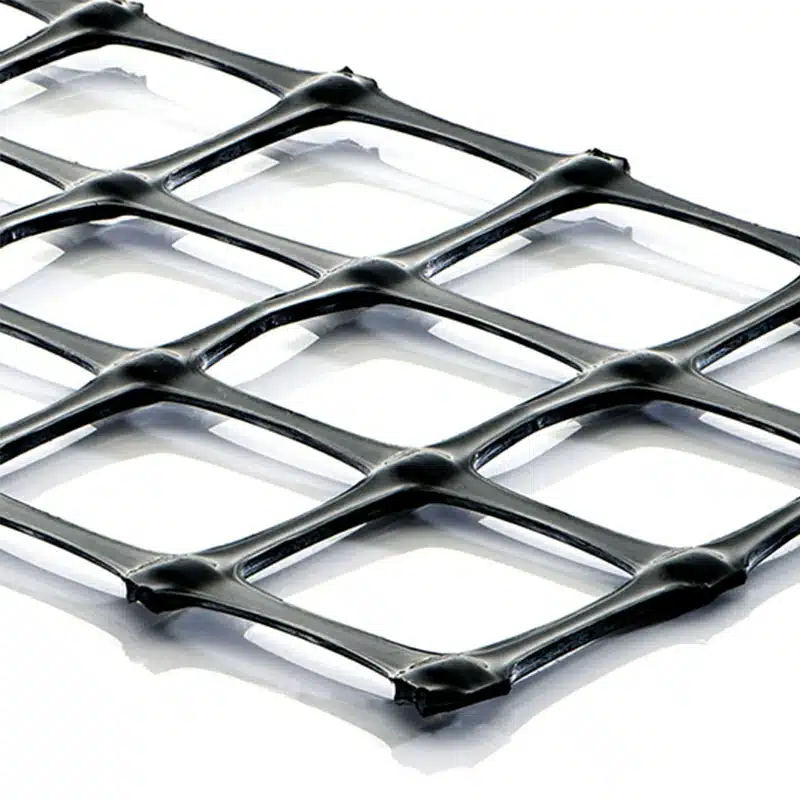
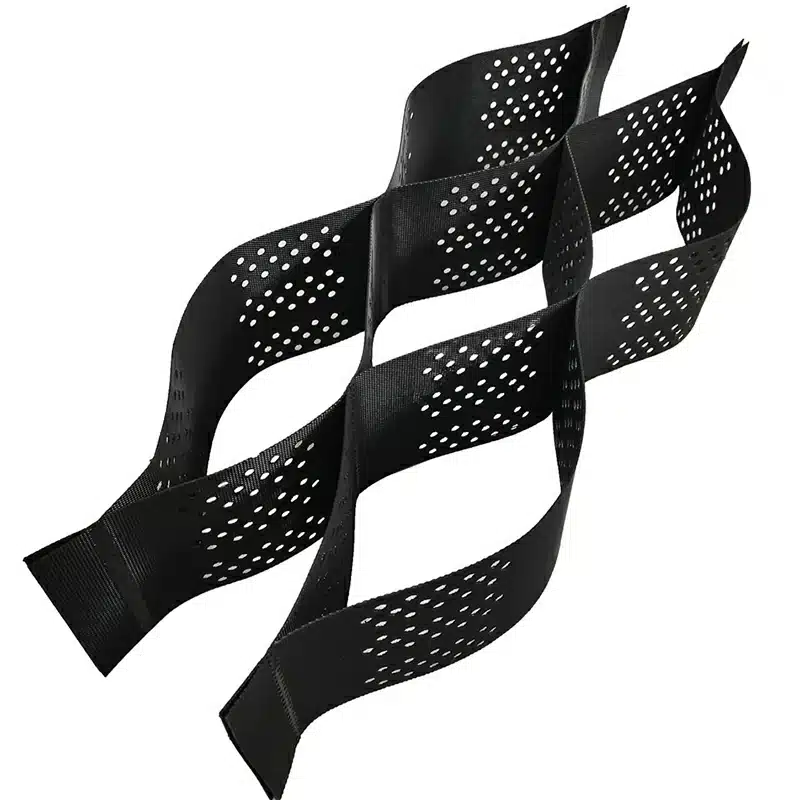
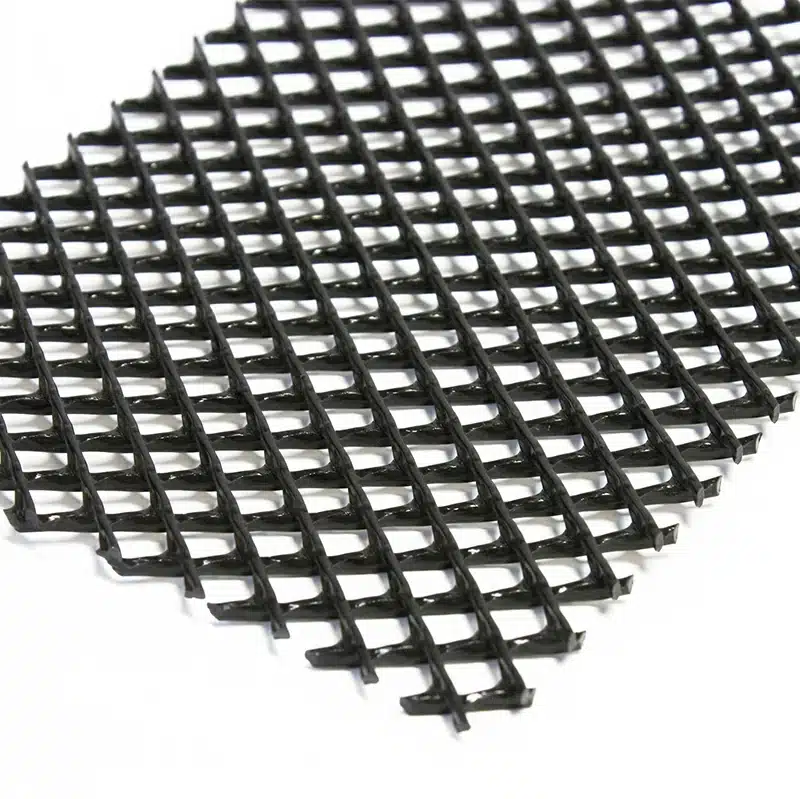
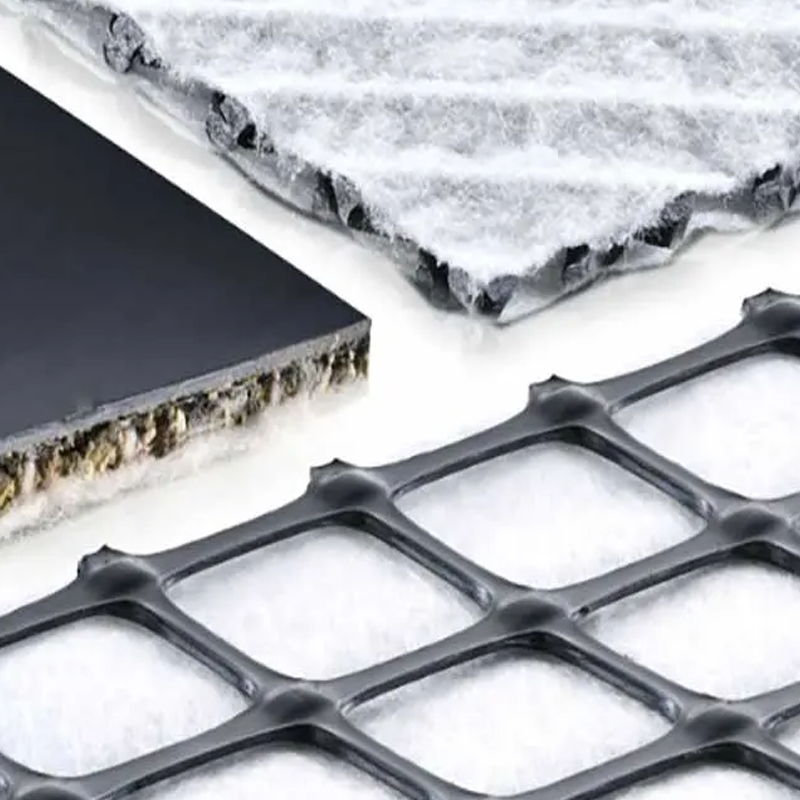
- Drainage Geocomposites: Combine geotextile filter layers with geonets or structured drainage cores. They integrate filtration and in-plane drainage, making them suitable for landfills, retaining walls, and underground structures.
The appropriate product depends on hydraulic capacity, soil compatibility, mechanical loads, and available construction space. Buyers comparing drainage fiber material types for engineering projects should evaluate technical specifications rather than relying on fabric weight alone.
Where Is Drainage Fiber Material Commonly Used?
Drainage fabrics provide filtration, separation, and water management functions across transportation, construction, landscaping, and environmental engineering projects.
In road and railway construction, geotextiles separate subgrade soil from aggregate layers, helping prevent material mixing and maintain drainage performance.
For retaining walls and foundations, permeable fabrics are installed around drainage aggregate or perforated pipes. They help retain surrounding soil while allowing collected water to enter the drainage system, contributing to the management of hydrostatic pressure.
In landscaping and French drain systems, nonwoven geotextiles are commonly installed around gravel-filled trenches. Proper filtration helps limit sediment accumulation and maintain drainage efficiency.
In landfills and environmental projects, geotextiles provide filtration and protection and may be combined with drainage cores to form geocomposites.
For these applications, drainage fiber material for underground and landscape drainage should be evaluated according to expected water flow, soil conditions, and long-term performance requirements.
How to Choose the Right Drainage Fiber Material?
Selecting suitable drainage fabric requires balancing hydraulic performance, mechanical strength, and filtration compatibility. Fabric thickness and weight alone cannot determine whether a product meets project requirements.
Important technical properties include:
- Permittivity: Indicates through-thickness water flow performance under specified conditions.
- Apparent Opening Size (AOS): Helps assess soil retention and filtration compatibility.
- Tensile Strength: Measures resistance to tensile forces during installation and service.
- Puncture Resistance: Evaluates resistance to localized mechanical damage.
- Material Composition: Influences chemical compatibility and durability.
Relevant test methods include ASTM D4491 for water permeability characteristics, ASTM D4751 for apparent opening size, and ASTM D6241 for static puncture strength.
Nonwoven geotextiles are frequently selected for filtration applications, while certain woven products offer additional tensile performance. Drainage geocomposites may be preferable where significant in-plane flow capacity is required.
Before procurement, buyers should provide soil conditions, required specifications, project dimensions, installation requirements, and estimated quantities to support accurate product selection and quotations.
Drainage fiber material plays an important role in filtration, separation, and subsurface water management systems. Nonwoven geotextiles, woven filtration fabrics, and drainage geocomposites offer different performance characteristics for roads, foundations, landscaping, and environmental projects.
Selecting appropriate materials requires evaluating permeability, soil retention, mechanical properties, and long-term service conditions.
Geofantex manufactures and supplies geotextiles and drainage geocomposites for civil engineering applications. Contact our team with your technical specifications and order requirements to receive product recommendations and a commercial quotation.
Get Free Sample
We’ll respond as soon as possible(within 12 hours)