


+86-159 9860 6917
info@geofantex.com
geofantex@gmail.com
+86-400-8266163-44899
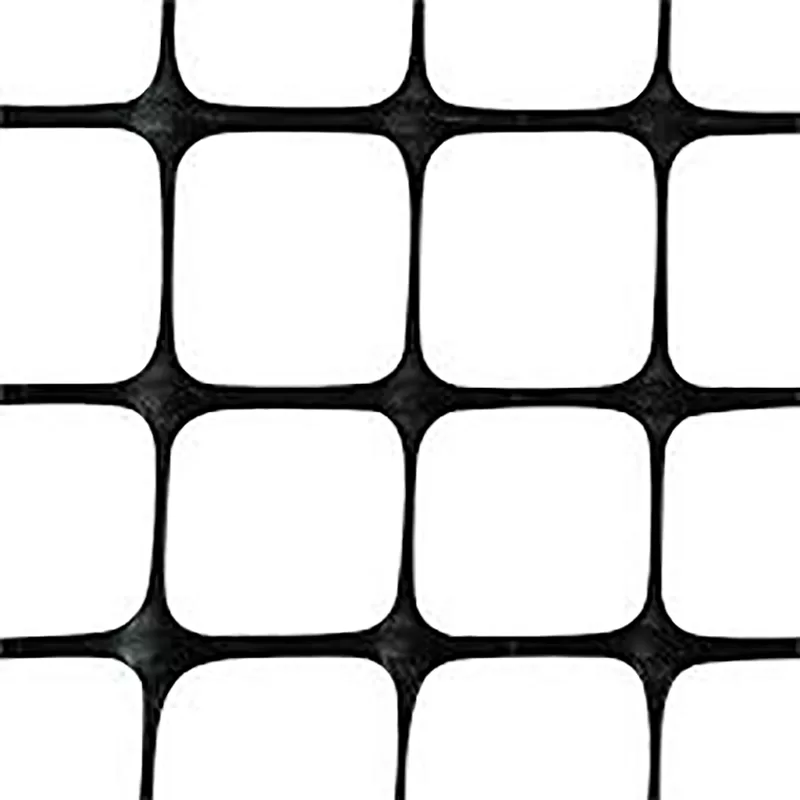
Modified Geogrid for Slope Erosion Control is increasingly specified by engineers, contractors, and project owners seeking reliable solutions for slope stabilization and erosion prevention. Whether for highway embankments, landfill slopes, or infrastructure projects, modified geogrids provide soil reinforcement, improve long-term stability, and help reduce maintenance requirements throughout the service life of the structure.
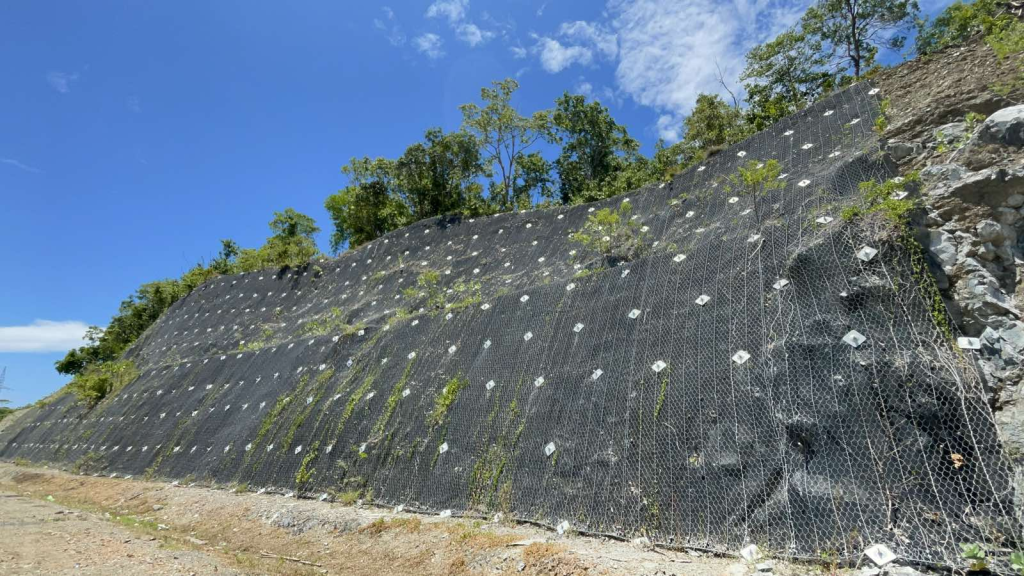
What Is Modified Geogrid for Slope Erosion Control?
A slope erosion control system is designed to strengthen soil structures while reducing surface erosion caused by rainfall, runoff, and environmental exposure. Modern solutions often combine reinforcement and erosion protection functions to improve overall slope performance.
These systems are widely used in transportation, environmental, and civil engineering projects where slope protection is essential. By creating a reinforced soil mass, modified geogrids help maintain slope geometry and prevent soil displacement under both static and dynamic loading conditions.
For engineers evaluating reinforcement options, Modified Geogrid for Slope Erosion Control solutions for highway embankments can provide an effective balance between structural performance and environmental sustainability.
How Does Modified Geogrid for Slope Erosion Control Improve Slope Performance?
These systems improve slope performance through several important mechanisms.
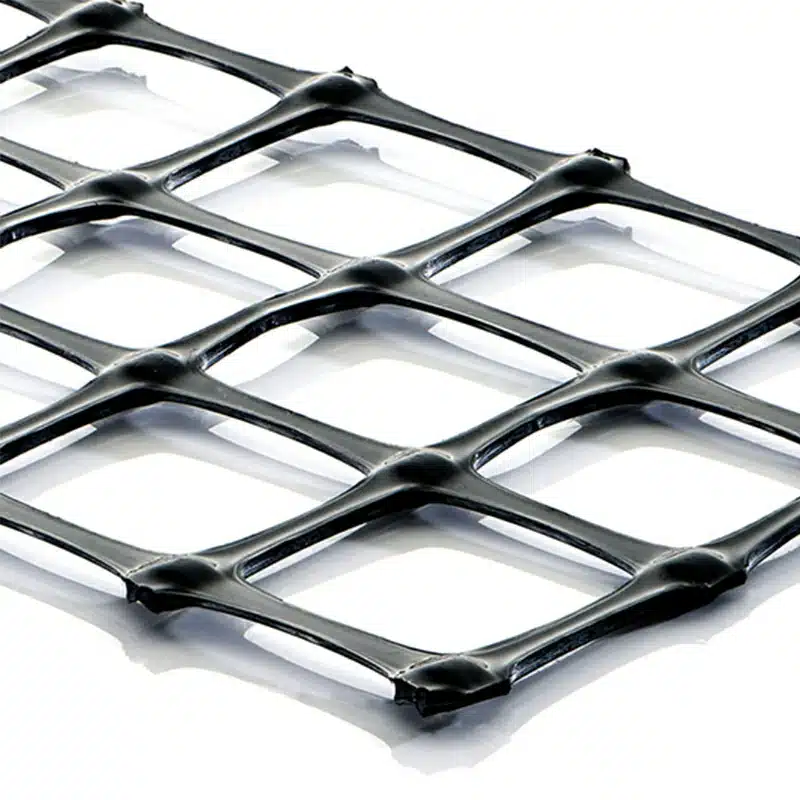
First, the geogrid delivers tensile reinforcement that increases the shear strength of the soil. This reinforcement distributes loads more evenly and reduces the risk of slope failure. Second, the grid structure confines soil particles, limiting lateral movement and improving overall stability.
In addition, modified geogrids help control erosion by reducing runoff velocity and retaining topsoil. When vegetation is established on the reinforced slope, plant roots further strengthen the soil and create a natural erosion barrier.
According to the Federal Highway Administration (FHWA), reinforced soil systems using geosynthetics can significantly improve slope performance while reducing dependence on traditional concrete retaining structures. This makes geogrid-reinforced slopes a preferred choice for many infrastructure projects worldwide.
Organizations seeking advanced Modified Geogrid for Slope Erosion Control technology often prioritize solutions that combine reinforcement, drainage, and vegetation support in a single engineered system.
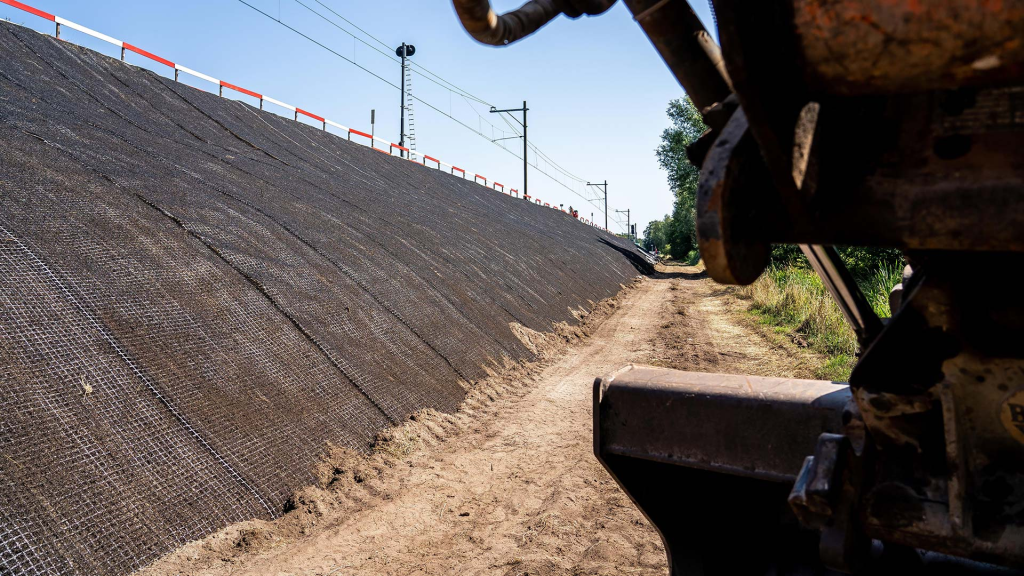
What Are the Benefits of Using These Systems?
The growing popularity of reinforced slope protection solutions is driven by several important advantages.
One major benefit is enhanced slope stability. Reinforced soil structures can withstand higher loads and more challenging environmental conditions than unreinforced slopes. Another advantage is reduced construction cost, as geogrid systems often require less excavation and fewer structural materials than conventional retaining walls.
Environmental performance is equally important. Modified geogrids support vegetation growth, helping projects meet sustainability objectives while maintaining an attractive natural appearance.
Industry statistics highlight the increasing adoption of geosynthetic solutions:
- The global geosynthetics market was valued at approximately USD 15.1 billion in 2023 and is projected to exceed USD 24 billion by 2030. Source: Grand View Research.
- Transportation infrastructure accounts for more than 35% of geosynthetics applications worldwide. Source: MarketsandMarkets.
- Geogrid-reinforced slopes can reduce construction costs by approximately 20%–50% compared with conventional retaining wall systems. Source: FHWA.
These figures demonstrate why geosynthetic reinforcement technologies continue to gain acceptance across infrastructure and environmental sectors.
What Should Engineers Consider When Selecting a Modified Geogrid?
Successful slope protection begins with a detailed evaluation of site conditions. Engineers should carefully assess soil properties, slope geometry, groundwater conditions, and anticipated loading requirements.
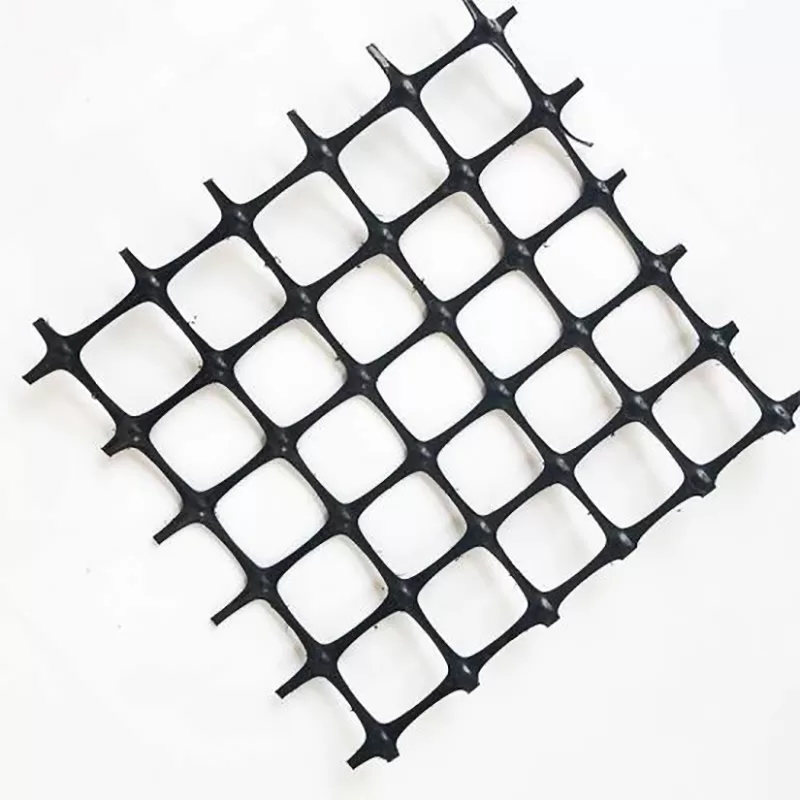
Engineers should evaluate geogrid tensile strength, creep resistance, junction efficiency, and long-term durability. The selected product must also be compatible with local environmental conditions, including rainfall intensity, UV exposure, and potential chemical interactions.
For landfill applications, additional attention should be given to slope angles, cover system stability, and drainage performance. Many project owners choose Modified Geogrid for Slope Erosion Control in landfill slope reinforcement to improve long-term safety and reduce maintenance costs.
Modified Geogrid for Slope Erosion Control has become an essential geosynthetic solution for modern slope stabilization projects. By combining soil reinforcement, erosion control, and vegetation support, it delivers long-term structural performance while reducing environmental impact and lifecycle costs. From highway embankments to landfill containment systems, modified geogrids help engineers create safer, more sustainable, and more economical slope protection solutions. For project-specific recommendations, material specifications, or pricing information, contact our technical team for a customized quotation.
Get Free Sample
We’ll respond as soon as possible(within 12 hours)