

+86-159 9860 6917
info@geofantex.com
geofantex@gmail.com
+86-400-8266163-44899
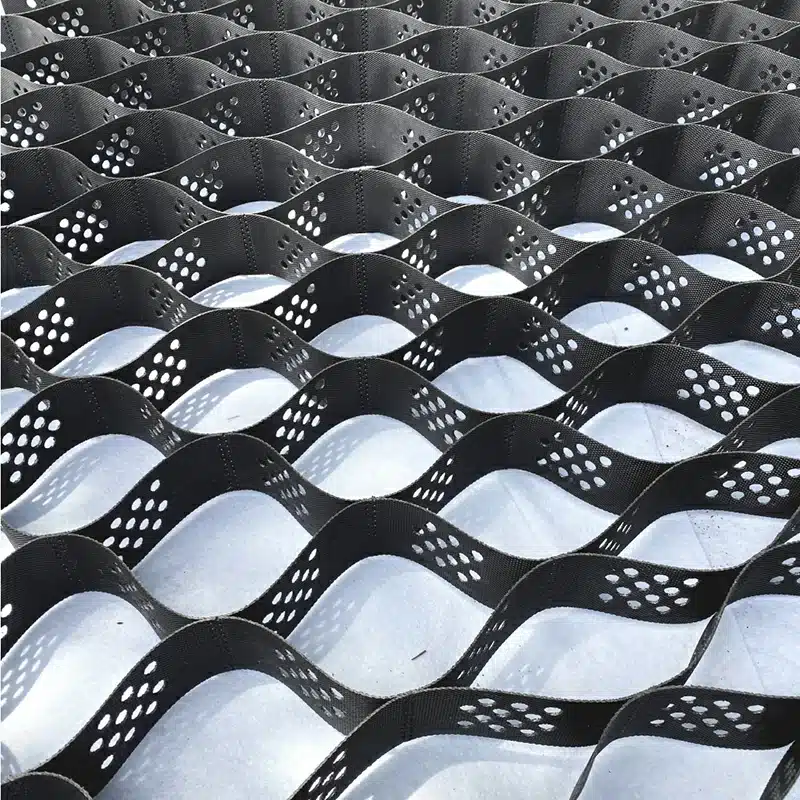
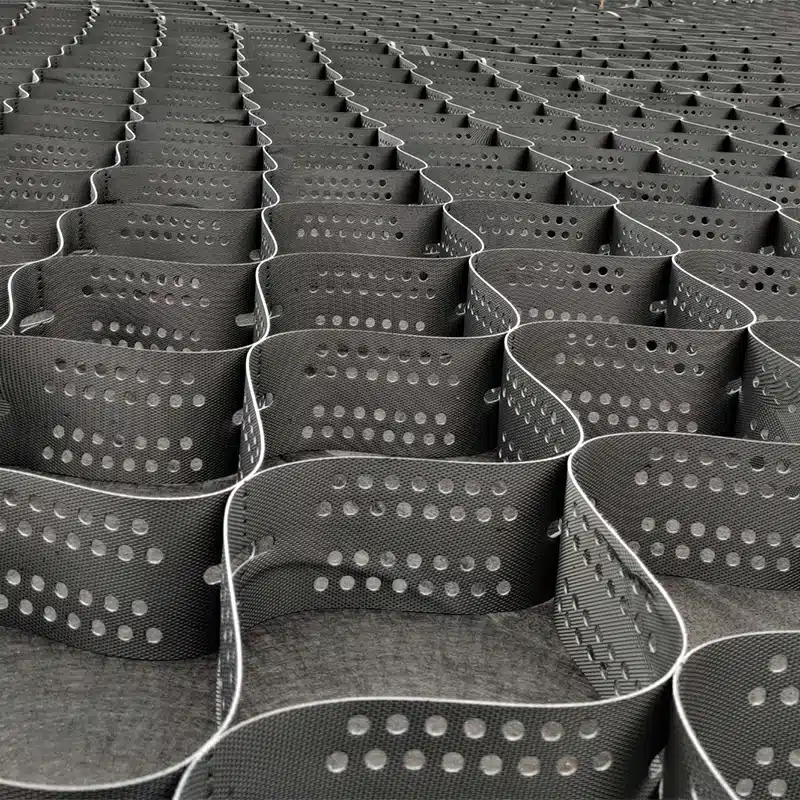
Geocell material plays a critical role in modern infrastructure projects where buyers need durable and cost-effective soil stabilization solutions. Whether for roads, embankments, or erosion control systems, procurement teams and engineers increasingly seek geosynthetic products that improve performance while reducing construction costs and material consumption.
How Geocell Material Improves Road Construction Performance
Road construction projects often face challenges such as weak subgrades, uneven settlement, and heavy traffic loads. Ground reinforcement systems help spread loads more evenly and strengthen aggregate layers. As a result, roads become more stable and less prone to rutting.
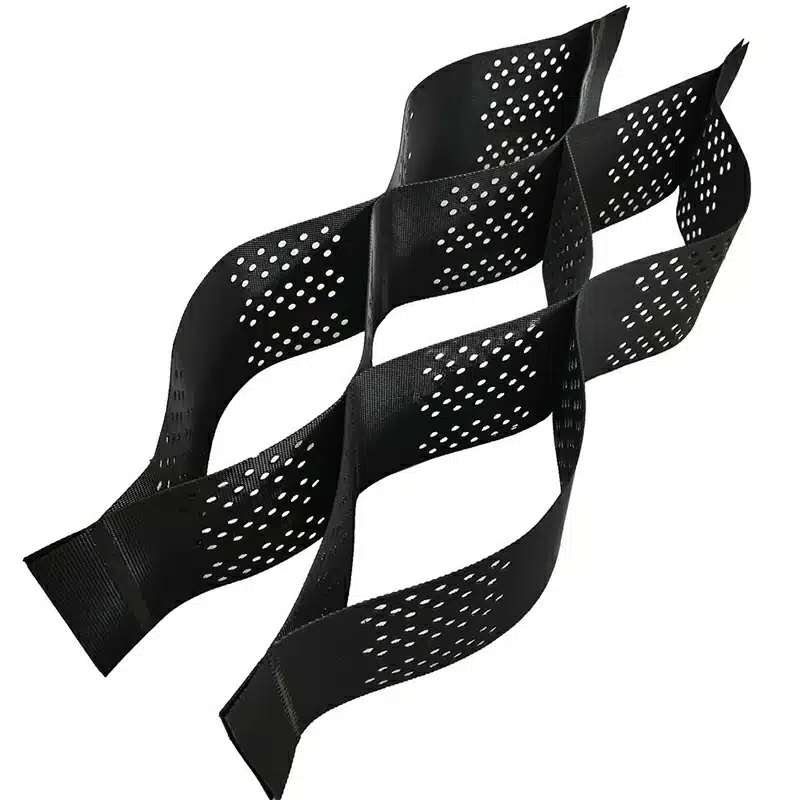
Contractors selecting geocell systems for transportation projects often prioritize weld strength, material thickness, and long-term durability. By confining fill materials within cellular structures, the system creates a reinforced platform that minimizes deformation and lowers maintenance requirements.
For project engineers seeking more information, geocell material applications for roadway reinforcement can help explain performance benefits across different infrastructure scenarios.
Why Geocell Material Is Effective for Slope Protection
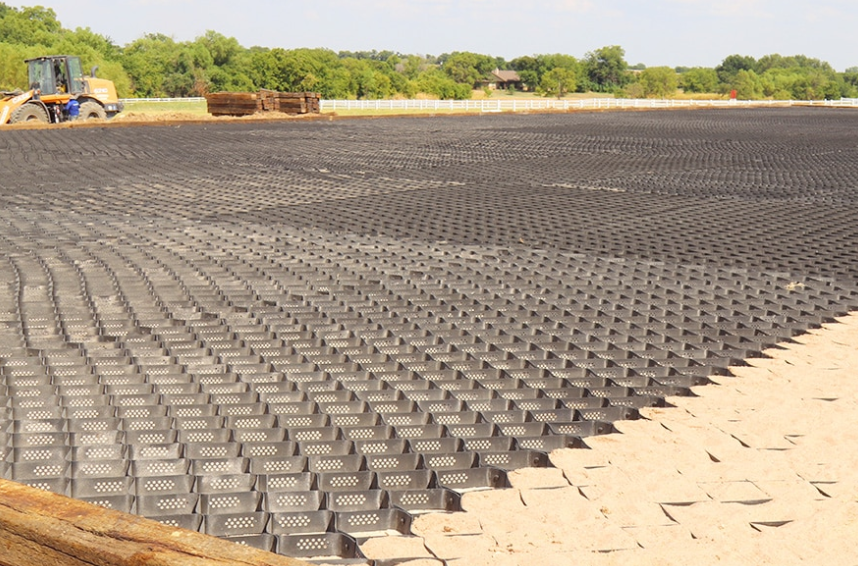
Slope instability often results from erosion, water runoff, or poor soil conditions. Ground support systems help stabilize these areas by improving soil confinement and reducing movement.
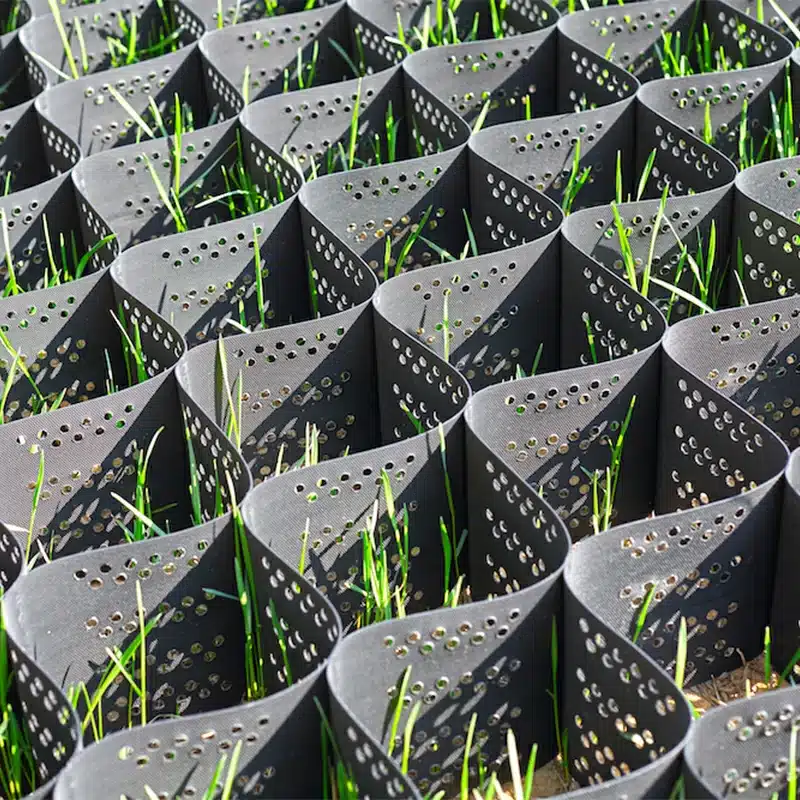
Compared with conventional concrete structures, geocells can adapt more easily to uneven terrain and natural contours. This flexibility allows better integration with ecological restoration projects and long-term erosion management strategies.
Many civil engineers use geocell systems in highway slopes, riverbanks, railway embankments, and landfill projects because they improve structural stability while reducing environmental impact.
Professionals researching geocell material solutions for slope protection projects often focus on performance under rainfall exposure and long-term environmental conditions.
Key Factors When Selecting Ground Stabilization Solutions
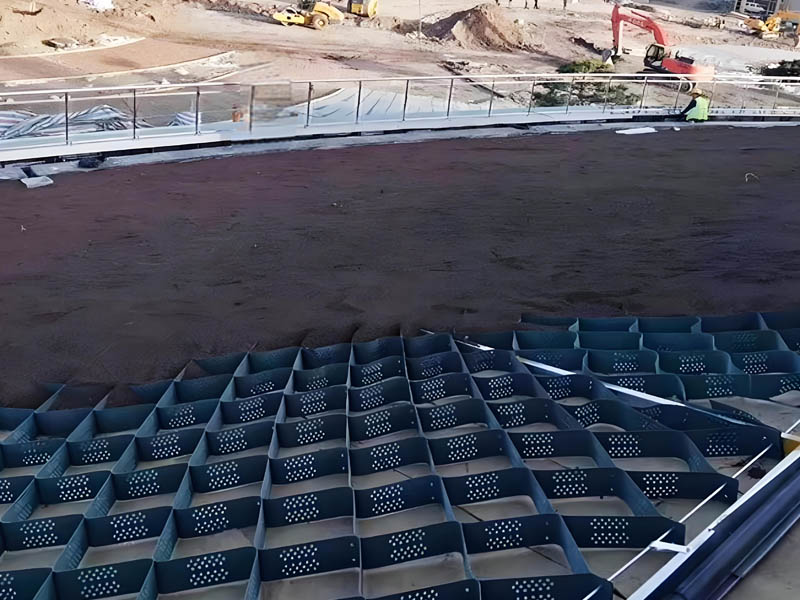
Project requirements vary widely. Therefore, selecting the right solution requires careful evaluation of site conditions and engineering goals.
- Cell depth and structure dimensions
- Material tensile properties
- Seam and weld strength
- UV resistance capability
- Environmental exposure conditions
- Design load requirements
For heavy-load applications such as mining roads and industrial platforms, deeper cells and stronger structures may provide superior support. For erosion control projects, flexibility and drainage performance often become more important selection criteria.
Buyers evaluating advanced geocell material systems for infrastructure projects should also consider installation efficiency and lifecycle cost savings rather than focusing solely on initial material pricing.
Long-Term Benefits for Infrastructure Projects
Today, infrastructure projects focus increasingly on sustainability and cost efficiency. Modern ground improvement methods can reduce aggregate use, minimize excavation, and optimize locally available materials.
Because geocells extend service life and reduce maintenance frequency, they provide long-term economic value for transportation and geotechnical projects. Infrastructure owners often view geocell systems as a practical solution for balancing engineering performance with budget efficiency.
As global construction standards continue evolving, geocell material remains an important geosynthetic technology for improving ground stability and supporting resilient infrastructure development.
Get Free Sample
We’ll respond as soon as possible(within 12 hours)