

+86-159 9860 6917
info@geofantex.com
geofantex@gmail.com
+86-400-8266163-44899
Geogrid fabric for roads helps engineers, contractors, and project buyers improve aggregate confinement, stabilize weak subgrades, and support load distribution in pavement systems. When selecting a product, buyers should consider traffic loads, soil conditions, aggregate size, aperture geometry, tensile properties, and installation requirements. A correctly specified geogrid can improve construction efficiency and support more stable base and subbase performance.
How Geogrid Fabric for Roads Works
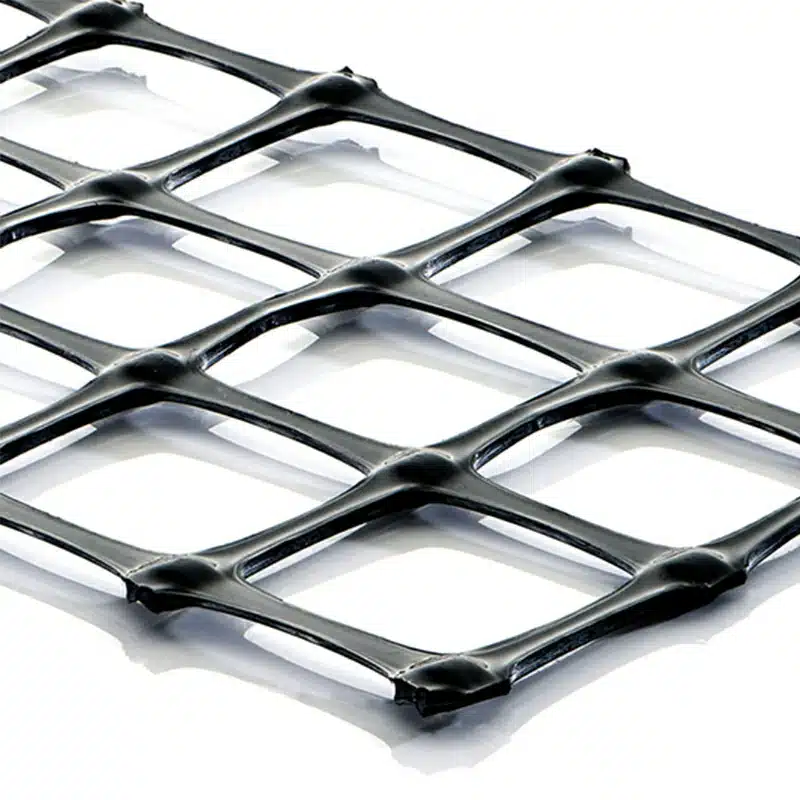
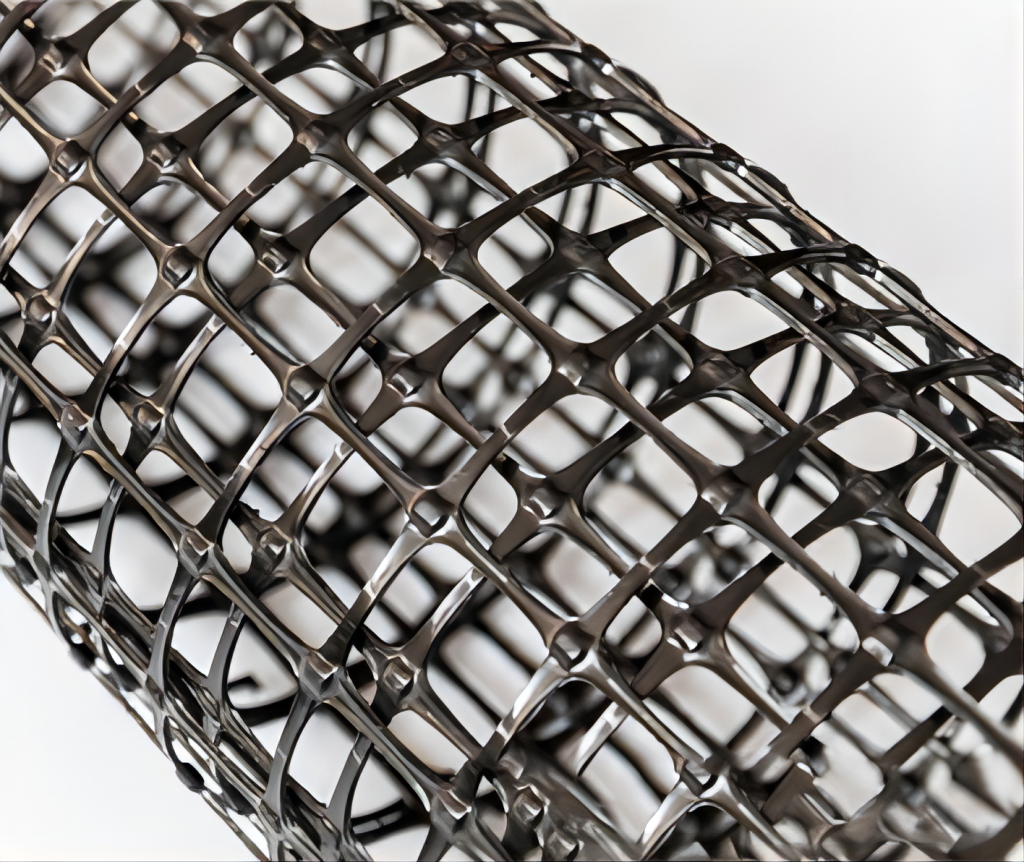
Geogrids are polymeric geosynthetics with an open-grid structure designed mainly for reinforcement and stabilization. In road construction, they are commonly installed within or beneath aggregate layers.
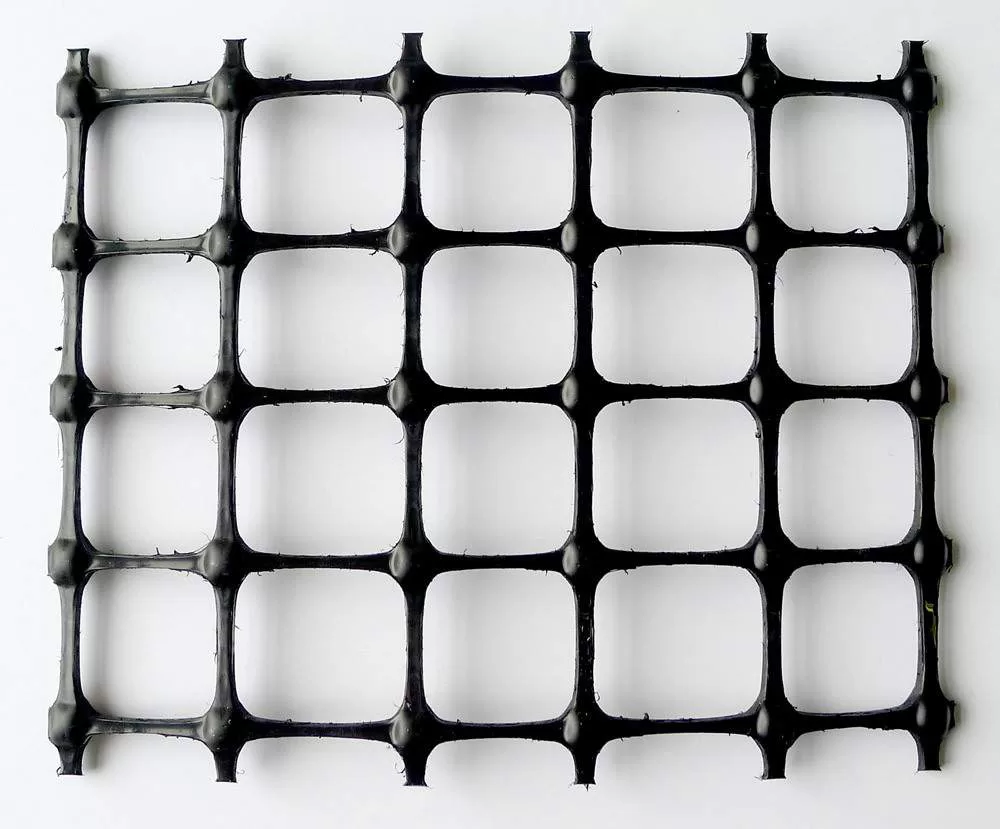
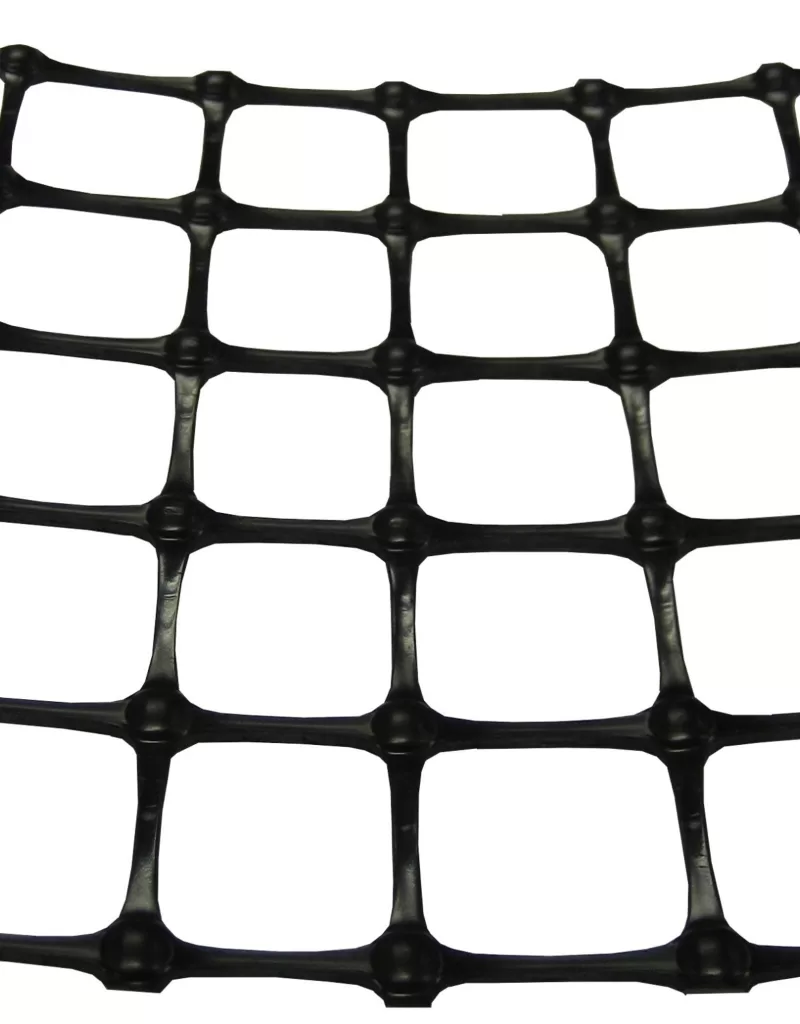
When aggregate particles interact with the geogrid apertures, the grid helps restrict lateral movement. This confinement creates a more stable layer and improves load distribution across the road structure.
In suitable projects, geogrid fabric for roads with weak subgrades can help reduce rutting and aggregate displacement. However, performance depends on subgrade strength, aggregate characteristics, traffic loading, geogrid properties, and installation quality.
Applications of Geogrid Fabric for Roads
Geogrids are used in highways, rural roads, industrial roads, haul roads, temporary access routes, parking areas, and other trafficked surfaces.
On weak subgrades, geogrid can help create a more stable working platform for aggregate placement and construction equipment. On unpaved roads, it can also help control rutting and reduce lateral aggregate movement.
For paved roads, engineers should determine the geogrid position according to the pavement design. The reinforcement layer must match the expected loads, base thickness, drainage conditions, and long-term performance requirements.
Highway Project SEO ALT Text
Geogrid fabric for roads installed beneath a highway aggregate base to improve load distribution and subgrade stability
Biaxial and Uniaxial Geogrid Selection
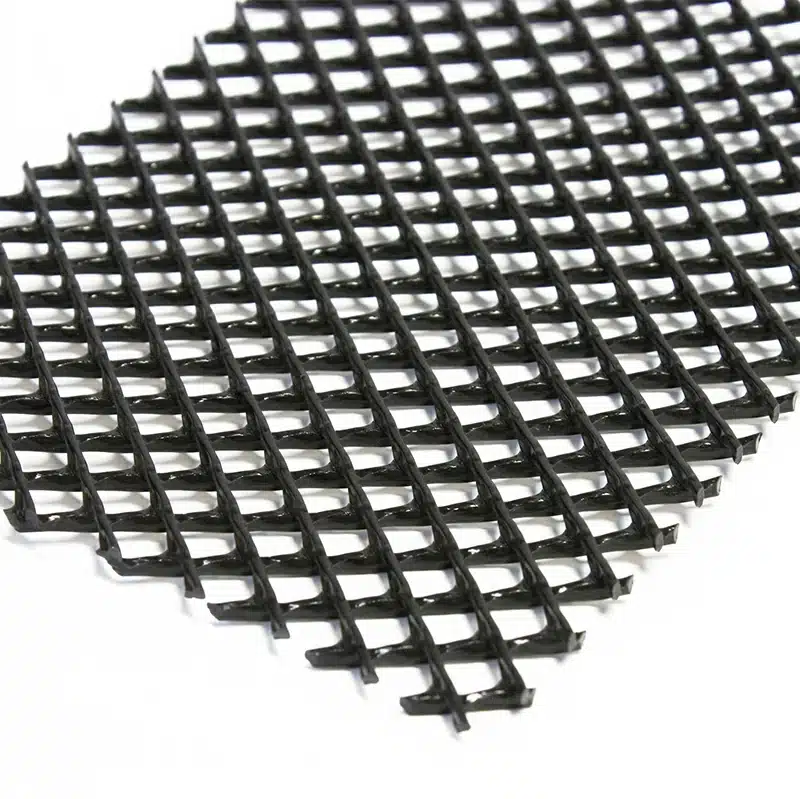
Biaxial geogrids provide tensile properties in two principal directions and are commonly used for base stabilization. Their aperture structure allows aggregate particles to interlock with the grid and helps improve lateral confinement.
Uniaxial geogrids provide higher tensile performance primarily in one direction. They are more commonly used in retaining walls, steep slopes, reinforced embankments, and other applications requiring directional reinforcement.
For road projects, engineers should select products according to the intended reinforcement mechanism rather than relying solely on tensile strength.
Where multidirectional aggregate confinement is required, biaxial geogrid fabric for roads and highways may be suitable, depending on the pavement design and site conditions.
Geogrid vs. Geotextile in Road Construction
Geogrids and geotextiles perform different functions.
Geogrids mainly provide reinforcement and stabilization. Their open structure allows aggregate to interact with the grid and limits lateral movement.
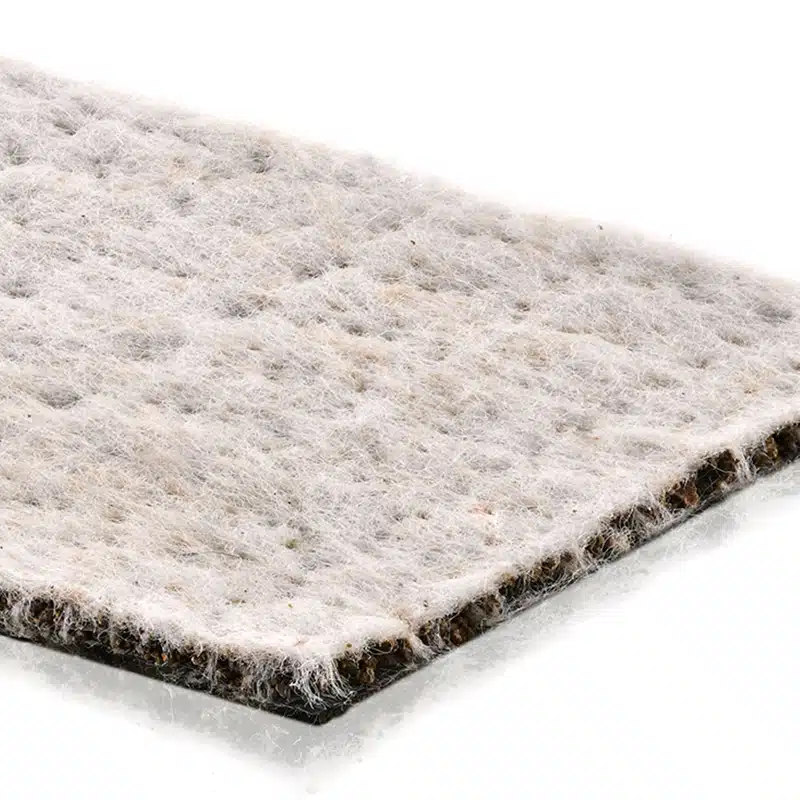
Geotextiles are commonly used for separation, filtration, drainage, and protection. In road construction, they can help prevent weak subgrade soil from mixing with the aggregate layer.
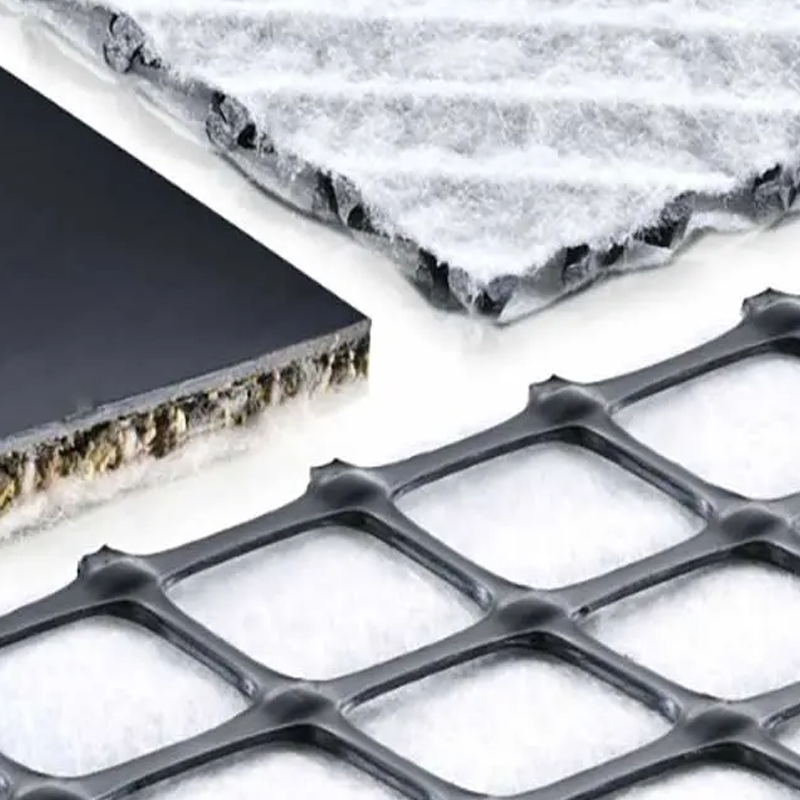
Some projects use both products. The geotextile provides separation and filtration, while the geogrid provides mechanical stabilization.
Road Project SEO ALT Text
Geogrid fabric for roads placed over weak subgrade during road construction to stabilize aggregate and reduce rutting
How to Install Geogrid Fabric for Roads
Installation usually begins with preparing the subgrade and removing debris that could damage the grid. Workers then roll out the material over the prepared surface in the required orientation.
Adjacent rolls should be overlapped or connected according to project specifications and the manufacturer’s installation guidelines. The geogrid should remain relatively flat before aggregate placement.
Aggregate should then be placed carefully over the material. Construction equipment should follow the specified installation procedure to minimize displacement or damage.
Proper installation of geogrid fabric for roads during base reinforcement helps maintain effective aggregate interlock and consistent stabilization performance.
Key Product Selection Criteria
Buyers and engineers should evaluate more than tensile strength when selecting a road geogrid.
Important factors include:
- Subgrade strength
- Soil conditions
- Aggregate size and type
- Traffic loading
- Aperture dimensions
- Tensile properties
- Junction strength
- Roll dimensions
- Installation conditions
- Required service life
Project drawings, technical specifications, required quantities, and application details should also be provided during procurement.
Long-Term Road Performance
A properly designed geogrid system can improve aggregate stability and support reliable road performance, particularly where weak subgrades create construction challenges.
However, geogrid is only one part of the pavement system. Drainage, aggregate quality, subgrade preparation, pavement thickness, loading, and installation quality all affect long-term performance.
For contractors, engineers, and procurement teams, selecting geogrid fabric for roads based on project conditions helps ensure that the material matches the intended stabilization and reinforcement function.
Get Free Sample
We’ll respond as soon as possible(within 12 hours)