

+86-159 9860 6917
info@geofantex.com
geofantex@gmail.com
+86-400-8266163-44899
Proper geotextile installation is essential for ensuring reliable soil stabilization, separation, filtration, drainage, and reinforcement in civil engineering projects. Whether the application involves roads, railways, retaining walls, erosion control, or landfill construction, following correct installation procedures helps maximize service life while reducing maintenance costs and project risks.
Why Proper Geotextile Installation Matters
A well-executed geotextile installation ensures the material performs according to the project design. Incorrect installation may lead to wrinkles, punctures, inadequate overlaps, drainage failure, or reduced reinforcement capacity. By following industry best practices, contractors and engineers can improve construction quality and long-term infrastructure performance.
For additional technical guidance, contractors can review our geotextile installation guidelines for civil engineering projects before beginning site preparation.
Step 1: Site Preparation Before Geotextile Installation
Every successful geotextile installation begins with proper site preparation.
Before placing the fabric:
- Remove sharp stones, roots, and construction debris.
- Grade and level the subgrade surface.
- Repair soft or unstable areas.
- Verify that the selected geotextile matches the engineering specifications for strength, permeability, and durability.
A clean and stable foundation minimizes damage during installation and improves overall performance.

Step 2: Transportation, Storage, and Geotextile Laying
Proper handling is just as important as installation.
Geotextile rolls should be transported carefully without dragging or dropping them. Store the rolls on clean, elevated surfaces away from standing water and prolonged UV exposure.
During installation:
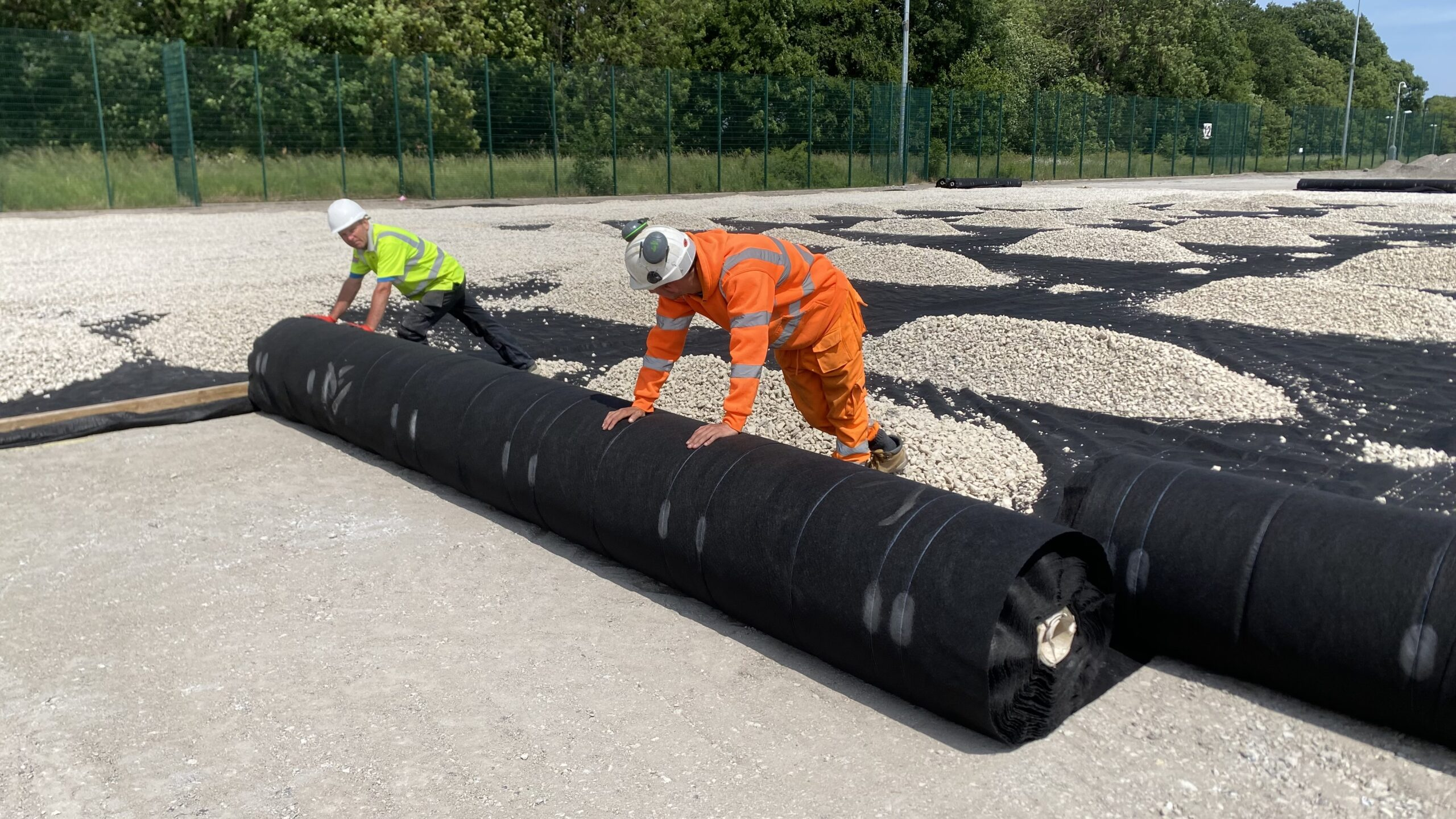
- Unroll the fabric smoothly.
- Keep the material flat without wrinkles.
- Maintain correct alignment with the project layout.
- Follow the specified overlap dimensions or seam requirements.
- Avoid excessive tension that may distort the fabric.
These practices help ensure uniform coverage and consistent engineering performance. Following the correct geotextile installation and laying procedures also helps maintain proper alignment, overlap, and material integrity throughout construction.
Step 3: Backfilling and Covering
After the fabric has been placed, backfilling should begin as soon as possible.
Approved materials such as gravel, crushed stone, sand, or suitable soil should be placed evenly over the geotextile in controlled layers. Heavy equipment should not travel directly on exposed fabric unless permitted by project specifications.
Immediate covering provides several benefits:
- Protects the material from UV degradation.
- Prevents punctures and mechanical damage.
- Maintains drainage and filtration performance.
- Preserves reinforcement efficiency throughout the structure’s service life.
Proper compaction should follow engineering requirements while avoiding excessive pressure directly on the geotextile.

Step 4: Quality Control and Inspection
Quality assurance is a critical part of every geotextile installation project.
Inspect the installed material for:
- Tears or punctures
- Wrinkles or folds
- Correct overlaps and seam integrity
- Proper alignment
- Compliance with project specifications
Where required, laboratory or field testing can verify tensile strength, permeability, and other material properties before project completion.
Maintenance and Common Installation Mistakes
Even after construction, periodic inspections help ensure continued drainage efficiency and structural stability.
Common mistakes to avoid include:
- Installing on uneven or contaminated subgrades
- Insufficient overlap between adjacent sheets
- Delaying backfill after installation
- Using unsuitable backfill materials
- Applying excessive compaction directly on exposed fabric
Routine monitoring enables early detection of potential issues and extends the installation’s lifespan. Project teams can also follow our geotextile installation best practices for long-term performance to reduce common construction errors and improve system durability.
Successful geotextile installation depends on careful planning, proper material handling, accurate placement, controlled backfilling, and thorough quality inspection. Following these best practices ensures that geotextiles deliver reliable separation, filtration, drainage, and reinforcement throughout the life of the project. Whether used in transportation infrastructure, erosion control, retaining structures, or environmental engineering, correct installation is the foundation for long-term performance and reduced maintenance costs.
Get Free Sample
We’ll respond as soon as possible(within 12 hours)