




+86-159 9860 6917
info@geofantex.com
geofantex@gmail.com
+86-400-8266163-44899
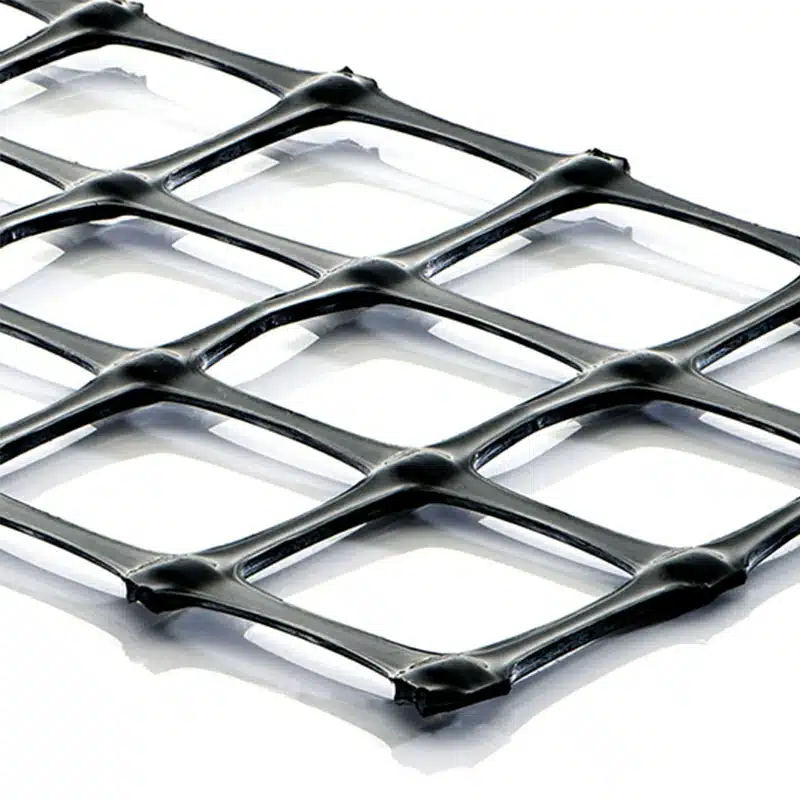
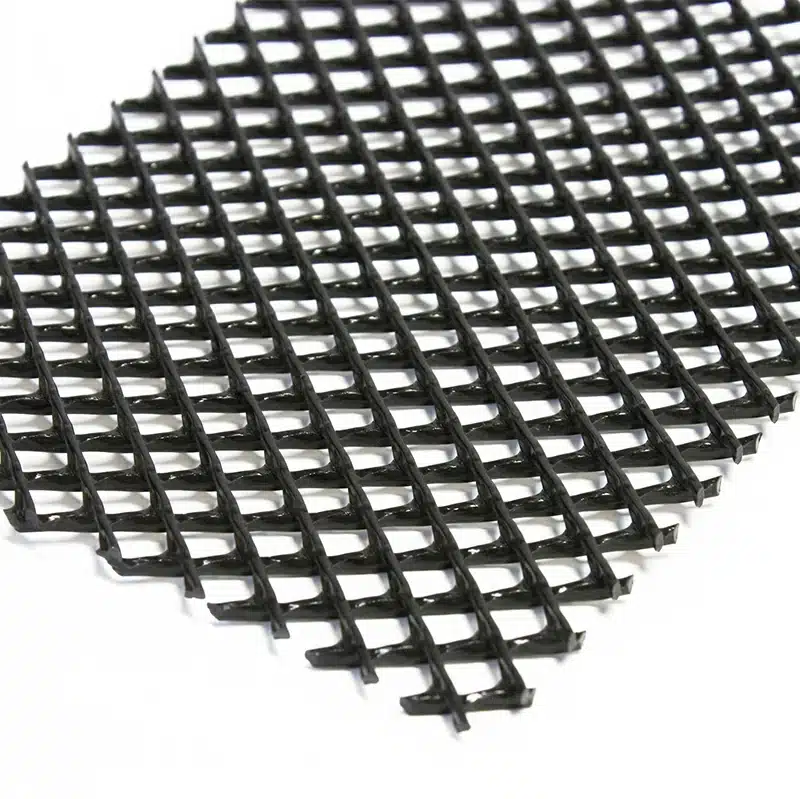
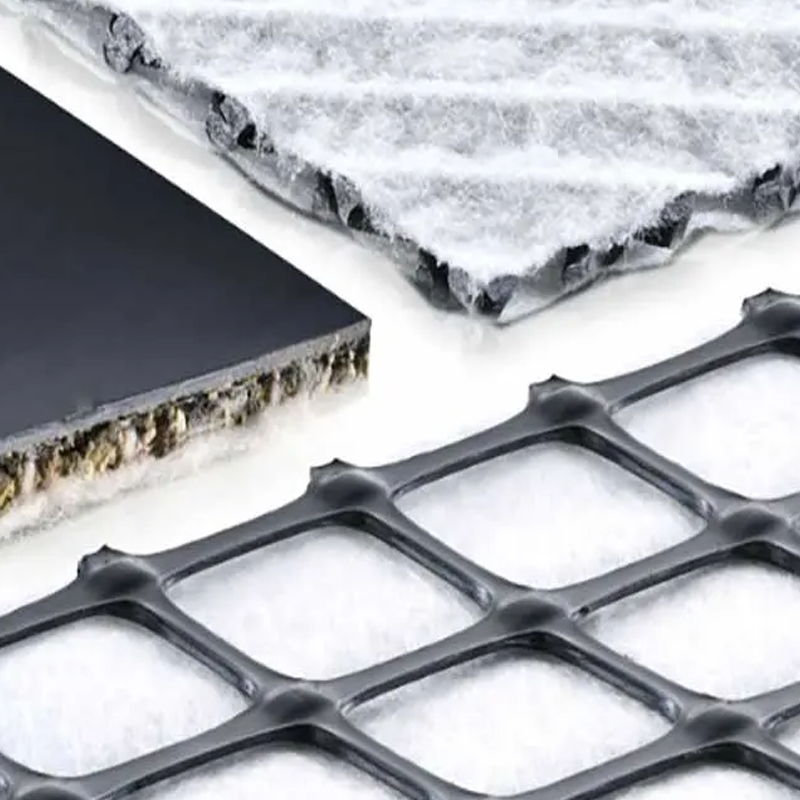
Geogrid for road construction is widely used to improve subgrade stability, reinforce aggregate base layers, and reduce rutting under repeated traffic loads. Available in polypropylene (PP), polyester (PET), and fiberglass, geogrids provide reinforcement solutions for highways, access roads, and other pavement projects. Selecting the appropriate geogrid depends on soil conditions, tensile strength, aperture size, and project specifications. For contractors, engineers, and distributors, understanding these factors is essential when evaluating geogrid materials, comparing suppliers, and planning procurement for road construction projects.
What Is Geogrid for Road Construction Used For?
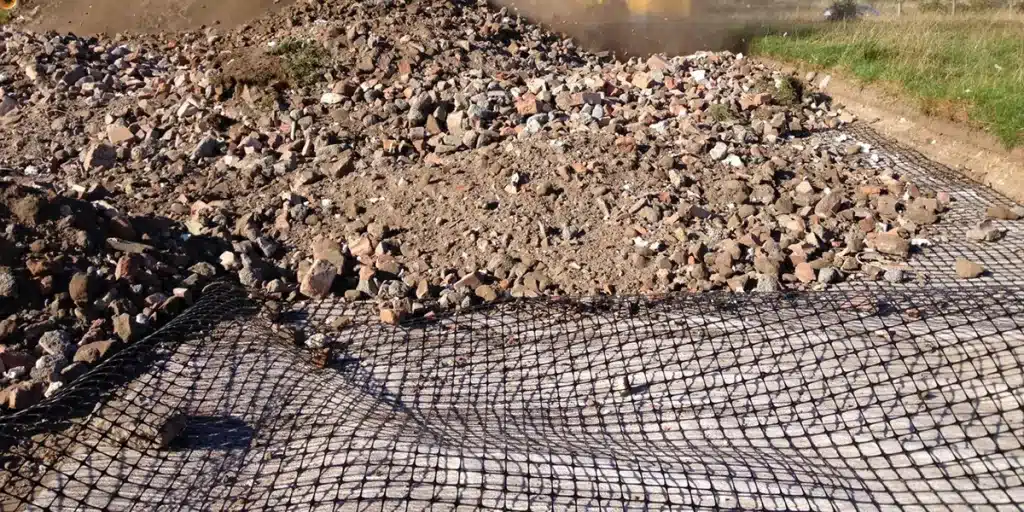
Geogrids play a pivotal role in road construction, acting as reinforcement materials essential to building a construction platform over weak subgrades to carry equipment and facilitate the construction of the pavement system without excessive deformations of the subgrade. These grid-like structures, usually composed of polymers or fiberglass, are strategically positioned within or below the pavement layers. They serve to distribute loads, minimize cracking, and significantly enhance the overall performance of the road. By effectively restraining the lateral movement of aggregates, geogrids notably diminish deformation, thus extending the lifespan of the road.
What Materials Are Commonly Used for Geogrid for Road Construction?
Polypropylene (PP) and polyester (PET) are the most prevalent materials used in geogrid manufacturing, along with polyvinyl alcohol, polyethylene, or polypropylene. Polypropylene geogrids offer high tensile strength and resistance to chemical and biological degradation. On the other hand, polyester geogrids excel in their capacity to handle heavy loads and provide exceptional dimensional stability, ensuring long-term performance in various road construction applications.
How Does Geogrid Reinforcement Improve Flexible Pavement Performance?
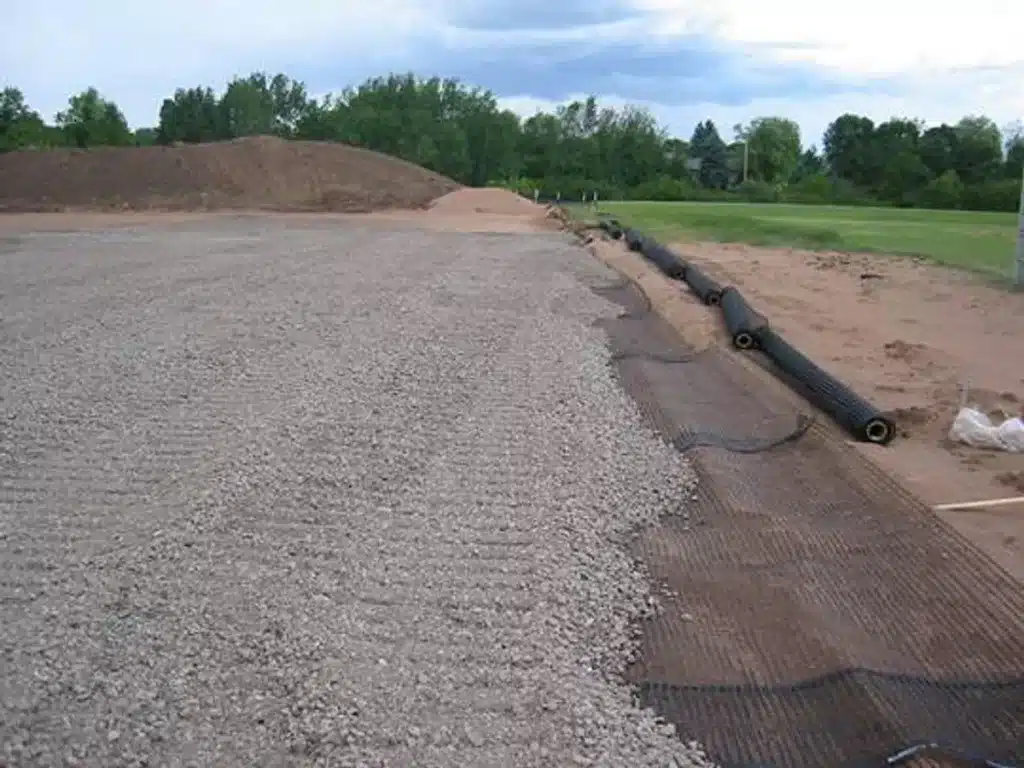
Geogrid reinforcement significantly enhances flexible pavements by distributing loads more uniformly across the layers, which helps to redistribute a load to a wider area of the subgrade layer, resulting in a smaller accumulated permanent deformation in the subgrade. This reinforcement minimizes reflective cracking, rutting, and deformation caused by heavy traffic or environmental factors. By improving load-bearing capacity and reducing strain, geogrids effectively mitigate pavement distress, leading to longer-lasting, more resilient roads.
How to Install Geogrid in Road Construction?
The placement of geogrids in road construction involves meticulous steps:
- Surface Preparation: Ensure the base surface is clean, compacted, and free from debris.
- Lay Geogrid: Unroll the geogrid material uniformly across the prepared surface, ensuring to roll it out and allow it to follow the natural contours of the ground, thereby avoiding wrinkles or folds.
- Anchoring: Secure the geogrid edges with proper anchoring techniques to prevent movement during subsequent pavement layers’ installation.
- Cover with Aggregate: Apply a layer of aggregate material above the geogrid to provide stability and support.
In conclusion, geogrids are indispensable reinforcements in road construction, enhancing pavement performance, longevity, and resilience against various stresses. With their diverse materials and proper installation, geogrids contribute significantly to the creation of durable and high-performing roadways that withstand the rigors of heavy traffic and environmental challenges.
Get Free Sample
We’ll respond as soon as possible(within 12 hours)