

+86-159 9860 6917
info@geofantex.com
geofantex@gmail.com
+86-400-8266163-44899
A geocell stream crossing provides a practical solution for stabilizing stream crossings, controlling erosion, and supporting vehicle loads. These cellular confinement systems help contractors, engineers, and infrastructure developers construct access routes across shallow waterways. Available in different cell heights and specifications, geocells can accommodate gravel, soil, or concrete infill, depending on site conditions. Typical applications include temporary access roads, rural infrastructure, agricultural routes, and environmentally sensitive areas.
What Is a Geocell Stream Crossing and Why Is It Used?
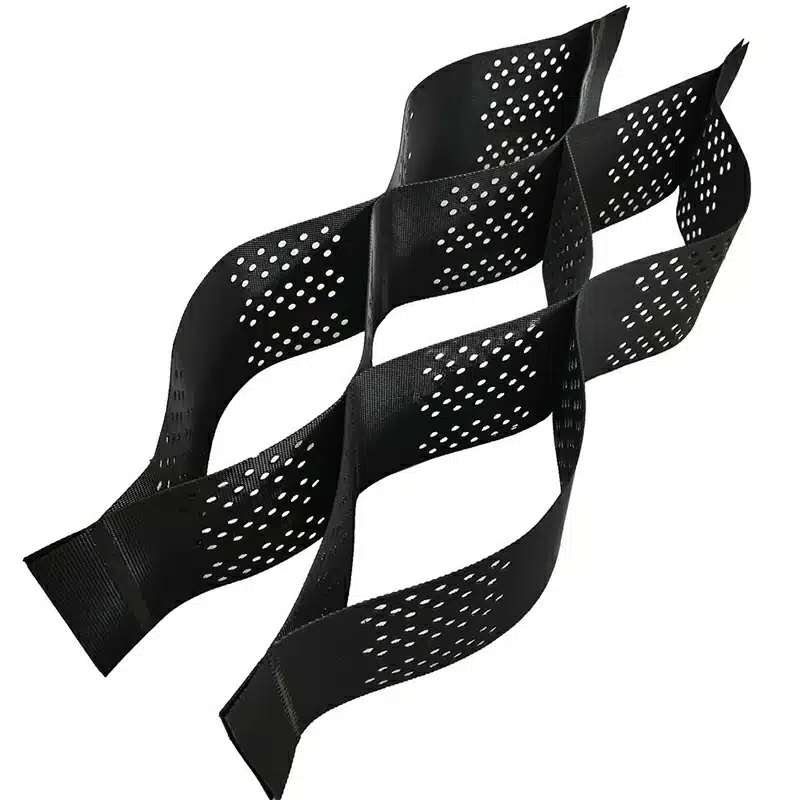
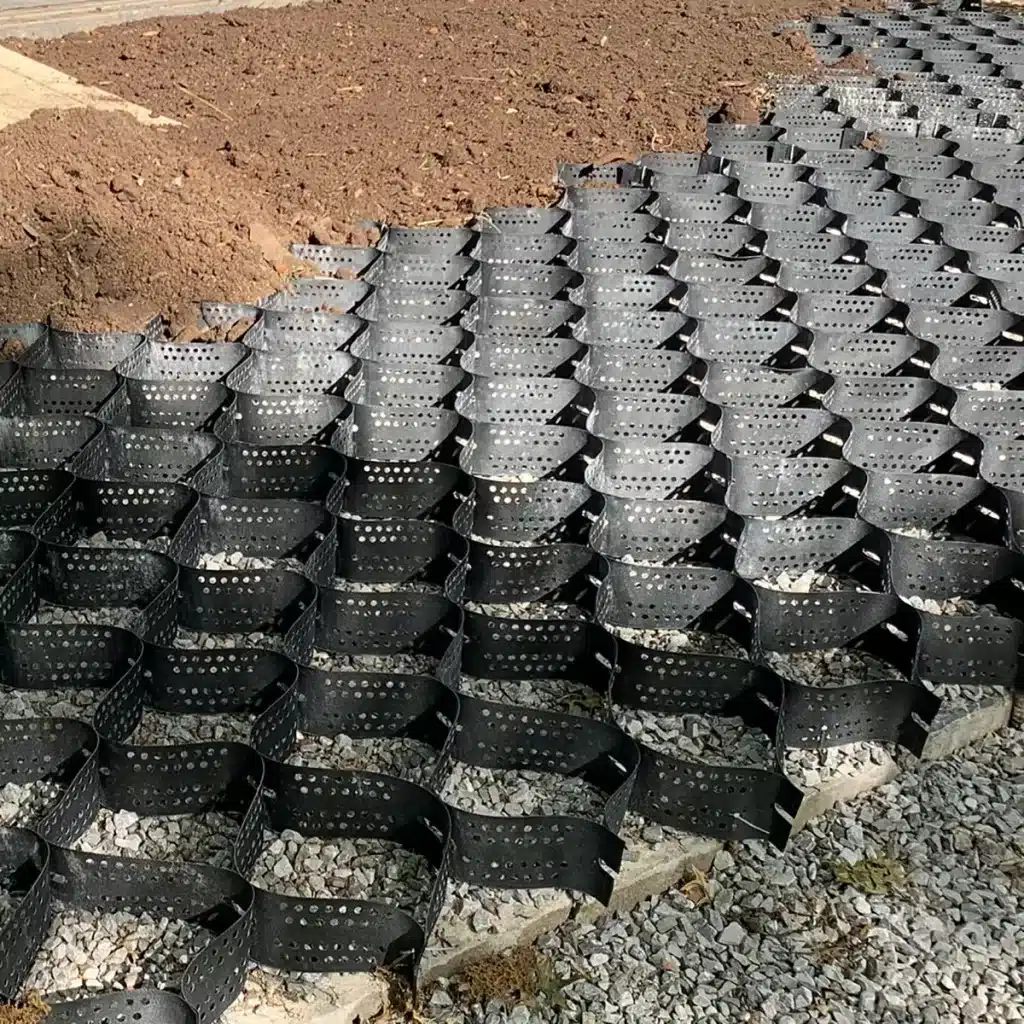
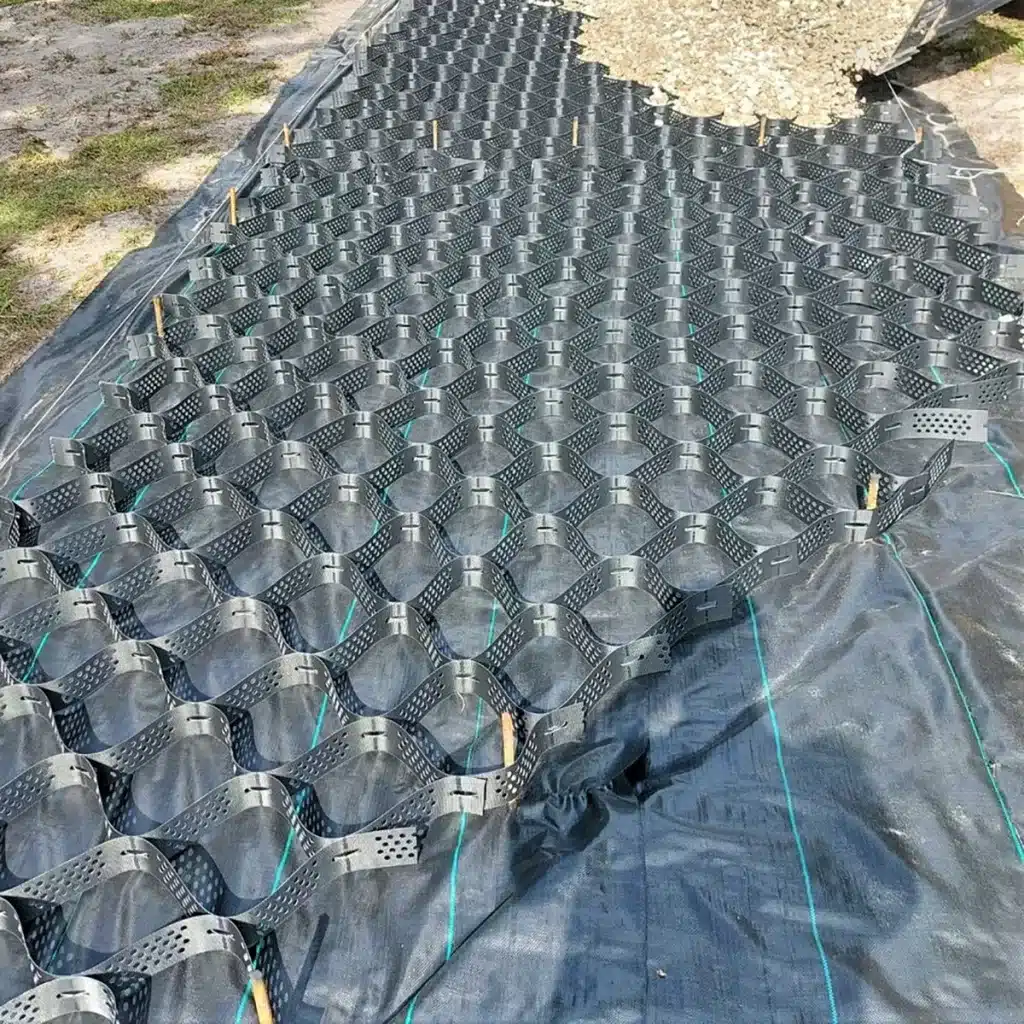
Geocells are three-dimensional honeycomb structures commonly manufactured from high-density polyethylene (HDPE). During installation, the panels are expanded over a prepared foundation and filled with suitable materials, such as gravel, soil, or concrete.
The cellular structure confines the infill, helping maintain surface stability under traffic loads. For stream crossings, this confinement can reduce aggregate displacement and support a more stable crossing surface. Proper geocell stream crossing design for ground stabilization helps maintain surface stability under traffic loads.
How Does a Geocell Stream Crossing Stabilize Weak Ground?
A geocell stream crossing stabilizes weak or saturated ground by confining infill within interconnected cells. This confinement limits lateral movement and helps distribute applied loads across the reinforced layer.
When vehicles or construction equipment cross the surface, the cellular structure provides lateral restraint to the infill, improving its resistance to deformation.
Performance depends on subgrade strength, cell geometry, infill properties, and the thickness of the supporting layers. Additional foundation reinforcement may be necessary where soil conditions are particularly weak.
Geocell Stream Crossing for Erosion Control
Using a geocell stream crossing for erosion control can help protect exposed soil against washout and displacement.
The confined infill creates a more stable surface in locations where flowing water and repeated traffic may accelerate erosion. Depending on hydraulic conditions, geocells can be combined with geotextiles, riprap, or other protective measures.
However, cellular confinement does not eliminate the risk of scour. Engineers must evaluate flow velocity, water depth, sediment transport, and potential erosion around the crossing.
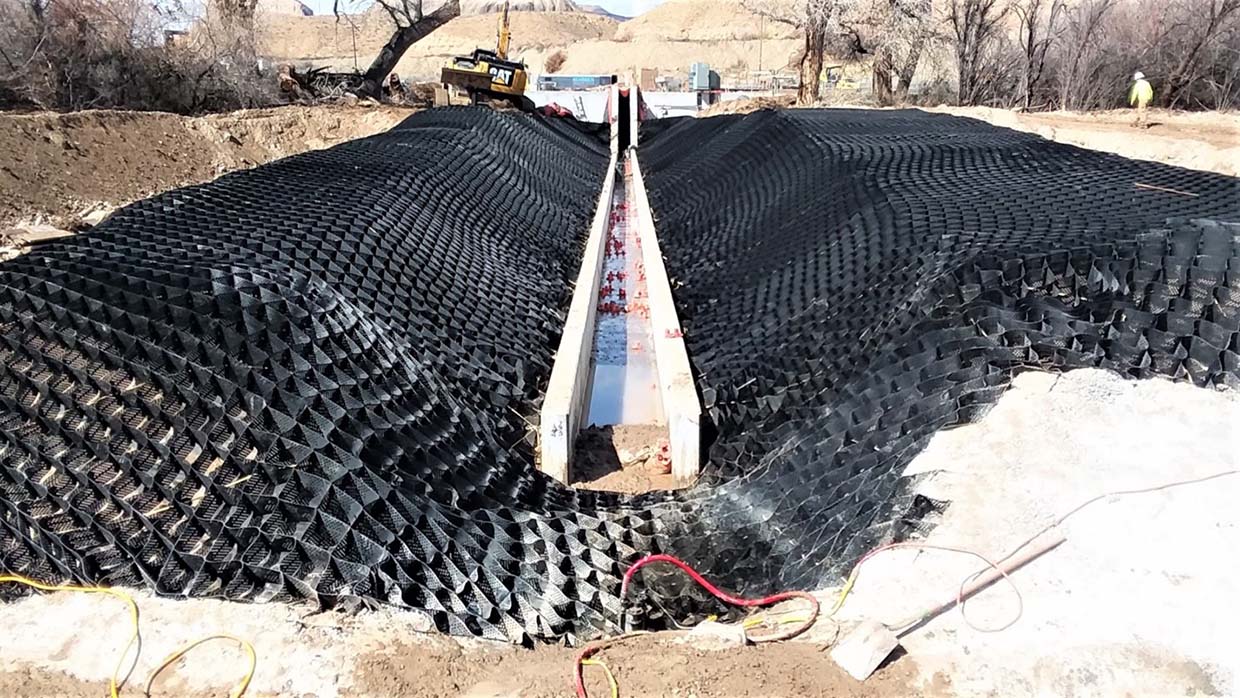
Can a Geocell Stream Crossing Be Filled with Concrete?
Yes. Concrete infill may be suitable when a project requires increased surface durability, load resistance, or erosion protection.
The cellular structure holds concrete within individual cells, forming a confined surface layer. Concrete provides resistance to deformation and surface erosion, while the geocell helps maintain the intended distribution of the infill.
For reliable installation, contractors should consider:
- Concrete mix: Select a workable mixture that fills the cells without significant voids.
- Subgrade preparation: Prepare the foundation according to geotechnical requirements.
- Panel anchoring: Secure expanded panels before placing concrete.
- Concrete placement: Distribute the mixture evenly without displacing the cells.
- Curing: Allow sufficient curing time before opening the crossing to traffic.
Water management is also essential. Depending on site conditions, temporary diversion, pumping, or other appropriate water-control measures may be required during construction.
How to Build a Stream Crossing with Geocells
Successful construction begins with evaluating soil conditions, stream hydraulics, expected traffic, erosion risks, and environmental requirements.
A typical installation sequence includes:
- Site selection: Identify a suitable crossing location based on channel geometry, stability, and environmental constraints.
- Permits and planning: Obtain required approvals and establish appropriate water-management procedures.
- Foundation preparation: Prepare the streambed while minimizing unnecessary disturbance.
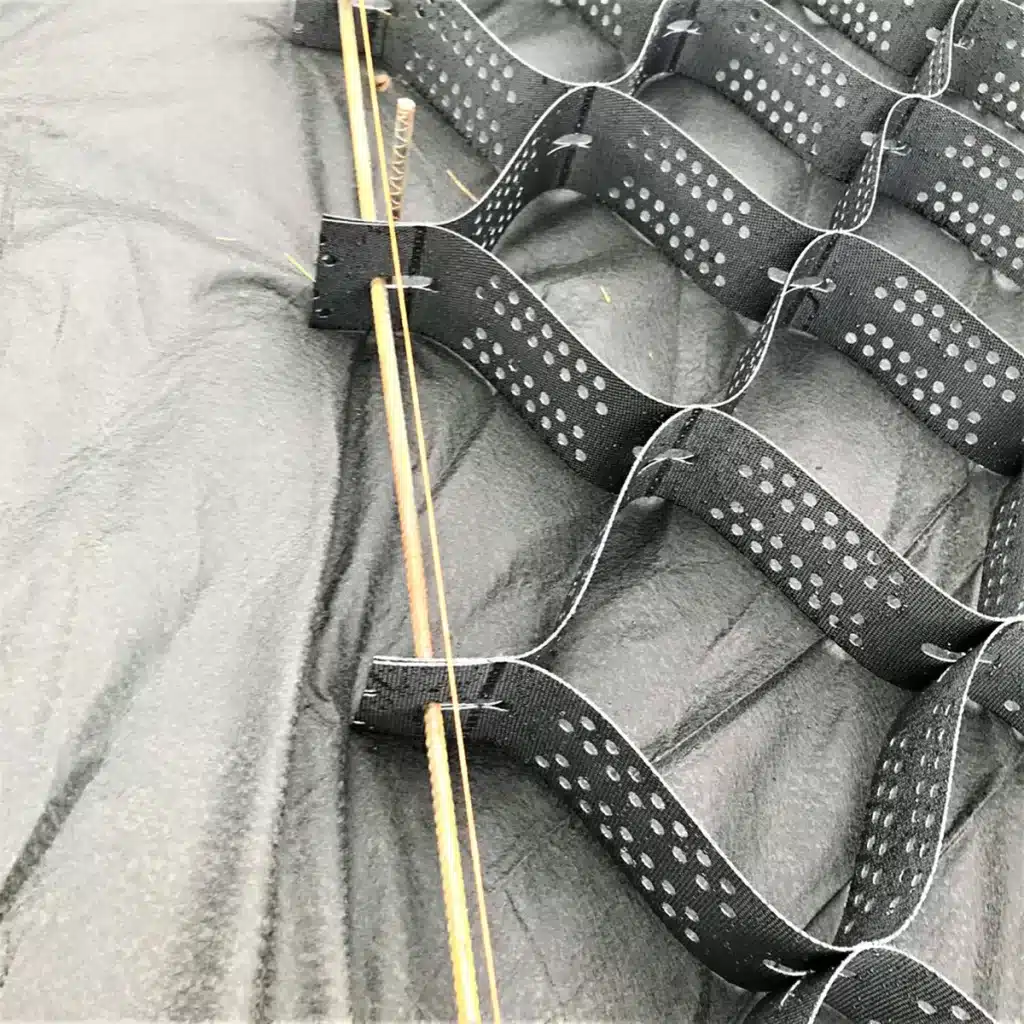
- Geocell installation: Expand, position, and anchor the panels according to design specifications.
- Infill placement: Install gravel, soil, or concrete based on structural and hydraulic requirements.
- Erosion protection: Use geotextiles, riprap, or other measures where necessary to protect approaches and vulnerable areas.
Proper drainage and hydraulic capacity are critical. The crossing must accommodate anticipated flows without causing unacceptable upstream flooding, downstream erosion, or channel instability.
Why Use Geocells for Stream Crossings?
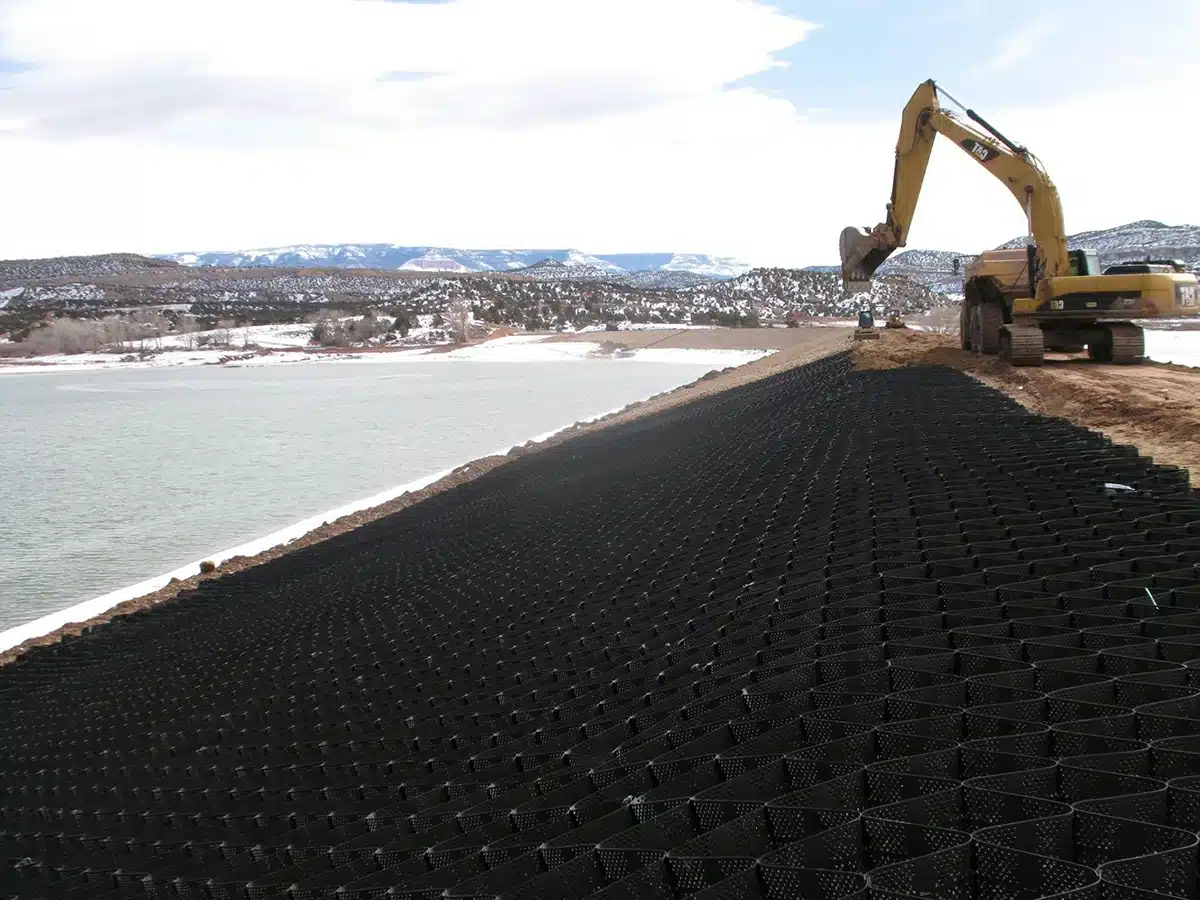
A geocell stream crossing combines cellular confinement, load distribution, and erosion protection within a relatively lightweight system.
Its principal engineering advantages include:
- Improved load support: Helps distribute traffic loads and limit surface deformation.
- Erosion protection: Restrains infill movement and helps protect exposed surfaces.
- Material durability: HDPE geocells can provide resistance to moisture and chemical exposure when properly specified.
- Flexible infill options: Accommodates soil, gravel, aggregate, or concrete.
- Construction efficiency: Expandable panels can simplify transportation and installation.
- Adaptability: Different cell dimensions and infill materials accommodate varying project conditions.
Gravel infill may support permeability, while concrete can provide greater surface durability. Vegetated soil infill may be appropriate in selected areas where hydraulic and loading conditions permit.
The final configuration must account for streamflow, foundation strength, vehicle loading, and environmental constraints.
For engineers, contractors, distributors, and procurement teams, Geofantex offers cellular confinement products for infrastructure applications. Selecting the appropriate geocell stream crossing system for infrastructure projects requires matching product specifications with site-specific engineering requirements.
Contact Geofantex to discuss geocell dimensions, infill options, technical specifications, and quotation requirements.
Get Free Sample
We’ll respond as soon as possible(within 12 hours)