




+86-159 9860 6917
info@geofantex.com
geofantex@gmail.com
+86-400-8266163-44899
Geogrid for retaining walls provides soil reinforcement for highway widening, embankment construction, and infrastructure projects. Engineers and contractors use geogrids to improve stability and limit lateral soil movement. For material buyers, selecting suitable reinforcement requires evaluating tensile strength, long-term durability, and site conditions. This engineering case analysis examines the application, product selection, and installation requirements of a reinforced soil retaining wall.
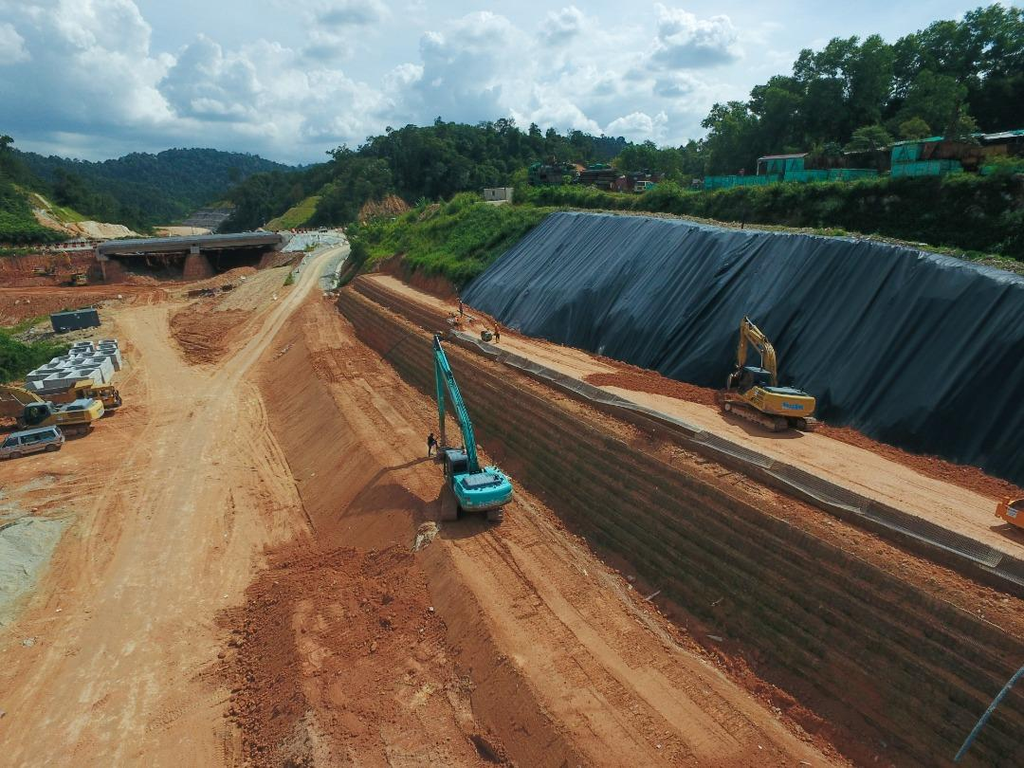
Engineering Problem: Highway Widening and Soil Stability
Highway widening often requires extending an existing embankment while maintaining a stable road structure. Limited land availability may prevent the construction of conventional embankment slopes. Retaining structures must resist lateral earth pressure, traffic surcharge loads, and potential ground movement. Weak foundation soils and inadequate drainage can further increase construction risks.
Conventional concrete retaining walls may require extensive foundation work. In comparison, reinforced soil structures combine compacted backfill with geosynthetic reinforcement to form a stable retaining system.
Project Conditions for Reinforced Soil Retaining Walls
Consider a representative highway widening project involving a road embankment adjacent to existing infrastructure. The construction area has limited horizontal space, and the proposed wall must support the widened roadway while accommodating traffic loads and variable foundation conditions.
Important project factors include:
- Soil strength and foundation bearing capacity.
- Wall height and required reinforcement length.
- Traffic surcharge and construction equipment loads.
- Groundwater conditions and surface drainage.
- Available space for reinforcement installation.
These conditions determine whether a reinforced soil wall is technically suitable.
Geogrid for Retaining Walls: Reinforcement Solution
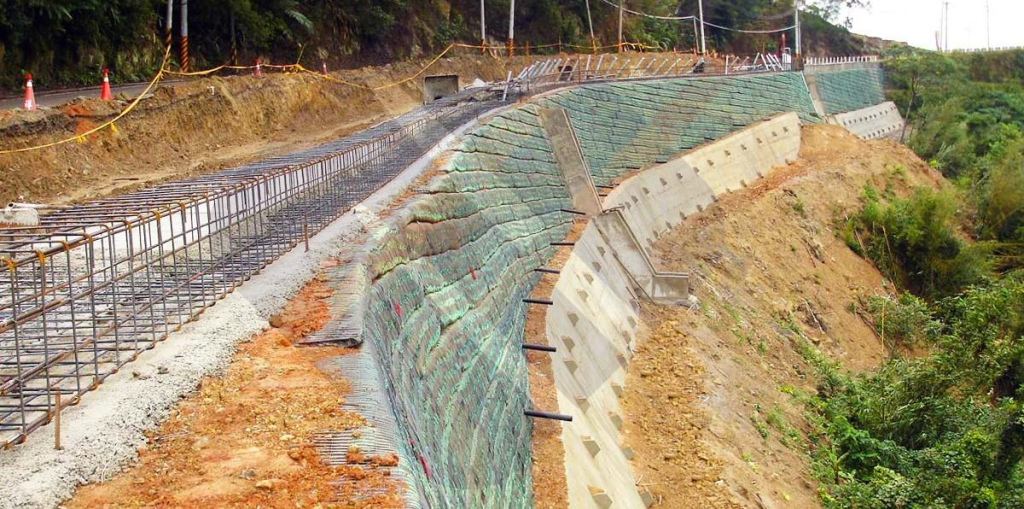
A mechanically stabilized earth (MSE) wall incorporates horizontal geogrid layers within compacted structural backfill. The reinforcement develops tensile resistance through interaction with the surrounding soil, helping resist lateral soil movement and improve the stability of the reinforced soil mass.
For highway construction, geogrid reinforcement solutions for retaining walls can support steep retaining faces where conventional embankment slopes are impractical. The complete system typically includes geogrid reinforcement, engineered backfill, wall facing, foundation preparation, and drainage components. Each component contributes to overall stability, while proper reinforcement design helps control deformation and maintain structural performance.
Product Selection for Geogrid for Retaining Walls
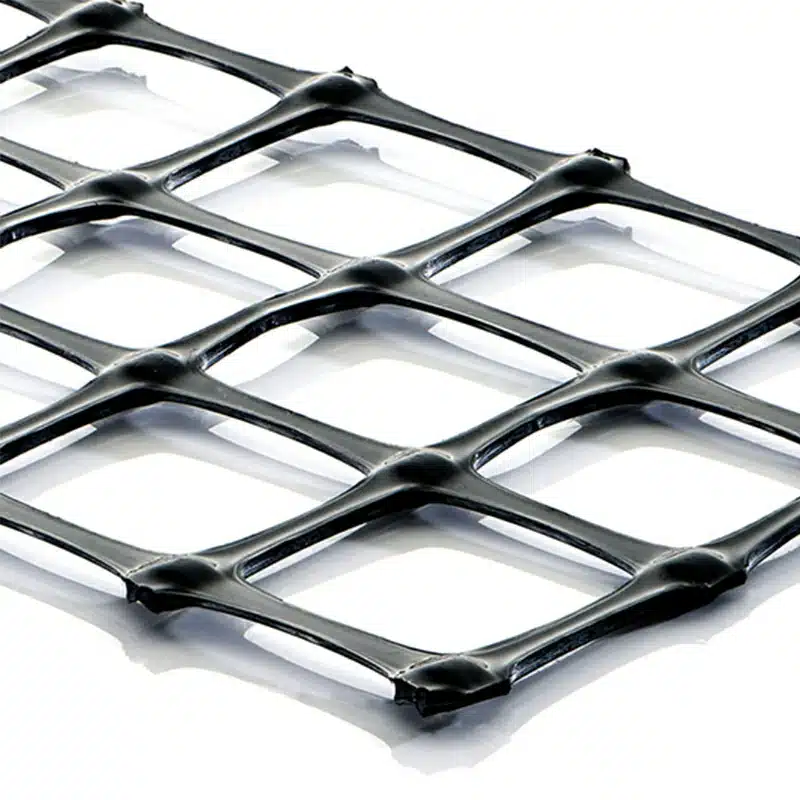
Material selection should reflect project loading conditions, backfill characteristics, and the required service life. Uniaxial HDPE geogrids are commonly used in retaining structures because they provide tensile reinforcement in the primary loading direction. Suitable polyester (PET) geogrids may also be used when their design properties meet project requirements.
Engineers should evaluate:
- Long-term design tensile strength and creep behavior.
- Soil–geogrid interaction and pullout resistance.
- Installation damage and environmental durability.
- Reinforcement spacing, length, and orientation.
- Compatibility with the wall facing and connection system.
Buyers can review technical specifications for geogrid used in retaining walls to compare reinforcement properties with engineering requirements. Nominal tensile strength alone is insufficient. Long-term design strength and verified soil–reinforcement interaction properties are essential selection criteria.
Installation Considerations for Highway Embankments
Correct installation helps the reinforcement system achieve its intended engineering function. Construction begins with foundation preparation and installation of the initial facing units. Workers then place geogrid layers at the specified elevations, ensuring that the primary tensile direction follows the approved reinforcement design. Geogrids must remain flat and properly positioned before backfilling.
Approved backfill is placed in controlled lifts and compacted according to project specifications. Construction equipment should not operate directly on exposed reinforcement. Drainage materials and outlets must also be installed where required to prevent excessive water pressure.
Contractors can consult installation guidelines for geogrid in retaining walls when planning reinforcement placement, backfilling, and quality inspections.
Expected Engineering Performance
A properly designed reinforced soil retaining wall can provide several functional benefits. Reinforcement develops tensile resistance that contributes to internal stability, while the reinforced soil mass helps resist lateral earth pressure and traffic surcharge loads. The system can also accommodate staged construction and reduce the footprint required for highway embankment widening.
However, geogrid reinforcement does not eliminate foundation settlement or drainage problems. Engineers must verify internal stability, external stability, overall stability, and serviceability to ensure the retaining structure meets project requirements.
Geogrid for retaining walls offers a practical reinforcement solution for highway widening and road embankment construction. Successful performance depends on appropriate material selection, engineered backfill, drainage design, and installation quality.
Geofantex supplies geosynthetic reinforcement materials for civil engineering applications. Contractors and procurement teams can contact Geofantex to discuss project specifications, suitable geogrid options, and quotation requirements.

Get Free Sample
We’ll respond as soon as possible(within 12 hours)